


Experiential Travel in India: Beyond Sightseeing for International Tourists (2026)
India’s most extraordinary travel experiences are not in its monuments. They are in a weaver’s workshop in Varanasi where a Banarasi silk sari takes three...


 18884507235


There is a particular kind of travel that changes you. Not the kind that gives you photographs for social media or stamps in your passport, but the kind that rearranges something fundamental in the way you see the world, that hands you back to yourself slightly altered, slightly larger, slightly less certain of things you were previously confident about.
India does this. Consistently. To an extraordinary proportion of the people who visit it.
This is not marketing language. It is the most frequently reported experience of international travellers who come here, across nationalities, ages, travel styles, and budgets. Something about India gets under the skin in a way that the Maldives, or Thailand, or even Japan, all of them magnificent in their own right; rarely does. People come for two weeks and start planning to return before they have left. People who were ambivalent about the idea of India in the first place become its most passionate advocates within days of arriving.
Why?
That is what this piece attempts to answer. Not with superlatives and stock photography captions, but honestly, with the specific, unrepeatable, sometimes uncomfortable, always extraordinary things that India offers that nowhere else on earth does.
Every major ancient civilisation that we study, Egypt, Rome, Greece, Mesopotamia, the Indus Valley itself, is, in the conventional sense, dead. Their monuments survive. Their influence persists. But the living, breathing, daily-practice civilisation that produced them is gone. You visit ruins. You look at what was.
India is the single exception.
The civilisation that produced the Vedas, texts composed between 1500 and 1200 BCE that contain some of the earliest philosophical inquiry in human history, is not gone. It is operating right now. The rituals performed on the ghats of Varanasi this morning are direct continuations of practices recorded in those same texts. The mathematical and astronomical principles encoded in the temple architecture of Tamil Nadu’s great Chola complexes are the same principles being taught in traditional gurukulas today. The Ayurvedic medical system that international travellers come to Kerala to experience was codified by Charaka and Sushruta in texts written before the birth of Christ.
When you stand inside the Meenakshi Amman Temple in Madurai, a complex of 17 acres, 14 soaring gateway towers, 33,000 sculptures, and a daily rhythm of worship that has run without interruption for over a thousand years, you are not in a museum. You are inside a living institution. The priests performing the evening ritual tonight are the direct professional descendants of the priests who performed it a century ago, five centuries ago, ten centuries ago.
There is nowhere else on earth where this is true at this scale. Ancient Egypt is magnificent, but it is archaeology. Ancient Greece gave us philosophy, but the Acropolis is a monument, not a living religious site. Rome built cathedrals over its temples. China’s ancient traditions survive but have been dramatically disrupted by a century of upheaval.
India’s ancient civilization is not a relic. It is a living system, still breathing, still generating, still producing philosophy and art and mathematics and music and medical practice from roots that are 3,000 years old. To travel here is not to look at what was. It is to step inside what still is.
Ask most travellers to describe France, and they will give you a reasonably consistent answer. Japan, Thailand, Morocco, each has a dominant character, a recognisable register that holds across the country.
Ask someone to describe India and watch what happens.
There is no single answer. There cannot be. India is not a country in the way that most countries are countries, a relatively coherent geographic and cultural unit with regional variations. India is a subcontinent that chose, in 1947, to become a single political entity. What it contains within that entity is staggering.
28 states. 8 union territories. 22 officially recognised languages. Over 1,600 dialects. A north that looks, sounds, eats, worships, and dresses entirely differently from a south that looks, sounds, eats, worships, and dresses entirely differently from a northeast that has more in common with Southeast Asia than with either. A western coastline shaped by 450 years of Portuguese presence. An eastern coastline shaped by the British Raj. A desert in the northwest. A rainforest in the southwest. A high-altitude Arctic desert in the north. Tropical islands in the south and east.
This means something specific for the traveller: no two trips to India are the same. A person who spent three weeks in Rajasthan has not seen the India that exists in Tamil Nadu. A person who knows Kerala has not seen the India that exists in Ladakh. You can return every year for a decade and the country will keep producing experiences that bear no relationship to anything you have had before, because you will, effectively, be visiting different countries each time, united only by a passport and a flag.
No other single destination on earth offers this. Not the United States, which has geographic diversity but cultural consistency. Not China, which has scale but less permeability to the traveller. Not Southeast Asia, which requires multiple borders and visa applications to approximate what India contains within one.
And for travellers who want to extend beyond India’s borders, the subcontinent offers three immediate neighbours, Bhutan, Nepal, and Sri Lanka, each of which deepens the journey in an entirely different direction. Bhutan for its Himalayan Buddhist kingdom, untouched and deliberately so. Nepal for Everest, ancient Kathmandu, and the Terai’s wildlife. Sri Lanka for its own extraordinary layering of beaches, temples, tea country, and one of the most dramatic histories in South Asia. GeTS Holidays builds itineraries across all four, India at the centre, with any or all of these extensions available for travellers who want the full subcontinent rather than a single country.
This is not hyperbole. India has one of the most diverse, sophisticated, and most misunderstood culinary cultures in the world, and the gap between what most international travellers think Indian food is and what it actually is, experienced in the places where it evolved, is one of the great revelations of travel here.
What the world calls “Indian food”, the curry-house canon of butter chicken, tikka masala, and naan, represents a tiny, geographically specific, and heavily adapted slice of a culinary tradition of extraordinary breadth. The real thing, eaten across the country in its regional specificity, is something else entirely.
In Kashmir, wazwan, a formal banquet of up to 36 courses, cooked by hereditary wazas over wood fires using techniques perfected over centuries, centred on lamb preparations of extraordinary subtlety, is a cuisine that has no parallel in the Indian repertoire and that most Indians from other states have never encountered.
In Chettinad, in Tamil Nadu’s interior, the cooking of the Nattukotai Chettiars, a mercantile community whose trade routes brought spices from across Southeast Asia into a local cuisine of fierce, complex heat, produces dishes like kavuni arisi, kuzhambu gravies of layered depth, and the use of spices like kalpasi and marathi mokku that appear in no other regional Indian tradition.
In Manipur, in the northeast, the cooking of the Meitei community uses fermented fish paste, bamboo shoots, and an entirely distinct spice palette that has more in common with Thai and Burmese cuisines than with anything in north or south India.
In Goa, four and a half centuries of Portuguese influence produced a cuisine that blends Konkan Hindu, Catholic, and European traditions into something genuinely singular, vindaloo, xacuti, the layered bebinca coconut cake, none of it replicable anywhere else.
In Bengal, a culinary tradition that treats fish with the reverence that France treats cheese, dozens of preparations for hilsa alone, combined with a sweet-making tradition of extraordinary delicacy: rasgulla, sandesh, mishti doi, each with its own regional variations and ancestral recipes.
In Kerala, the Onam Sadya, a feast of 26 or more dishes served on a banana leaf, eaten with the right hand in a specific sequence, is simultaneously a meal, a ritual, a cultural statement, and one of the finest eating experiences available anywhere in Asia.
This is not one food culture. It is at least 28 distinct food cultures, each with its own ingredients, techniques, seasonal rhythms, and philosophical relationship with what food is for. France is often called the world’s greatest food destination. France has one food culture. India has at least 28. The comparison, once you have experienced both, is not as straightforward as it once seemed.
The Swiss Alps are magnificent. Patagonia is overwhelming. The Norwegian fjords are humbling. Bali is beautiful.
India contains all of these registers, and several that exist nowhere else on earth, within a single country.
The Thar Desert of Rajasthan, golden sand dunes shifting in the late afternoon light, camel caravans moving against a darkening sky, the silence so complete at night that you hear your own blood, is as dramatic as any desert on earth. But it exists 1,500 kilometres from the Andaman Islands, where the water is the colour of shallow tropical sea at its most perfect, the coral reefs are among the most biodiverse in the Indian Ocean, and the jungle comes directly to the beach in a wall of green so dense it seems impenetrable.
Both of those are 2,000 kilometres from Ladakh, a high-altitude cold desert at 3,500 metres where the mountains are the colours of rust, ochre, and bone, the sky is a blue so saturated it seems artificial, and the only sounds are wind and the distant bells of a monastery.
And Ladakh is 3,000 kilometres from the Western Ghats of Kerala, an ancient mountain system of such biodiversity that it is one of only eight sites on earth designated as a Biodiversity Hotspot, where tigers move through rainforest so old it predates the Himalayas, and where rivers run through tea plantations so perfectly green they look painted.
The Kashmir Valley in spring, when the Mughal gardens fill with tulips and cherry blossom, the Dal Lake reflects a sky of implausible blue, and the surrounding Himalayan peaks carry their last snow before the summer melt, looks like a painting someone made trying to imagine what paradise might look like.
The Sundarbans delta in West Bengal, the largest mangrove forest on earth, a labyrinth of waterways and mud and roots where the boundary between land and water is negotiated freshly with every tide, and where Royal Bengal tigers swim between islands in saltwater, is a landscape so particular to itself that no analogy does it justice.
The ghats of Varanasi at dawn, the steps running down to the sacred Ganga, the silhouettes of temples against a sky going from black to purple to gold, the figures descending into the water for their morning ritual, the sound of bells and conch shells and chanting rising across the river, are one of the most visually extraordinary scenes in human geography. Not because they are beautiful in the conventional sense, but because they are so completely unlike anything else on earth that your visual vocabulary temporarily runs out of categories.
The living root bridges of Meghalaya; grown over decades from the aerial roots of Indian rubber trees, trained by the Khasi people across mountain streams in the rainforest, the oldest 500 years old and still in daily use, exist nowhere else on earth.
All of this. One country. One visa.
India is one of the world’s twelve megadiverse countries, a designation given to nations that together contain more than 70% of the world’s biodiversity. What this means in practice for the traveller is a wildlife experience that cannot be replicated by combining multiple trips to other destinations.
The Bengal tiger in its natural habitat, in the sal forests of Bandhavgarh, the grasslands of Ranthambore, the teak forests of Tadoba, is one of the most powerful wildlife encounters available anywhere on earth. Not because it is the most dangerous animal you can safely observe, but because of what it represents: the most charismatic large predator in the world, moving through its own landscape with the complete confidence of an animal that has no natural enemies, entirely indifferent to your presence.
The one-horned rhinoceros at Kaziranga, recovered from fewer than 200 animals to over 3,700 through one of conservation’s great success stories, moving through tall elephant grass on the Brahmaputra floodplain in numbers that feel genuinely prehistoric, exists in significant wild populations in exactly one place on earth. That place is India.
The Asiatic lion survives in exactly one wild population on earth: the Gir Forest of Gujarat. Fewer than 700 animals. A single ecosystem. The last of their kind in Asia, recovered from near-extinction in the early 20th century.
The snow leopard in Hemis National Park in Ladakh, seen on a January morning moving across a snow-covered ridge in the absolute silence of the high Himalayas, is an experience that serious wildlife travellers plan years for and remember for the rest of their lives.
The olive ridley sea turtle mass nesting events on Odisha’s beaches, hundreds of thousands of turtles arriving simultaneously in the darkness to lay their eggs, the beach appearing to move, have no parallel anywhere in Asia.
Over 1,300 bird species including more than 300 migratory species arrive each winter from Siberia, Central Asia, Mongolia, and the Arctic. The bar-headed goose, which crosses the Himalayas at altitudes above 7,000 metres during migration. The great Indian bustard, one of the heaviest flying birds on earth, surviving in its last few hundred individuals on the Thar Desert plains.
All of this wildlife, in landscapes of extraordinary beauty, accessible through a tourism infrastructure that has been developed and refined over 50 years by international visitors seeking it.
India is not simply a country that has religion. It is a country that is, in a profound sense, made of it.
Four of the world’s major religions were born here or achieved their fullest early development here: Hinduism, Buddhism, Jainism, and Sikhism. Two others, Islam and Christianity, arrived early enough and took root deeply enough to produce architectural and cultural traditions that are, in both cases, among the finest expressions of those traditions anywhere in the world.
Varanasi is the oldest continuously inhabited city in the world, possibly 3,000 years old, and the holiest city in Hinduism. Every day, in full public view, the cremation fires on the Manikarnika and Harishchandra ghats burn without interruption, because Hindus believe that dying here guarantees moksha, liberation from the cycle of rebirth. This is not hidden. It is not sanitised. It is simply what happens, in the open, as it has happened here for three thousand years.
Bodh Gaya in Bihar is where the Buddha attained enlightenment approximately 2,500 years ago. The Mahabodhi Temple built over that spot is the most sacred site in Buddhism, a UNESCO World Heritage Site where Tibetan monks in burgundy robes chant alongside Sri Lankan monks in saffron alongside Japanese Zen priests in black, the entire global Buddhist community gathered at its most sacred centre.
Amritsar’s Golden Temple; its upper floors covered in 750 kilograms of pure gold leaf, reflected in the sacred pool that surrounds it, open 24 hours a day, 365 days a year, feeding 100,000 people daily from its langar without charge or question of faith, is simultaneously one of the most beautiful buildings in the world and one of the most radical acts of continuous generosity in human history.
Ajmer’s dargah of Khwaja Moinuddin Chishti where Sufi qawwali singers perform through Thursday nights in the courtyard of a 12th-century shrine, drawing Hindu and Muslim and Sikh and atheist visitors in equal numbers, is one of the most musically and spiritually extraordinary experiences available anywhere in Asia.
None of this is theme park spirituality. None of it is performed for the benefit of visitors. All of it is daily practice, embedded in the life of communities that have maintained these traditions without interruption across centuries. The traveller who arrives with genuine curiosity rather than casual tourism is welcomed into something real.
India has 42 UNESCO World Heritage Sites. It has been producing monumental art and architecture for at least 5,000 years, and the range and quality of what survives, across five millennia, multiple religious traditions, dozens of regional schools and dynasties, is without parallel anywhere on earth.
The cave paintings of Bhimbetka created between 10,000 and 30,000 years ago by hunter-gatherers whose images of animals, hunts, and daily life survive on sandstone that has protected them through the millennia, are the oldest artistic record of human presence in the subcontinent.
The Ajanta cave paintings covering the walls and ceilings of 30 rock-cut Buddhist monasteries with narrative paintings of extraordinary quality, rediscovered in 1819 after centuries of jungle concealment, are considered among the finest surviving examples of ancient painting in the world.
The Taj Mahal earns every word written about it. The proportions are exact. The inlay work, 28 types of precious and semi-precious stone set into white marble in patterns of botanical and geometric precision, was created by craftsmen brought from across the Mughal empire and has not been replicated since. At dawn, with the reflection pool still and the sky going from grey to gold behind it, it is simply the most beautiful building human hands have made.
The Kailasa Temple at Ellora — carved top to bottom from a single basalt cliff face, requiring the removal of an estimated 200,000 tonnes of stone, is the largest rock-cut structure in the world. Standing inside it produces a sensation of disbelief that does not entirely resolve even after hours in space.
Hampi, the ruins of Vijayanagara spread across 26 square kilometres of a landscape of enormous granite boulders, the Tungabhadra River curving between them, 500-year-old temple structures rising from the rock, is one of the most visually extraordinary historical sites on earth.
Five thousand years of unbroken artistic production. Forty-two UNESCO sites. Hundreds of monuments of the first order that most international travellers have never heard of. The person who claims to have “done” India culturally is, with respect, mistaken. India cannot be done. It can only be entered, repeatedly, each time finding more than the last.
This is the element that does not appear in guidebooks in sufficient depth, because it is difficult to describe without sounding sentimental, and because it surprises even travellers who have been warned about it.
India is, at a fundamental level, an extraordinarily warm country. Not in the performed-hospitality sense of luxury hotels with staff trained to smile, but in the organic, unrehearsed, sometimes overwhelming sense of ordinary people going out of their way for strangers in ways that are not motivated by any commercial transaction.
The family on the overnight train who insist that you eat with them before you have exchanged three sentences. The shopkeeper in the old city of Varanasi who spends 45 minutes showing you the precise history of the lane you are standing in, buying nothing, needing nothing from you. The farmer in a village in Rajasthan who sees that you are lost on a back road and walks two kilometres out of his way to show you the right path, refuses money, and explains through hand signals and broken English that his guest’s problem is his problem while you are in his area.
The Sanskrit concept at the root of this is Atithi Devo Bhava, “The guest is God.” It is one of the foundational precepts of Indian hospitality, thousands of years old, and it is not merely a saying. It is a practice, observable daily, in the texture of ordinary interactions between Indian people and foreign visitors across the country.
For international travellers from the US, UK, Australia, Canada, and Western Europe, India offers a standard of experience, historical, natural, culinary, cultural, that in any comparable European or Southeast Asian destination would cost two to three times as much.
A night in a genuine Rajasthan palace hotel costs $120–200. A week-long Ayurvedic retreat in Kerala, physician consultation, personalised treatment protocol, accommodation and meals included, costs $600–900 at a mid-range centre. A private guided jeep safari in a tiger reserve, with an expert naturalist, for four people, $60–80. A full-day cooking class in a family home in Varanasi, lunch included, $30–40.
The rupee’s relationship to Western currencies means that India consistently delivers the best experiential value of any major travel destination in the world. When the financial barrier to having a genuinely extraordinary experience is lower, you have more of them. You stay one more night at the lake palace because you can. You add the Ayurvedic week because it fits the budget. You hire the private car for the week because it costs less than the trains would in Europe.
India gives back, financially, in a way that makes most other destinations feel either expensive or comparably limited. At the luxury end of the market, the segment that GeTS Holidays works in, this means that the budget a traveller might allocate to a mid-range European trip buys them something genuinely extraordinary in India: heritage palace hotels, private guides at every site, first-class internal flights, and the kind of curated access to experiences that money simply cannot buy in destinations where luxury is more uniformly commoditised.
A piece like this would be dishonest if it did not acknowledge what India also is.
India is loud. It is crowded in ways that travellers from less densely populated countries find genuinely challenging. It is chaotic in ways that do not resolve into order the more time you spend there, they resolve into a different kind of order, an Indian kind, that takes time and patience to begin to read. The infrastructure is uneven: world-class in some places, startlingly basic in others. The heat in certain seasons in certain regions is a physical force that requires managing. Getting from place to place takes longer than it should and involves more variables than you planned for.
All of this is true. And all of it is also, for the right traveller, part of the experience rather than a subtraction from it. The chaos is not a bug. It is the visible surface of a country managing the coexistence of 1.4 billion people across 28 states, speaking dozens of languages, following different religions, eating different food, celebrating different festivals, and doing so with more democratic accountability and less suppression than most countries that have attempted less complex versions of the same challenge.
India requires patience. It rewards patience with an intensity that no patient, ordered, efficiently managed destination can match.
The traveller who arrives expecting it to work like Switzerland will be frustrated. The traveller who arrives curious, flexible, and willing to follow where the place leads will be undone, in the best possible sense, within days.
This is also, incidentally, where having the right support on the ground makes an enormous difference. The variables that make India challenging for the unprepared traveller, logistics, permits, distances, the gap between what is advertised and what is delivered, are precisely what a specialist operator exists to manage. The traveller who arrives in India with GeTS Holidays behind them arrives knowing that the palace has been chosen for the right room, the naturalist guide at the tiger reserve is the one who has been tracking the resident tigress for three years, the Ayurvedic physician at the Kerala retreat speaks fluent English and has 20 years of experience with international patients, and the car waiting at the airport knows exactly where it is going and why.
That is not a small thing. In India, it is the difference between a trip that is merely eventful and one that is genuinely transformative.
Because it is the only place on earth where a 3,000-year-old civilisation is not a relic, it is a living system, generating philosophy and art and music and cooking and spiritual practice from roots that predate most of what the Western world considers ancient.
Because it contains within a single visa and a single journey the geographical range of an entire continent, the cultural diversity of a dozen countries, and the historical depth of five millennia.
Because the food alone, 28 distinct culinary traditions, each evolved over centuries, each utterly itself, constitutes a reason to visit that no other single destination on earth can match on the same terms.
Because the wildlife, tigers, one-horned rhinoceroses, Asiatic lions, snow leopards, sea turtles, 1,300 species of birds, exists in landscapes of extraordinary beauty, accessible through one of the world’s most developed wildlife tourism ecosystems.
Because the art and architecture, from 30,000-year-old cave paintings to the Taj Mahal to the living root bridges of Meghalaya to the gold-covered temple towers of Tamil Nadu, spans five millennia of unbroken human creative ambition.
Because the spiritual landscape, Hindu, Buddhist, Jain, Sikh, Sufi, Christian, Zoroastrian traditions coexisting in the same geography, all of them living rather than historical, offers the most complex and rewarding encounter with human religious experience available anywhere on earth.
Because the people, warm in a way that is organic rather than performed, generous in a way that is ancient rather than trained, will, with reliable frequency, make you feel that your presence here is genuinely welcome rather than merely commercially useful.
Because you can have all of this at a level of experiential quality that, in any comparable destination, would cost two to three times what it costs in India.
And because, when you leave, and you will leave having seen a fraction of what exists, you will already be thinking about when you are coming back.
That is why India. That is why now. That is why, once you have been, the question stops being why and becomes simply: which part next?
If you want history and iconic experiences: The Golden Triangle; Delhi, Agra, Jaipur. Seven to ten days. Every monument you have imagined, in the place where it exists.
If you want nature and wildlife: Rajasthan’s Ranthambore for tigers, then Kerala for backwaters and Ayurveda. Two weeks that move from desert to tropics.
If you want spiritual depth: Varanasi, Bodh Gaya, Rishikesh. The sacred geography of northern India across ten days.
If you want beaches and culture: Goa for the coast, then Tamil Nadu for the great temple cities. Two weeks between the Arabian Sea and the Bay of Bengal.
If you want the road less travelled: Ladakh for the high-altitude desert and Buddhist monasteries. Meghalaya for the living root bridges and the greenest landscape in India. Kashmir for the valley that has been called paradise since the Mughals named it one.
If you want the full subcontinent: Add Bhutan for its Himalayan Buddhist kingdom, Nepal for Everest and ancient Kathmandu, or Sri Lanka for beaches, temples, and tea country. Each one deepens the journey in a direction India alone cannot take you.
GeTS Holidays specialises in crafting exactly these journeys, bespoke, luxury, and built around what each traveller is actually looking for rather than a standard itinerary applied to every guest. Whether your India is a week in one region or a month across several, whether you want to extend into Bhutan, Nepal, or Sri Lanka, or whether you simply want someone who knows this part of the world deeply to tell you where to begin the conversation starts at GeTS Holidays
India is waiting. It has been waiting for a very long time, and it is extraordinarily patient. The only question worth asking now is when.
This guide was produced by the editorial team at GeTS Holidays, luxury inbound travel specialists for India, Bhutan, Nepal, and Sri Lanka. Last updated July 2026.
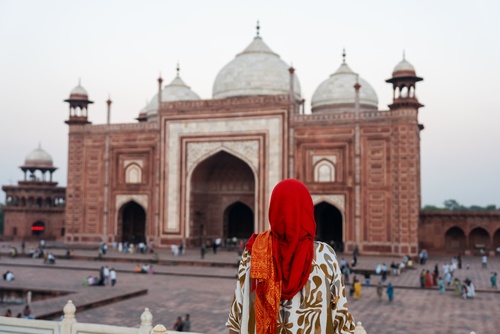
India’s most extraordinary travel experiences are not in its monuments. They are in a weaver’s workshop in Varanasi where a Banarasi silk sari takes three...
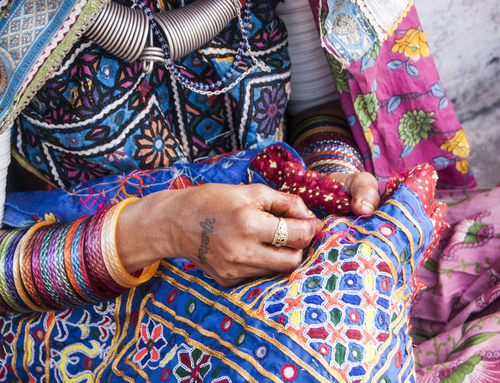
India has more distinct textile and craft traditions than any other country on earth. This is not an approximation. The combination of 28 states, dozens...
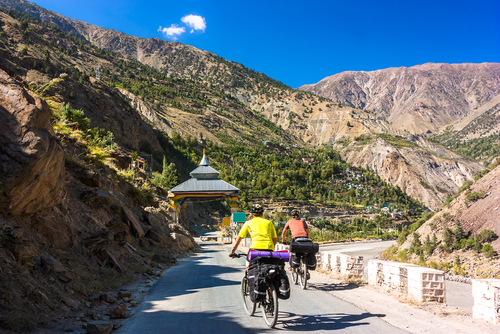
India bookings among adventure travellers surged 214% in the past year. Cycling is at the heart of that surge. International cyclists are discovering that India...
You are one step closer to having the best journey of your lifetime! Talk to us, write to us all that you have envisioned for your India trip, and one of our travel experts will connect with you on priority. To help you explicitly we have WhatsApp and Email addresses!


