


Kochi Travel Guide for International Tourists: Kerala’s Most Extraordinary City (2026)
Kochi is India’s most trending international destination in 2026. This is not a marketing claim, it is the finding of travel search data across European...


 18884507235

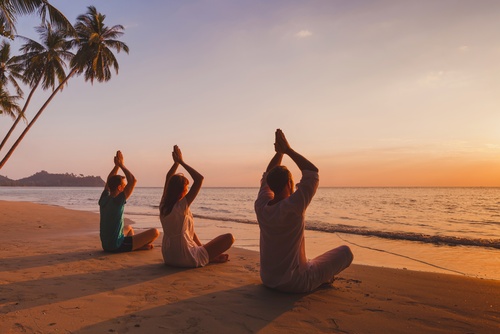
India is the world’s number one wellness tourism destination in 2026.
This is not a marketing claim. It is the finding of the Global Wellness Institute’s 2026 rankings, placing India ahead of Thailand, Indonesia, Bali, and Japan in a category that has become one of the fastest-growing segments in international travel.
The reason is straightforward. India invented wellness. Ayurveda, the world’s oldest complete medical system, has been practised here for over 3,000 years. Yoga originated here. Meditation traditions that the rest of the world is only now beginning to understand have been developed, refined, and transmitted in unbroken lineages across centuries of Indian civilization.
For international travellers seeking genuine restoration, not a spa weekend with Indian aesthetics applied to standard treatments, but the real thing, India offers something that no other destination can replicate.
This guide covers everything you need to know to plan a wellness trip to India in 2026.
Several factors have converged to place India at the top of the global wellness travel ranking this year.
First, international awareness of Ayurveda and yoga has reached a genuinely mainstream level. These are no longer niche interests. They are part of the mainstream wellness vocabulary of educated consumers across the US, UK, and Europe, and the people who practice them want to experience them at their source.
Second, wellness tourism is growing because of rising urban stress levels, increased global awareness of Ayurveda and yoga, and a strong traveller desire for trips that restore rather than merely entertain. India is the only destination that addresses all three simultaneously.
Third, India’s wellness infrastructure has matured significantly. The Kerala Ayurvedic treatment sector, the yoga ashrams of Rishikesh, and the meditation retreat centres across the country have developed international-standard accommodation, English-speaking practitioners, and programme structures designed specifically for international visitors.
Finally, value. A two-week Ayurvedic Panchakarma retreat in Kerala, physician consultation, daily treatments, accommodation, and all meals included, costs a fraction of what a comparable experience would cost in Switzerland, Bali, or the Maldives. The quality is higher. The authenticity is incomparable.
Wellness tourism in India covers a broad spectrum. Understanding the different categories helps you choose the right experience for your goals.
Medical Ayurveda is the most rigorous category. It involves a physician consultation, a formal diagnosis, a prescribed treatment protocol, and a minimum stay of 7–21 days. It is medicine, not spa therapy. The results, documented across thousands of international patients, include significant improvements in chronic conditions, digestive health, skin quality, sleep, energy, and mental clarity.
Yoga and meditation retreats range from beginner-friendly week-long programmes to advanced teacher training courses of several months. They combine physical practice with philosophical study, breathwork, and lifestyle guidance. The finest are transformative. The weakest are yoga studios with Indian decor.
Luxury wellness resorts combine high-end accommodation with curated wellness programming, Ayurvedic treatments, yoga classes, meditation sessions, organic cuisine, and nature-based activities in a resort environment of considerable comfort. They are the most accessible entry point for first-time wellness travellers to India.
Spiritual wellness encompasses pilgrimage travel, ashram stays, meditation intensives, and the specific quality of inner stillness that India’s sacred geography produces in ways that are difficult to explain and consistently reported by visitors. It overlaps with every other category and underlies all of them.
Before choosing an Ayurvedic experience in India, understanding what Ayurveda actually is saves significant confusion.
Ayurveda is a complete medical system, not a collection of massage techniques. The word comes from the Sanskrit ayus (life) and veda (knowledge). Its foundational texts – the Charaka Samhita and the Sushruta Samhita, were written between 600 BCE and 600 CE and describe a medical system of extraordinary sophistication.
Ayurveda works on the principle that every individual has a unique constitutional type (prakriti), a natural balance of three fundamental energies called doshas:
Every individual has all three doshas in different proportions. Health is the state of natural balance. Disease arises when this balance is disturbed. Treatment restores the balance through diet, lifestyle, herbal medicine, and therapeutic procedures.
A genuine Ayurvedic experience always begins with a physician consultation. The vaidya (Ayurvedic physician) takes your pulse (nadi pariksha), examines your tongue, skin, and eyes, and asks detailed questions about your health history, diet, sleep, digestion, and emotional state. From this, they determine your prakriti and vikriti (current imbalance) and prescribe a specific treatment protocol.
Key Ayurvedic treatments:
This distinction is the most important decision in planning an Ayurveda trip to India.
An Ayurvedic spa offers selected treatments, typically abhyanga and shirodhara, in a pleasant environment without a physician consultation. It is relaxing and has some benefits. It is not medicine.
An authentic Ayurvedic treatment centre has qualified physicians (BAMS degree minimum), conducts individual consultations, prescribes specific treatment protocols, prepares medicines in-house, and monitors progress throughout the programme.
Always ask before booking:
Any centre that cannot answer these questions clearly is operating as a spa. That may be what you want. If you want genuine therapeutic benefit, it is not sufficient.
Kerala is where Ayurveda is most deeply rooted, most authentically practised, and most accessible to international visitors. The state’s tropical climate, biodiversity of medicinal plants, and centuries of unbroken Ayurvedic tradition make it the best destination in the world for genuine treatment.
Kerala’s humidity is therapeutically beneficial in Ayurvedic theory. The monsoon season (June–September), when the air is cool and moist and the body’s pores are open, is considered the ideal time for Panchakarma. However, quality centres operate year-round.
The finest Ayurvedic centres in Kerala for international visitors:
Kalari Kovilakom, Palakkad – Set in a restored 19th-century palace, Kalari Kovilakom is widely considered the finest Ayurvedic treatment experience in India. It operates as an exclusive retreat with a minimum stay of 14 days. No alcohol. No visitors. No shortcuts. The centre follows entirely classical Ayurvedic protocols with no adaptation for Western preferences. It is demanding, transformative, and consistently produces results that guests describe as life-changing.
Somatheeram Ayurvedic Health Resort, Kovalam – One of the longest-established Ayurvedic resorts in Kerala, Somatheeram combines genuine physician-led treatment with accommodation in traditional Kerala-style cottages on a clifftop above the Arabian Sea. Packages run from 7 to 28 days.
Vaidyagrama, near Coimbatore – A residential Ayurvedic healing village offering treatment programmes of 14–28 days conducted by classically trained vaidyas. The most rigorous of the internationally known centres. No compromise on classical protocols.
CGH Earth’s Kalari Rasayana – A clinical Ayurvedic centre near Thrissur combining medical-standard treatment with the environmental responsibility that CGH Earth’s properties are known for across Kerala.
Rishikesh and the surrounding Uttarakhand region offer Ayurvedic treatment in a Himalayan setting that Kerala cannot provide. Several ashrams and wellness centres here combine Ayurvedic treatment with yoga and meditation in integrated programmes.
Ananda in the Himalayas, Narendra Nagar – Consistently rated one of the finest destination spas in Asia, Ananda sits in a maharaja’s palace estate above Rishikesh overlooking the Ganga. It combines Ayurvedic treatment with yoga, meditation, and Vedanta study in a luxury setting of extraordinary beauty.
Several of Rajasthan’s finest heritage hotels have developed serious wellness programmes that combine Ayurvedic treatment with the palace hotel experience. This is the most accessible entry point for luxury travellers who want an introduction to Ayurveda without committing to a full residential programme.
Amanbagh, Alwar – The Aman group’s Rajasthan property offers Ayurvedic consultations and treatments alongside its exceptional spa facilities in a setting of considerable architectural beauty.
India is the birthplace of yoga. Experiencing it here, in the places where the tradition developed, with teachers whose lineages connect directly to the foundational texts, is entirely different from yoga practice anywhere else in the world.
Rishikesh earned its reputation as the global centre of yoga for good reasons. The town has been a centre of yoga and Vedantic study since the 19th century. The concentration of genuine teachers, ancient ashrams, and international practitioners here is higher than anywhere else in India.
The Ganga runs through the town. The Himalayan foothills rise on both sides. The evening aarti on the river connects daily life to the sacred in a way that reinforces the yoga practice happening around it.
What to look for in Rishikesh:
Recommended institutions in Rishikesh:
Mysuru is the home of Ashtanga Vinyasa yoga, the dynamic, sequenced practice that has become the most widely practised yoga style in the world outside India. The Ashtanga Yoga Research Institute, founded by the late Sri K. Pattabhi Jois, continues to operate here under his grandson Sharath Jois.
Serious Ashtanga practitioners travel from across the world to study in Mysuru. The city itself, with its palaces, its markets, its gentleness, makes an excellent base for a yoga-focused India trip.
Several of Kerala’s finest Ayurvedic retreat centres offer integrated yoga and Ayurveda programmes. The combination, daily Ayurvedic treatments and daily yoga practice in a tropical setting, is one of the most complete wellness experiences available in India.
India’s meditation traditions are among the oldest and most sophisticated in the world. For international visitors seeking genuine mindfulness practice rather than the stripped-down, secular version that has become mainstream in the West, India offers the source material.
Vipassana, the ancient Buddhist meditation technique rediscovered and taught by S.N. Goenka, is available at centres across India in the form of 10-day residential courses. The courses are entirely free. They involve 10 hours of meditation daily, complete silence for the duration, and no technology, reading, or writing.
They are genuinely demanding. They are also genuinely transformative. Participants consistently describe them as among the most significant experiences of their lives.
Centres are located across India, Igatpuri (Maharashtra), Jaipur, Hyderabad, and others. Bookings fill months in advance. Register online at dhamma.org.
Tiruvannamalai in Tamil Nadu, where the great 20th-century sage Ramana Maharshi spent his entire adult life, remains one of the most significant centres of Advaita Vedanta teaching in the world. The Ramana Maharshi Ashram at the base of Arunachala hill offers residential stays for serious practitioners. The atmosphere of the place, quiet, centred, entirely devoted to the investigation of consciousness, is unlike any other ashram in India.
Bodh Gaya in Bihar, where the Buddha attained enlightenment, hosts meditation retreats from every Buddhist tradition throughout the year. Sitting in the Mahabodhi Temple complex, meditating under a descendant of the original Bodhi tree, surrounded by practitioners from across Asia in the robes of every Buddhist school, this is an experience available nowhere else on earth.
For international travellers who want wellness in a luxury resort environment, without the rigour of a full Panchakarma programme or a silent meditation retreat, India’s luxury wellness resorts offer an excellent middle path.
The finest luxury wellness resorts in India for international visitors:
Ananda in the Himalayas, Uttarakhand – consistently ranked among the top ten destination spas in the world. Set in a Maharaja’s estate above Rishikesh with views of the Ganga valley. Combines Ayurvedic treatment, yoga, meditation, and Vedanta study with luxury accommodation and exceptional cuisine.
Shreyas Retreat, Bengaluru – a luxury yoga retreat centre outside Bengaluru offering integrated programmes of yoga, Ayurveda, meditation, and naturopathy in a setting of considerable beauty. Minimum three-night stay. Maximum 24 guests at any time.
Carnoustie Ayurveda and Wellness Resort, Kerala – a luxury property on Kerala’s backwaters combining genuine Ayurvedic treatment with five-star accommodation and exceptional food. One of the finest balances of luxury and authenticity in the Kerala wellness sector.
The Leela Kovalam, Kerala – a clifftop resort on the Arabian Sea coast near Thiruvananthapuram with a serious Ayurvedic treatment centre, multiple restaurants, and exceptional sea views. The most luxurious of the Kovalam coastal properties.
The most significant emerging trend in international wellness travel in 2026 is what the industry is calling the “glow-cation”, a trip built specifically around skin health, mental clarity, and what is broadly termed biohacking wellness. It is where ancient healing ritual meets contemporary wellness science.
India is uniquely positioned for this trend. The reason is straightforward: Ayurveda has been doing exactly this for 3,000 years.
The connection between internal health and external appearance, skin quality, hair health, eye clarity, physical vitality, is not a modern wellness discovery. It is foundational to Ayurvedic medicine. The Charaka Samhita describes it in detail. Every Panchakarma programme addresses it systematically. Every Ayurvedic dietary prescription considers it central.
What is new is the language. International travellers who would not have described themselves as interested in Ayurveda are increasingly interested in:
The international travellers who arrive in Kerala for a “glow-cation” in 2026 and undergo a properly structured Ayurvedic programme are, in effect, receiving what Ayurveda has always delivered, simply described in terms that connect with their existing wellness vocabulary.
What a glow-cation in India looks like in practice:
The finest Kerala retreats, Kalari Kovilakom, Vaidyagrama, Carnoustie, deliver all of this with physician-level rigour. The results are documented, consistent, and increasingly sought by international travellers who have tried every other approach and are looking for something that actually works.
The best time for a wellness trip to India varies by destination and by the type of experience you are seeking.
For Ayurvedic treatment in Kerala:
The monsoon season, June to September, is the traditional and therapeutically optimal time for Panchakarma. The humidity opens the body’s pores and makes treatment more effective. Additionally, rates at Kerala’s retreat centres are lower in the monsoon. October to March is equally excellent for treatment, with clearer skies and more comfortable outdoor conditions.
For yoga in Rishikesh:
February to April is the finest window. The weather is pleasant, the river is clear, and the Himalayan foothills are at their most beautiful before the summer heat arrives. October to November is the second best window.
For meditation retreats:
Year-round, with the exception of peak summer (May–June) when the heat in most locations is intense. Bodh Gaya is best visited between October and March when the Tibetan community is present and the teaching calendar is most active.
For luxury wellness resorts:
October to March across most of India. The weather is excellent, the outdoor facilities are fully operational, and the overall experience is at its most comfortable.
The length of your India wellness trip depends entirely on what you are seeking.
5–7 days: An introduction to Ayurveda or yoga. Suitable for travellers who want to experience India’s wellness traditions without committing to a full programme. Produces genuine relaxation and restoration. Does not produce significant therapeutic change.
10–14 days: The minimum for a meaningful Panchakarma programme. Sufficient for genuine detoxification, significant improvements in sleep and energy, and the beginning of longer-term therapeutic benefit. The recommended length for most first-time Ayurveda visitors.
21 days: The classical Panchakarma duration. Produces the most complete therapeutic results. Recommended for travellers with specific health goals, chronic conditions, significant stress accumulation, or the desire for a complete reset.
One month or more: For serious practitioners of yoga or meditation, a teacher training programme, a Vipassana course followed by a yoga intensive, or a complete seasonal Ayurvedic programme. India’s ashrams and retreat centres are designed for extended stays and reward them proportionally.
If you are planning a Panchakarma programme or any Ayurvedic treatment for a specific health condition, consult your own physician before booking. Certain Ayurvedic treatments are contraindicated for specific conditions. A good Ayurvedic centre will ask about your health history, providing accurate information at your initial consultation is essential.
The quality gap between India’s finest Ayurvedic centres and its least rigorous is enormous. Research specifically:
Your Ayurvedic physician needs complete information to prescribe safely. Declare all existing conditions, current medications, recent surgeries, and allergies at your initial consultation without exception.
This applies throughout India regardless of the quality of your accommodation. All reputable wellness centres provide filtered or bottled water, use it exclusively.
Is Ayurvedic treatment in India safe for international visitors?
Yes, at qualified centres with BAMS-trained physicians. The risks come from unqualified practitioners and poorly prepared herbal medicines. Research your centre carefully, verify physician qualifications, and declare all existing health conditions at your initial consultation.
How much does a wellness trip to India cost?
A mid-range Ayurvedic retreat in Kerala costs approximately ₹8,000–15,000 ($95–180 USD) per day inclusive of accommodation, meals, and daily treatments. Luxury centres like Ananda in the Himalayas charge $400–600 USD per day. Budget centres offering Ayurvedic treatments under ₹3,000 per day rarely have adequate physician qualifications.
Can I do yoga and Ayurveda on the same trip?
Yes, and the combination is highly recommended. Several Kerala retreat centres offer integrated yoga and Ayurveda programmes. Ananda in the Himalayas combines both exceptionally well. A common approach is to spend the first week in an Ayurvedic retreat and the second week at a yoga centre in Rishikesh.
What is the difference between a Vipassana retreat and a yoga retreat?
A Vipassana retreat is a silent meditation course focused entirely on the practice of mindfulness meditation. A yoga retreat combines physical postures, breathwork, meditation, and philosophical study. Both are available across India. Vipassana courses are free. Yoga retreats range from budget to luxury.
Is India’s wellness tourism sector regulated?
Ayurvedic physicians in India are regulated by the Central Council of Indian Medicine (CCIM), which sets qualification standards and maintains a register of qualified practitioners. Always verify that your treating physician is registered with the CCIM or holds a BAMS degree from a recognised institution.
Can wellness tourism in India help with chronic conditions?
Ayurveda has documented therapeutic applications for a wide range of chronic conditions including musculoskeletal problems, digestive disorders, skin conditions, anxiety, and insomnia. It should complement rather than replace conventional medical care for serious conditions. Always consult both your own physician and your Ayurvedic vaidya before beginning treatment for a specific health concern.
India’s wellness traditions are the deepest and most authentic in the world and experiencing them properly requires knowing which centres are genuinely excellent, which programmes deliver real results, and how to combine wellness with the rest of what India offers. At GeTS Holidays, we build bespoke wellness itineraries for international travellers across India, from Kerala Panchakarma programmes to Himalayan yoga retreats to integrated wellness and heritage journeys, designed around your specific health goals and travel preferences. Begin at [www.getsholidays.com].
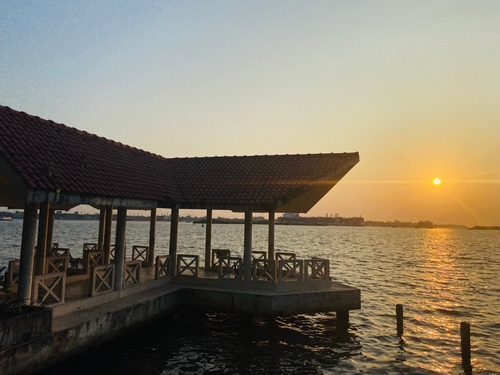
Kochi is India’s most trending international destination in 2026. This is not a marketing claim, it is the finding of travel search data across European...
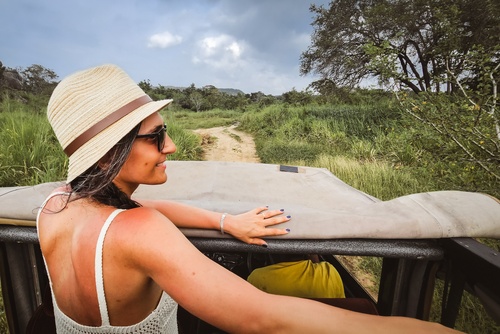
Thailand has been the default Asian destination for Western travellers for three decades. It is familiar, efficient, beautiful, and well-understood. The beaches are excellent. The...
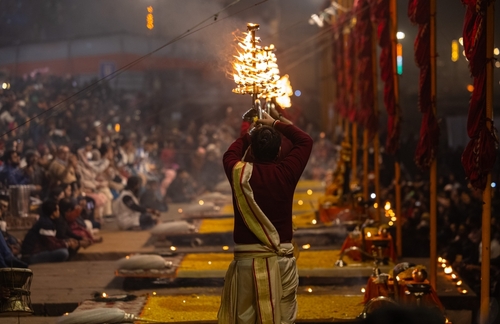
There is no city in the world like Varanasi. Not in Asia. Not anywhere. Varanasi is the oldest continuously inhabited city on earth, possibly 3,000...
You are one step closer to having the best journey of your lifetime! Talk to us, write to us all that you have envisioned for your India trip, and one of our travel experts will connect with you on priority. To help you explicitly we have WhatsApp and Email addresses!


