


Experiential Travel in India: Beyond Sightseeing for International Tourists (2026)
India’s most extraordinary travel experiences are not in its monuments. They are in a weaver’s workshop in Varanasi where a Banarasi silk sari takes three...


 18884507235


There is a particular kind of India trip that happens thousands of times every year. It is planned with genuine enthusiasm, booked with real excitement, and executed with considerable effort. And it consistently, reliably, produces the same result: a traveler who returns home having seen a great deal and experienced rather less, who can describe the Taj Mahal accurately and tell you the name of every fort they visited, but who cannot tell you what India actually felt like, because they were never in any single place long enough to feel it.
This is the India trip everyone gets wrong. And the mistakes that produce it are so consistent, so predictable, and so entirely avoidable that understanding them before you book changes everything that follows.
India is not a small country. It is a subcontinent that has chosen, for historical and political reasons, to carry a single passport. The distance from Delhi to Kochi is roughly the same as the distance from London to Cairo. The distance from Mumbai to Kolkata is comparable to crossing the continental United States from Chicago to Los Angeles.
The single most common itinerary mistake international travelers make is planning a two-week trip that includes Delhi, Agra, Jaipur, Varanasi, Mumbai, Goa, and Kerala, and then wondering why they spent half of it in transit, exhausted, eating airport food, and arriving at each destination too tired to actually be present in it.
India rewards depth over breadth in a way that very few destinations do. A week spent properly in Rajasthan, going beyond Jaipur to Udaipur, Jodhpur, and the forgotten step-wells of Shekhawati, will produce a richer, more coherent, more memorable experience than two weeks spent racing between seven cities across four states.
The rule of thumb that experienced India travelers use: pick one region, go deep, leave the rest for next time. There will be a next time. India guarantees it.
The Golden Triangle; Delhi, Agra, Jaipur, is the entry point for most first-time visitors to India, and it is a magnificent entry point. But it has produced a widespread misunderstanding among international travelers: the belief that having done the Golden Triangle, they have done India.
South India is not a variation on north India. It is, in almost every meaningful sense, landscape, language, cuisine, architecture, religious tradition, pace of life, a different country. The great Dravidian temple cities of Tamil Nadu, the tropical backwaters of Kerala, the coffee estates and wildlife reserves of Karnataka, the layered colonial heritage of Kochi, none of this has any equivalent in north India, and none of it is visible from the Taj Mahal.
The traveler who goes only to north India has seen one India. The traveler who combines north and south, even briefly, even imperfectly, begins to understand what India actually is: not a country with a dominant character and regional variations, but a subcontinent of genuine multiplicity, where every few hundred kilometers produces something entirely new.
If your first trip is two weeks and you cannot do both, do north India properly and plan south India as your second trip. But plan it. Do not make the mistake of thinking that what you saw in Rajasthan is what India is.
On a map of India, Agra and Varanasi look close. They are not. The drive takes eight to ten hours depending on traffic. The train, if you choose the right one and book in advance, takes around three hours, but Indian Railways requires understanding, advance booking, and the acceptance that delays happen.
Jaipur and Udaipur look close on a map. The drive is five to six hours on roads that are significantly better than they were a decade ago but still require a competent driver and a comfortable vehicle.
The traveller who books flights into Delhi and out of Mumbai with twelve days in between, planning to cover Agra, Jaipur, Udaipur, Jodhpur, Varanasi, and Mumbai in that time, will spend those twelve days largely in motion, arriving somewhere tired, seeing it briefly, leaving before it has had time to become real.
Check driving times, not map distances, before building your itinerary. Build in rest days that are not secretly travel days in disguise. Accept that covering less ground more slowly is not a compromise, it is, in India specifically, the correct way to travel.
The monuments of India are extraordinary. The Taj Mahal, Amber Fort, the cave temples of Ellora, the ghats of Varanasi, these are not overhyped. They are as remarkable as advertised, and they deserve every hour of attention given to them.
But a trip built exclusively around monuments misses what India is most extraordinary at, the texture of daily life, the food eaten in the right places, the conversation with the right person, the early morning at a living temple before the tourists arrive, the market at the hour when it belongs to the people who use it rather than the people who photograph it.
The best India itineraries are built around a mix of monuments and time; time in a neighbourhood, time at a market, time sitting at a ghat watching the river, time in a spice garden in Kerala with someone who can explain what you are smelling and why it matters. The monuments give the trip its structure. Time gives it its soul.
Every experienced traveller in India has a version of the same story. The day the itinerary fell apart, the train was delayed, the site was unexpectedly closed, the driver took a wrong turn, and what filled the gap was the best thing that happened on the trip.
The family who invited them to a wedding. The chai shop conversation that lasted two hours. The temple festival that was not in any guidebook, happening on the street outside the hotel, that they watched from a rooftop as the procession went by with drums and fire and flowers.
India is extraordinarily good at filling the gaps in a plan with something better than the plan. But only if the plan has gaps. A schedule packed from 7am to 10pm every day, moving between pre-booked time slots at consecutive monuments, leaves no room for India to be India.
Build space into your itinerary. Not dead time, purposeful openness. A free afternoon in Udaipur with nothing booked, just the instruction to walk until something interests you. A morning in Kochi with no agenda beyond breakfast and the waterfront. These are not wasted hours. They are the hours that produce the stories you will still be telling in ten years.
The India trip that works is not the one that covers the most ground. It is the one that goes deep enough into the right places, at the right pace, with enough flexibility to follow what the country offers rather than only what the itinerary demands.
It is also, frankly, the one that has been planned by people who know India well enough to have made all of the above mistakes on behalf of their guests, and learned, over years and thousands of itineraries, exactly how to avoid them.
At GeTS Holidays, every itinerary we build for our guests begins with the same question: not where do you want to go, but what do you want to feel? The answer to that question shapes everything that follows, the pace, the regions, the specific hotels and guides and experiences, into something that is genuinely yours rather than a standard circuit with your name on it.
The India trip everyone gets right starts with that conversation. It starts at [www.getsholidays.com].
Last updated July 2026. GeTS Holidays specialises in luxury inbound travel across India, Bhutan, Nepal, and Sri Lanka.
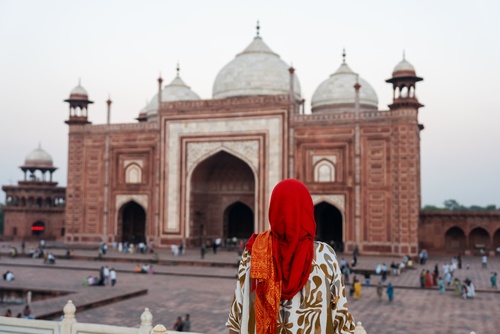
India’s most extraordinary travel experiences are not in its monuments. They are in a weaver’s workshop in Varanasi where a Banarasi silk sari takes three...

India has more distinct textile and craft traditions than any other country on earth. This is not an approximation. The combination of 28 states, dozens...
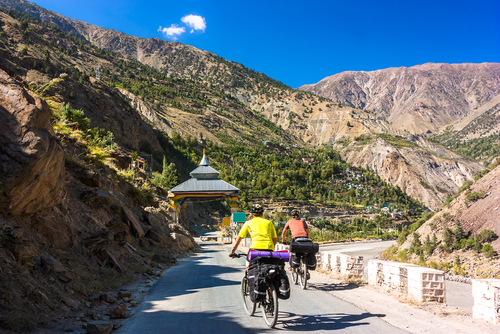
India bookings among adventure travellers surged 214% in the past year. Cycling is at the heart of that surge. International cyclists are discovering that India...
You are one step closer to having the best journey of your lifetime! Talk to us, write to us all that you have envisioned for your India trip, and one of our travel experts will connect with you on priority. To help you explicitly we have WhatsApp and Email addresses!


