


Experiential Travel in India: Beyond Sightseeing for International Tourists (2026)
India’s most extraordinary travel experiences are not in its monuments. They are in a weaver’s workshop in Varanasi where a Banarasi silk sari takes three...


 18884507235

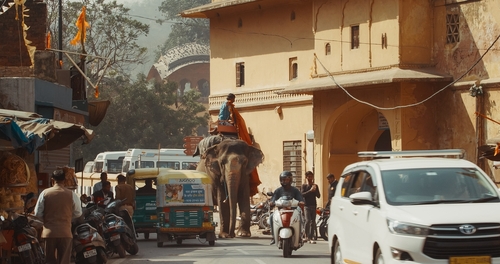
The flight has landed. The cabin doors have opened. And India, even before you have technically entered it, has already begun.
The smell hits first. Every airport in every country has its own specific smell, and Indira Gandhi International Airport in Delhi, or Chhatrapati Shivaji Maharaj International in Mumbai, or Kempegowda in Bengaluru, has one that is particular and immediate and unlike any airport you have landed in before. It is warm, it is slightly sweet, it is faintly smoky, and it is, whether you know it yet or not, the smell of a country that has been burning incense and cooking spices and carrying flowers to temples for three thousand years.
You are here. The question is what to do next.
This guide covers the first 48 hours in India in the kind of detail that most travel writing skips, not the monuments and the experiences, but the practical, sensory, sometimes disorienting reality of arriving in one of the world’s most extraordinary and most complex countries for the first time. Read it before you land. It will make everything that follows easier.
India’s e-Visa system is efficient and well-established for citizens of most countries. If you applied correctly before departure, and received your approval letter by email, immigration should be straightforward. Have the following immediately accessible as you approach the counter:
Your e-Visa approval letter, printed or clearly visible on your phone. Your passport, open to the photo page. Your return flight details. The address of your first night’s hotel. A rough idea of how long you are staying and what you plan to do, immigration officers occasionally ask.
Do not be alarmed by the queue. Indian airports process large volumes of international arrivals and the queues, while sometimes long, move. The officers are professional. Answer questions directly and simply.
If you are arriving at Delhi’s Terminal 3, the international terminal, the immigration hall is large, well-organised, and has dedicated counters for e-Visa holders. Follow the signs carefully and go to the correct queue from the beginning. Switching queues in Indian immigration halls costs significantly more time than waiting in the right one.
At the baggage carousel, do not accept help from anyone who approaches you unsolicited. This is not rude, it is the single most reliable way to avoid the airport’s most common tourist complication, in which apparently helpful strangers assist with luggage and then demand payment. Trolleys are available near the carousel. Use one yourself.
While waiting for your bags, use the time to mentally organise what you need to do before leaving the arrivals hall: collect cash, buy a SIM card, and find your transfer. Do these in this order, before exiting through the arrivals gate, and the first hour will be entirely manageable.
Collect Indian Rupees from the ATMs inside the arrivals hall before you exit. The exchange rates at airport ATMs are reasonable, significantly better than currency exchange counters in most cases, the machines accept international cards reliably, and having cash immediately eliminates the first category of problem India can present: the inability to pay for things in a country that, outside major hotels and upscale restaurants, still runs substantially on physical currency.
Withdraw more than you think you need. ₹15,000 to ₹20,000 ($180–240 USD) is a reasonable starting amount for a first day in a major city. ATMs exist throughout Indian cities, but having a comfortable buffer of cash from the moment you arrive removes a source of anxiety that has no reason to exist.
A note on UPI, India’s digital payment system, which you will see used everywhere from restaurants to street vendors. As a foreign national with a non-Indian bank account, you will not have access to UPI unless you have specifically set up an international UPI account before travel, which is possible but requires advance preparation. Assume cash for most transactions outside hotels and established restaurants.
India has excellent mobile coverage across its major cities and tourist circuits, and a local SIM card is among the most useful things you can acquire in the first hour. Airtel and Jio, India’s two largest networks, both have counters in the arrivals halls of major international airports and offer tourist SIM packages that provide data, calls, and SMS for periods of 28 to 84 days at extremely reasonable rates.
You will need your passport and a passport-sized photograph for SIM registration, Indian law requires biometric registration for all SIM cards. Some airport counters have cameras on-site. Activation typically takes 2 to 4 hours after purchase.
Why does this matter immediately? Because offline maps downloaded to your phone, Google Maps navigation, WhatsApp communication with your hotel or driver, and Uber or Ola app-based taxi booking all require data, and all of them make the first day in an Indian city significantly easier than navigating without them.
Exit through the official arrivals gate and look for your pre-arranged transfer. If GeTS Holidays has organised your arrival, your driver will be waiting beyond the barrier with a name board and will have been briefed on your flight details, your hotel, and your itinerary for the first day.
If you are arranging transport independently, use the prepaid taxi counter inside the arrivals hall, fixed rates, official receipts, no negotiation required. In Delhi, the airport Metro also connects Terminal 3 to the city centre efficiently and cheaply, though it requires navigating with luggage through busy stations.
Never accept a ride from someone who approaches you in the arrivals hall or outside the terminal doors. The offers,”taxi sir, very good price”, will be numerous and persistent. The prepaid counter eliminates every one of them.
The drive from any major Indian airport to the city centre is, for most first-time visitors, the first genuinely disorienting experience of the trip. Not in a frightening way, but in a way that requires recalibrating several assumptions simultaneously.
Indian traffic does not follow the spatial logic of Western road systems. Lanes are understood as suggestions rather than fixed channels. Horns are used constantly and communicatively, not in anger, as they are in most Western cities, but as a constant low-level conversation between vehicles about position, intention, and right of way. A horn in Indian traffic means “I am here” or “I am passing” or “please be aware of me.” It means these things hundreds of times per journey. This is not aggression. It is a system.
The density of the road, the motorcycles threading between cars, the auto-rickshaws appearing from unexpected angles, the occasional cow standing with complete equanimity in a traffic island, will seem chaotic from inside the vehicle. It is not chaos. It is a different kind of order, one that becomes legible with time and that your driver has been navigating fluently for years. Trust the driver. Look out of the window. Let the city begin to arrive at you rather than trying to organise it immediately into something comprehensible.
Delhi from the airport to the city centre passes through a modern expressway flanked by construction and eventually into the density of south Delhi,wide roads lined with trees, residential colonies, markets, temples, and the sudden appearance of historical monuments between apartment blocks with a casualness that never entirely stops being surprising. A 15th-century tomb between a petrol station and a shopping mall. A medieval step-well at the end of a residential street.
Mumbai from the international terminal to the city centre crosses a long causeway over the bay, and the approach to the city, the water on both sides, the skyline emerging, the density building, is one of the finest urban arrivals in Asia.
Kochi from the airport to Fort Kochi passes through Kerala’s particular version of urban India, greener, quieter, the roads lined with coconut palms and churches and temples and mosques in the specific proximity that Kerala has maintained for centuries, the humidity a physical presence after air-conditioned travel.
Each city announces itself differently. Let the announcement happen without trying to immediately assess or categorise what you are seeing.
This is the advice that every experienced India traveller gives and almost every first-time visitor ignores.
You have just flown, possibly from the other side of the planet. You are in a new timezone, a new climate, a new sensory environment of considerable intensity. Your body is processing altitude change, humidity or heat depending on the season, the sounds and smells and visual information of a new city, and the accumulated physical stress of long-haul travel. The instinct, entirely understandable, even admirable, is to go out immediately, to begin, to not waste a single hour of your precious time in India.
Resist it.
Check into your hotel. Have a shower. Change into something clean and comfortable. Eat something light, room service if you are too tired to go out, or a quiet restaurant within easy walking distance of your hotel if you have the energy. Do not attempt a market, a monument, or a long evening of exploration on your first night. Not because India is dangerous in the evening, it is not, in any of the major tourist cities, but because the experience of being overwhelmed on your first night, of having too much sensory information with too little capacity to process it, creates an anxiety about India that is entirely avoidable and that colours the days that follow.
Walk for an hour if you feel like it, in the immediate area of your hotel. Observe rather than engage. Let the sounds and the smells and the particular quality of the evening light settle around you without immediately trying to convert them into an experience.
Go to bed earlier than you think you need to. Tomorrow will require you to be fully present, and presence requires rest.
The first full day in India is where the trip actually begins, and the single most common mistake is attempting to cover too much of it.
Choose one place. Give it a full morning. Have lunch somewhere nearby that is recommended rather than convenient. Rest in the afternoon, the heat in most Indian cities, for most of the year, makes early afternoon sightseeing genuinely uncomfortable and occasionally counterproductive. Go out again in the late afternoon when the light is lower and the temperature has dropped. Eat dinner somewhere you have researched rather than somewhere you have simply walked into.
This pace feels slow when you are planning an itinerary at home. In practice it feels rich, unhurried, and complete.
Go to Humayun’s Tomb in the morning, before 9am, when the light is low and the gardens are quiet and the tour groups have not yet arrived. The tomb, built in 1570, the direct architectural ancestor of the Taj Mahal, sits in Mughal gardens of extraordinary serenity. Sit in the garden for longer than the guidebook suggests. Let the scale and the silence of the place establish what India’s historical depth actually feels like, in your body rather than just in your knowledge, before the Taj Mahal and the Red Fort and the forts of Rajasthan ask you to feel it again and again.
In the evening, walk through Nizamuddin Basti, the ancient neighbourhood surrounding the dargah of the Sufi saint Hazrat Nizamuddin Auliya, where on Thursday evenings qawwali singers perform in the shrine’s courtyard in a tradition unbroken since the 14th century. This is not a tourist performance. It is a weekly devotional gathering that happens to be accessible to respectful visitors who arrive quietly and observe the protocols of the place.
Walk the Colaba Causeway in the early morning when the street vendors are setting up and the city is moving at its most human pace. Have breakfast at Cafe Mondegar or Britannia & Co, the latter a Parsi restaurant that has been serving the same dishes since 1923 and that represents a culinary tradition of extraordinary rarity. Spend two hours at the Chhatrapati Shivaji Maharaj Vastu Sangrahalaya; the city museum in a magnificent Indo-Saracenic building, before the heat builds. In the evening, take the ferry to Elephanta Island and its rock-cut Shiva cave temple, returning as the sun sets over the harbour and the city skyline turns gold.
Walk the Fort Kochi waterfront before 7am, watch the Chinese fishing nets being operated in the early morning light, and eat breakfast at a cafe in the old Dutch quarter. Spend the morning in the Jewish Synagogue and the surrounding Jew Town spice market, where the smell of cardamom and pepper and cinnamon hangs in the air with a density that makes the history of the spice trade suddenly and viscerally real. In the afternoon, visit the Kerala Kathakali Centre for an evening performance of the classical dance-drama form that has been performed on this coast for four centuries.
Go to the Amber Fort at 7am, before the heat builds and the crowds arrive, and walk the ramparts rather than taking the elephant ride. The view from the top of the fort, the lake below, the Aravalli hills extending in every direction, the city visible in the distance, is one of the finest in Rajasthan and requires no more than the admission ticket and the willingness to climb. In the evening, walk through the lanes of the old city, the Pink City, as the shops are lighting up and the street food vendors are beginning their evening service. Eat at a rooftop restaurant overlooking the city walls as the sky goes dark and the fort is illuminated above.
Indian food, eaten in India, is one of the most extraordinary culinary experiences on earth. It is also the aspect of the trip that most first-time visitors approach with the most anxiety, largely based on concerns about stomach upset that are reasonable but frequently overstated.
The practical rules for eating well and safely in the first 48 hours:
Drink bottled or filtered water only. This is non-negotiable. Carry a bottle at all times. At restaurants, specify bottled water explicitly. At your hotel, use the bottled water provided. This single rule eliminates the majority of stomach problems that international visitors experience in India.
Start with cooked food. Raw salads, unpeeled fruit, and ice (which is often made from tap water) carry more risk than hot, freshly cooked food in the first few days while your digestive system adjusts. This is not a permanent restriction, it is a first-48-hours caution.
Eat where the locals eat. The restaurant that is full of Indian diners at lunchtime is almost always safer than the empty tourist-facing restaurant nearby, because high turnover means fresh ingredients and freshly cooked food rather than dishes sitting in serving containers through a slow afternoon.
Try the regional food immediately. One of India’s great pleasures is the specificity of its regional cuisines, the fact that what you eat in Delhi tastes nothing like what you eat in Mumbai or Kochi or Jaipur. Do not default to the international hotel menu on your first night out of anxiety. Ask your hotel or your GeTS Holidays guide what is best eaten in this city, in this neighbourhood, at this time of year. The answer will be more interesting than anything the hotel restaurant is serving.
Carry antidiarrhoeal medication but do not pre-emptively take it. Most international visitors to India experience mild digestive adjustment rather than serious illness, and this typically resolves within 48 hours. Having oral rehydration salts and a course of Loperamide in your bag is sensible preparation. Using them before you need them is not.
The thing about India that most first-time visitors are genuinely unprepared for is not the heat, or the crowds, or the traffic. It is the density of simultaneous sensory information.
In most Western cities, the sensory environment is managed. Noise is moderated by regulation. Smells are largely neutral or invisible. Visual information is organised by planning systems that separate commercial from residential from industrial. The environment is, at its best, coherent.
India is not coherent in this way. In the lanes of Old Delhi, or the ghats of Varanasi, or the markets of Jaipur, or the streets of Mumbai at rush hour, everything is happening simultaneously and at full volume. The smell of jasmine from a flower seller, the smell of diesel from the auto-rickshaw three feet away, the smell of frying bread from the stall on the corner. The sound of a temple bell, a car horn, a vendor calling his wares, a child laughing, a television at full volume in a first-floor apartment. The visual information of colour, the saris, the painted walls, the garlands of marigold, the flags, the painted trucks, arriving in combinations that have no Western aesthetic equivalent.
This is not overwhelming in a bad way. It is overwhelming in the way that any genuinely new experience is overwhelming, the way that the first time you heard a piece of music that became important to you was overwhelming, before you had a category for it.
Give it time. Within 24 hours, the information begins to sort itself. Within 48 hours, you begin to read it. Within a week, you wonder how you ever found it too much.
By the morning of the second day, something will have shifted. The city will feel less foreign and more particular. The sounds will have begun to mean things rather than simply occurring. The anxiety of arrival, where am I, how does this work, what do I do next, will have settled into something more like curiosity.
This is the moment to go further.
Take an auto-rickshaw rather than a hotel car. Not because it is cheaper, though it is, but because it puts you inside the city rather than insulated from it, at the pace of the traffic rather than above it, with the sounds and the air of the place rather than behind climate-controlled glass. Negotiate the fare before you get in, agree on the destination clearly, and enjoy the twenty minutes of being genuinely inside an Indian city rather than passing through it.
Eat at a place you have found yourself rather than been directed to. Walk into a neighbourhood that is not on your itinerary and see what is there. Accept the cup of chai that someone offers you, if it feels right. Ask a question, about the building you are standing in front of, or the festival decorations you have noticed, or the fruit you do not recognise in the market. Indian people, as a general rule, are pleased to be asked about their city, their country, their traditions. The conversation that follows will almost always be worth more than whatever you had planned to do next.
By the end of the second day, India will have begun to feel less like a place you are visiting and more like a place you are in. That shift, from tourist to traveller, from observer to participant, is what the first 48 hours is for.
Everything that comes after it will be richer for having allowed it to happen.
Almost every first-time visitor to India arrives with some degree of anxiety. This is rational, India is complex, unfamiliar, and large enough that no amount of research entirely prepares you for the reality of it.
What experienced India travellers know, and what first-timers discover within 48 hours of arrival, is that the anxiety dissolves faster than expected. Not because India turns out to be simpler than anticipated, it does not, but because the warmth and generosity of the people here make the complexity navigable in a way that no guidebook can fully convey. You will be helped, repeatedly and without being asked, by people who want nothing from you except for you to have a good experience in their country.
That experience is waiting. The first 48 hours is simply the door.
Arriving in India for the first time and want the reassurance of knowing that every detail, airport transfers, first night hotels, day one itineraries, and everything that follows, has been handled by people who know this country deeply? GeTS Holidays specialises in luxury inbound travel across India, Bhutan, Nepal, and Sri Lanka. The conversation starts at [www.getsholidays.com].
Last updated July 2026.
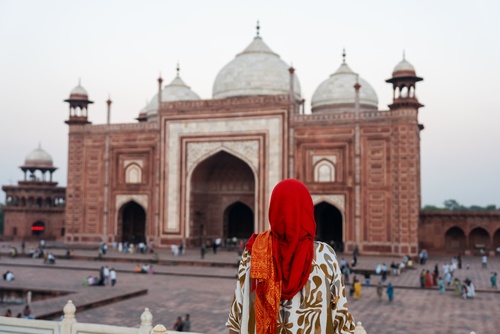
India’s most extraordinary travel experiences are not in its monuments. They are in a weaver’s workshop in Varanasi where a Banarasi silk sari takes three...

India has more distinct textile and craft traditions than any other country on earth. This is not an approximation. The combination of 28 states, dozens...
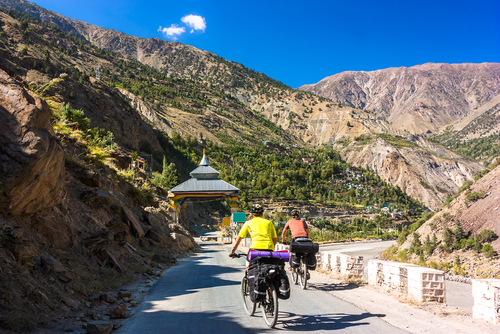
India bookings among adventure travellers surged 214% in the past year. Cycling is at the heart of that surge. International cyclists are discovering that India...
You are one step closer to having the best journey of your lifetime! Talk to us, write to us all that you have envisioned for your India trip, and one of our travel experts will connect with you on priority. To help you explicitly we have WhatsApp and Email addresses!


