


Kochi Travel Guide for International Tourists: Kerala’s Most Extraordinary City (2026)
Kochi is India’s most trending international destination in 2026. This is not a marketing claim, it is the finding of travel search data across European...


 18884507235

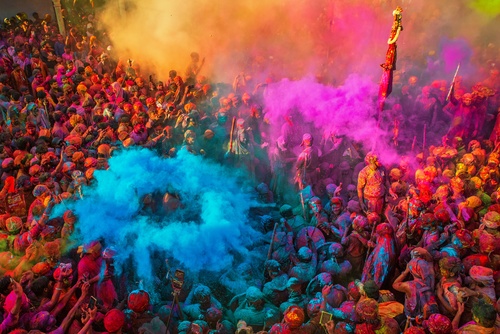
India has more festivals than any other country on earth. This is not an approximation or a marketing claim, it is a demographic and religious reality. With a population of 1.4 billion people practising Hinduism, Islam, Sikhism, Buddhism, Jainism, Christianity, Zoroastrianism, and Judaism, and with each tradition maintaining its own festival calendar, and with each of those traditions varying by region and community in ways that produce further festivals within festivals, the subcontinent generates a cycle of celebration that runs without interruption throughout the year.
For the international traveller, this creates one of the most extraordinary opportunities available anywhere in travel: the chance to time a trip to coincide with an event so visually extraordinary, so culturally specific, and so completely unlike anything available in the traveller’s own country that it becomes the defining experience of the journey, the thing they talk about for years afterward, the thing that makes them return.
This guide covers India’s most significant and most rewarding festivals for international visitors, what they are, what they look like, when they happen, and where to be to experience them at their fullest.
Indian festivals follow three different calendar systems simultaneously, which is why the dates change every year relative to the Gregorian calendar:
The Hindu lunar calendar — most Hindu festivals fall on specific lunar dates (full moon, new moon, or specific tithis) that shift by 10 to 11 days relative to the solar year. This is why Diwali falls in October some years and November in others.
The Islamic lunar calendar — Muslim festivals including Eid ul-Fitr and Eid ul-Adha follow the Islamic lunar calendar, which is shorter than the solar year, meaning these festivals move earlier by approximately 11 days each year.
Fixed solar dates — a few festivals, particularly in south India, follow the solar calendar and fall on the same date every year.
The practical implication: always check the specific dates of festivals you want to attend for the year of your travel. The dates in this guide are approximate windows based on typical historical timing. For 2026 specific dates, consult the Ministry of Tourism’s official festival calendar or confirm with your operator.
Holi is the most internationally recognised Indian festival and the one most frequently on international travellers’ bucket lists, and the reality of it, when experienced in the right place at the right intensity, completely justifies the anticipation.
Holi marks the end of winter and the arrival of spring, celebrated on the full moon day of the Hindu month of Phalgun, typically falling in late February or early March. The primary celebration involves the throwing of coloured powder (gulal) and coloured water, originally made from natural pigments derived from flowers and minerals, now primarily synthetic, in a communal expression of joy that reduces every participant, regardless of age, class, gender, or social position, to the same brightly coloured, laughing state.
The evening before Holi, Holika Dahan, involves the lighting of bonfires in communities across north India, representing the burning of the demoness Holika and the victory of good over evil in the mythological narrative that underlies the festival. Gathering around the Holika Dahan fire in a residential neighbourhood in Varanasi or Mathura, watching the community light the fire and circumambulate it with offerings, is a profoundly communal experience that the colour-throwing of the following morning does not quite replicate.
Mathura and Vrindavan (Uttar Pradesh), the heartland of Krishna devotion and the birthplace of Holi’s most elaborate traditions, offer the most ancient and most ritually complete Holi celebrations in India. The Holi of Vrindavan begins a week before the main festival day with the Lathmar Holi of Barsana and Nandgaon, a tradition in which women ritually beat men with wooden staves (lathis) while men attempt to shield themselves, re-enacting a mythological episode from Krishna’s life, and builds through increasingly elaborate flower, colour, and water celebrations over the following days.
Varanasi, where Holi is celebrated with the particular intensity that this city brings to every celebration, offers the combination of colour throwing on the ghats, the burning ghats illuminated by their perpetual fires in the background, and the city’s ancient devotional energy concentrated in a festival of extraordinary vitality.
Jaipur, where the royal family’s participation in Holi creates a celebration of considerable spectacle, with elephants decorated for the occasion and the old city’s pink walls providing a backdrop for the colour play, is the most photogenic Holi location for international visitors who want the imagery as well as the experience.
Practical notes: Wear old clothes that you do not mind destroying. Protect camera equipment with waterproof covers. Apply oil to your hair and exposed skin before going out, it makes the colour easier to remove afterward. Synthetic colours can cause skin irritation, seek out celebrations that use natural gulal where possible. Be aware that Holi involves close physical contact and boisterous celebration, stay with your group, choose your celebration location carefully, and follow the lead of experienced local guides.
Diwali, the Festival of Lights, is India’s most widely celebrated festival and, for many international travellers, its most visually extraordinary. Celebrated on the new moon day of the Hindu month of Kartik, it marks the return of Lord Rama to Ayodhya after 14 years of exile, celebrated by the lighting of oil lamps (diyas) to guide his way home.
What this produces, across India, on the night of Diwali and the four surrounding days, is one of the most breathtaking visual spectacles in the world: every house, every shop, every temple, every street illuminated by thousands of small oil lamps and strings of electric lights, the darkness of the new moon night transformed into a landscape of light that extends as far as the eye can see in every direction.
Varanasi offers the finest Diwali experience in India and one of the finest in the world. The ghats of the Ganga, lined with oil lamps from the waterline to the top of the steps, reflected in the dark water of the river, with the sound of bells and chanting and the distant crack of fireworks, produce an image that has no equivalent anywhere in world festivals. The Dev Deepawali, the Festival of Lights of the Gods, celebrated 15 days after Diwali on the full moon of Kartik, is Varanasi’s own elaboration of the celebration, when over a million oil lamps are lit on the 84 ghats simultaneously and the city produces a spectacle of devotional light that is simply without parallel.
Jaipur, where the old city’s architecture provides a backdrop of particular grandeur for the illumination, is the finest Rajasthan location for Diwali. The City Palace, the Hawa Mahal, and the old city walls are all lit, and the fireworks over the Pink City on Diwali night are visible from miles around.
Amritsar’s Golden Temple, where Diwali marks the day of Guru Hargobind’s release from Mughal imprisonment, celebrated with a spectacular fireworks display reflected in the sacred pool, is the Sikh celebration of Bandi Chhor Divas, which coincides with Diwali. The Golden Temple illuminated for this celebration, the gold of the building multiplied by fireworks and water reflection simultaneously, is one of the most extraordinary visual experiences in India.
Practical notes: Book accommodation for Diwali 3–6 months in advance. Prices are high and availability is extremely limited. Travel on the day of Diwali itself is inadvisable, roads and trains are packed. Arrive at your destination at least 2 days before and plan to stay 2 days after.
The Pushkar Camel Fair, held annually in the town of Pushkar in Rajasthan, on the banks of the sacred Pushkar Lake, in the days leading up to and immediately following the Kartik Purnima full moon, is one of the oldest, largest, and most visually extraordinary livestock fairs in the world, and one of the most significant cultural events in Rajasthan.
Over 50,000 camels, horses, and cattle are brought to Pushkar by their owners, nomadic herders, farmers, traders, and breeders from across Rajasthan and Gujarat, for five days of trading, racing, and competition. The landscape of the desert around Pushkar fills with tents and campfires and the noise and smell of tens of thousands of animals, and the fair generates a visual intensity, the decorated camels, the turbaned herders, the women in mirrored embroidery, the dust catching the late afternoon light, that is unlike anything else in India.
The Pushkar fair is simultaneously a livestock market, a Hindu pilgrimage (Pushkar Lake is one of the holiest lakes in India, and bathing in it on Kartik Purnima is considered particularly auspicious), and a folk festival. The evenings at Pushkar, the campfire performances of traditional Rajasthani music, the competitions of camel beauty and decoration, the religious ceremonies at the lake at dawn and dusk, are as rewarding as the daytime fair.
Practical notes: The Pushkar fair typically falls in late October or early November. Accommodation in Pushkar is extremely limited, most visitors stay in tent camps set up specifically for the fair, which have developed into a range of quality from basic to surprisingly comfortable. Book months in advance. The fair attracts large numbers of international visitors and has done so for decades, the combination of the fair’s genuine cultural significance and its international visibility makes it one of the few Indian festivals where tourist infrastructure is genuinely developed.
The Hemis Festival, held annually at Hemis Monastery in Ladakh, the largest and wealthiest monastery in the region, on the 10th day of the Tibetan Buddhist lunar month of Tse-Chu — is the most significant Buddhist festival in Ladakh and one of the most visually extraordinary in the Himalayan world.
Over two days, monks perform the Cham, elaborately choreographed sacred masked dances in silk brocade costumes and carved wooden masks representing protector deities, demons, and aspects of enlightened consciousness. The dances are performed in the monastery’s courtyard to the accompaniment of long ceremonial trumpets, cymbals, and drums, with the surrounding mountains of Ladakh as a backdrop that no festival venue in the world can rival.
The festival celebrates the birth of Guru Padmasambhava, the Indian master who brought Buddhism to Tibet in the 8th century, and it carries a religious significance for the Ladakhi Buddhist community that is entirely independent of its tourism appeal. The presence of thousands of local Ladakhis in traditional dress, the women in their elaborate perak (turquoise-encrusted headdresses) and goncha (traditional robes), the men in their gonchas and topi hats, alongside the monks and the international visitors creates a social tapestry of extraordinary richness.
Practical notes: The Hemis festival typically falls in late June or early July. It coincides with peak Ladakh tourist season, book accommodation in Leh months in advance. The festival is free to attend, though a donation to the monastery is appropriate. Arrive early on both days for a position in the inner courtyard near the dance floor.
Onam is the most important festival in Kerala, a ten-day harvest festival celebrated in the Malayalam month of Chingam (August–September) that is simultaneously a cultural, agricultural, and mythological celebration. It marks the annual visit of the mythological king Mahabali to his former kingdom, a visit so joyful that Kerala transforms itself in his honour.
Pookalam – elaborate flower carpets made from dozens of varieties of fresh flowers, arranged in concentric circles of colour and pattern on the ground before each house, are created over the ten days of Onam, each day a new layer added until the final carpet on Thiruonam day is of considerable size and complexity.
The Vallam Kali (snake boat races), Kerala’s most spectacular sporting event, held in the backwaters of Alappuzha (Alleppey) and Punnamada Lake during Onam season, involves teams of over 100 rowers in ornately decorated 30-metre snake boats, racing through the backwaters to the rhythm of traditional boat songs (vanchipattu) in a spectacle of physical coordination and communal energy that draws tens of thousands of spectators. The Nehru Trophy Boat Race, the most famous of these races, held on the second Saturday of August, is one of the finest sporting events in India.
The Onam Sadya, the 26-dish vegetarian feast served on a banana leaf, the finest expression of Kerala’s culinary tradition, is served on Thiruonam day at homes, restaurants, and public celebrations across the state.
Practical notes: Onam falls in August–September, during Kerala’s monsoon season. The rains are typically present but intermittent. The boat races draw large crowds, book grandstand tickets in advance for the Nehru Trophy race. The Sadya is available at most Kerala restaurants during the festival period, seek out establishments that take it seriously rather than settling for a reduced version.
The Hornbill Festival, held annually in the first week of December at the Kisama Heritage Village near Kohima, Nagaland, is India’s most extraordinary tribal cultural festival and one of the most visually spectacular events in Asia.
Ten days of performances, competitions, craft demonstrations, and cultural exchanges bring together all 16 Naga tribes of Nagaland in a celebration of shared cultural identity and distinct tribal individuality. The warriors’ headdresses of hornbill feathers (the festival is named for the hornbill, a sacred bird in Naga tradition), the body tattoos, the ceremonial weapons, the morungs (traditional communal houses) reconstructed at the festival site, the visual intensity is sustained across ten days without repeating itself.
The music of Nagaland, which has an extraordinary tradition of both ancient tribal music and contemporary rock (Nagaland has produced a disproportionate number of India’s finest rock musicians), is performed throughout the festival, creating a programme that moves from ancient war dances to contemporary rock concerts within the same day.
Practical notes: The Hornbill Festival runs from December 1–10 annually. Foreign nationals require an Inner Line Permit (ILP) to enter Nagaland, obtainable through a registered tour operator or at the Nagaland House in Delhi, Kolkata, or Guwahati. Book accommodation in Kohima 3-4 months in advance. The festival has developed a reasonable international visitor infrastructure over the past decade, including guided tours, traditional meals at morungs, and accommodation in heritage village tents.
The Kumbh Mela, held in rotation at four sacred river locations across north India (Prayagraj, Haridwar, Nashik, and Ujjain) on a 12-year cycle, with the Ardh (half) Kumbh at Prayagraj every six years, is the largest peaceful human gathering on earth. At the Maha Kumbh, the full Kumbh at Prayagraj, held every 12 years, estimates of total attendance over the 55-day festival period exceed 400 million people.
For international travellers, the Kumbh Mela is simultaneously the most overwhelming and the most extraordinary festival experience in India. The scale is beyond what the human visual system is designed to process, millions of pilgrims moving toward the river for the Shahi Snan (royal bath) on the most auspicious dates, the camps of the akharas (religious orders) spreading for kilometres in every direction, the sadhus and naga babas and ordinary devotees from every corner of India gathered at a river confluence that Hinduism considers the most sacred point on earth.
Practical notes: The next Maha Kumbh Mela at Prayagraj will be held in 2037. The Ardh Kumbh was held in 2025. The Haridwar Kumbh, the Nashik Kumbh, and the Ujjain Kumbh each operate on their own 12-year cycles, and consult current schedules for upcoming dates. Attending the Kumbh requires specialist guidance, the logistics of accommodation, the timing of the Shahi Snan dates, and the safety considerations of an event of this scale are not navigable independently on a first visit.
For the most popular festival experiences, Diwali in Varanasi, Holi in Mathura, the Pushkar Camel Fair, accommodation availability disappears months before the festival date. The finest hotels and most characterful guesthouses go first. Plan a minimum of 3–6 months ahead for any major festival, and 6–12 months for the most sought-after.
India’s festivals are religious and cultural events that happen to be visually extraordinary, they are not performances staged for the benefit of visitors. The traveller who arrives at Hemis or Onam or Diwali with genuine curiosity and respect for what is being celebrated will have a fundamentally different, and fundamentally better experience than one who is there purely for the photographs.
For almost every major festival, the location makes as much difference as the timing. Holi in Mumbai is a pale shadow of Holi in Mathura. Diwali in Delhi is commercially elaborate but spiritually thin compared to Diwali in Varanasi. The right festival in the right place produces an experience of an entirely different order from the same festival experienced in a more convenient but less authentic location.
Transport during major festival periods is heavily overloaded. Roads around festival locations are congested. Normal services operate on festival schedules that bear little relationship to their regular timetables. Build this into your planning; arrive the day before, leave the day after, and treat the festival itself as the itinerary rather than as an addition to one.
Timing a trip to India around its festivals requires specialist knowledge, which dates are fixed, which move, where the experience is most authentic, how to secure the right accommodation months in advance, and how to be in the right place at the right time without the festival’s logistical complexity overwhelming the experience itself. At GeTS Holidays, festival-timed journeys across India, Bhutan, Nepal, and Sri Lanka are among our most requested itineraries, built around what each festival actually requires to experience properly. The conversation starts at [www.getsholidays.com].
Last updated July 2026. Festival dates follow lunar and solar calendars and shift annually relative to the Gregorian calendar. Always confirm specific dates for your year of travel before booking.
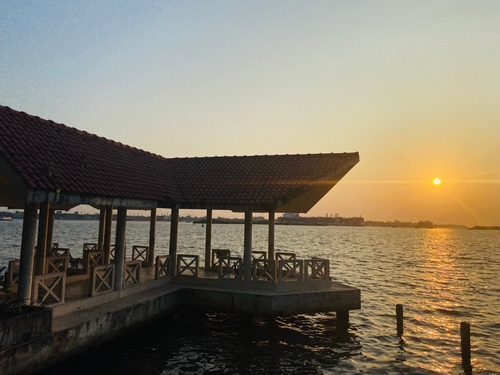
Kochi is India’s most trending international destination in 2026. This is not a marketing claim, it is the finding of travel search data across European...
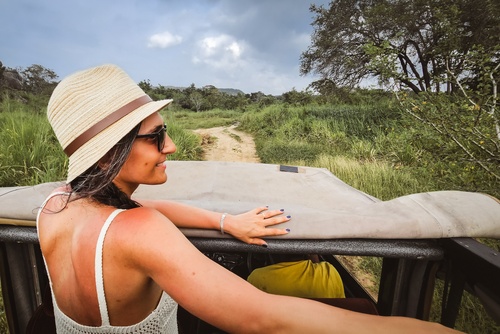
Thailand has been the default Asian destination for Western travellers for three decades. It is familiar, efficient, beautiful, and well-understood. The beaches are excellent. The...
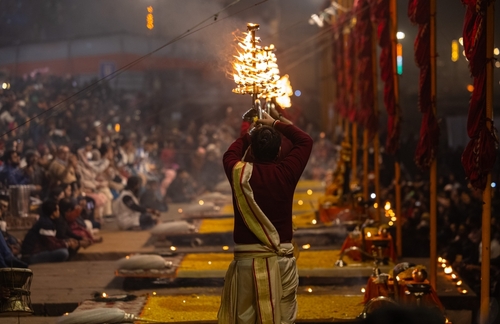
There is no city in the world like Varanasi. Not in Asia. Not anywhere. Varanasi is the oldest continuously inhabited city on earth, possibly 3,000...
You are one step closer to having the best journey of your lifetime! Talk to us, write to us all that you have envisioned for your India trip, and one of our travel experts will connect with you on priority. To help you explicitly we have WhatsApp and Email addresses!


