October 23, 2026
The first thing most international visitors notice about India is the color.
Not just the quantity of it, though the quantity is overwhelming, but the specific, saturated, unapologetic intensity of it. The saffron robes of the sadhus. The deep indigo of Jodhpur’s painted houses. The marigold garlands heaped on temple steps. The vermillion sindoor in the parting of a married woman’s hair. The white of the mourning procession moving through a street where, three doors down, a wedding is happening in a blaze of red and gold.
What most international visitors do not realize is that this color is not decorative. It is a language. Every shade in India’s visual vocabulary carries specific meaning, religious, social, seasonal, and cultural meanings that have been consistent across centuries and that, once understood, transform every visual experience in the country from beautiful to comprehensible.
This guide decodes that language.
Saffron: The Color of Renunciation and the Sacred
Saffron, the deep orange-gold of turmeric, of marigolds, of the robes of Hindu monks and sadhus, is the most sacred color in Hinduism. It represents fire, purity, and the renunciation of material existence.
The saffron robe of a sadhu or a swami is not a uniform. It is a statement of having abandoned the householder’s life, family, property, social position, in pursuit of spiritual liberation. The color announces to everyone who sees it that this person has left the world of ordinary desire behind.
Saffron appears on the Indian national flag, the top stripe, representing courage and sacrifice. It appears on temple flags, on the tilak (forehead mark) applied during worship, on the flowers offered to deities, and in the food coloring of the ritual sweets distributed at festivals.
When you see saffron in India, you are seeing the color of the sacred made visible in the world.
White: Mourning, Purity, and the Widowed
In the West, white is the color of weddings and beginnings. In India, white is the color of mourning and endings.
White is worn at cremations and funerals. Widows in traditional Hindu communities wore white as a sign of their status, a practice that has changed significantly in urban India but persists in more traditional communities. The white shroud in which a body is wrapped for cremation gives the color its association with death and transition.
White also represents purity in a different context, the white marble of the Taj Mahal is not coincidentally the color of mourning. Shah Jahan built his wife’s mausoleum in the color that, in the Mughal tradition blending Persian and Hindu influences, expressed both purity and grief simultaneously.
The specific poignancy of the Taj Mahal, its whiteness against the sky, its reflection in the dark water, carries this cultural meaning whether the viewer knows it or not.
Red: Marriage, Fertility, and Auspiciousness
Red is the color of marriage in India. The red sindoor, vermillion powder, applied in the parting of a married Hindu woman’s hair is the most visible daily marker of marital status in India. The red bangles worn by newly married women in north India. The red bridal lehenga that is the traditional wedding garment across most of the country.
Red also represents the goddess Durga, fierce, protective, triumphant. The red powder thrown during Holi. The red kumkum applied to the foreheads of devotees at temples. The red of the bindi worn by women, which originally indicated marital status before becoming a fashion accessory.
Red is auspicious. At Indian weddings, at temple ceremonies, at any celebration of life and continuity, red appears as the color of good fortune, fertility, and divine grace.
The specific visual power of an Indian wedding, the red of the bride’s clothing, the marigolds, the fire of the wedding ritual is not an aesthetic coincidence. Every shade in the ceremony carries its specific cultural meaning, layered across centuries of tradition.
Blue: The Divine, the Protective, and the Practical
Blue in India carries multiple meanings that operate simultaneously.
Krishna’s blue – the deep blue skin of the god Krishna in Hindu iconography, represents the infinite, the transcendent, the divine in its most accessible form. Krishna is blue because blue is the color of the sky and the ocean, of everything that extends beyond the horizon and cannot be contained. Devotees who paint images of Krishna blue are not choosing an arbitrary color. They are encoding his divine nature in pigment.
The Blue City of Jodhpur – the indigo-painted houses of the old town, carries a different and more practical meaning. The blue was applied by Brahmin households to identify their homes as belonging to the highest caste. It also served as a natural termite repellent, copper sulphate mixed into the limewash creates a chemical barrier against insects. And it reflects heat, keeping interiors cooler in the Thar Desert summer. The Blue City of Jodhpur is simultaneously a caste marker, a pest control system, and a passive cooling technology, a convergence of function and tradition that is entirely characteristic of how Indian visual culture developed.
Blue in Rajasthani textiles – the indigo-dyed fabrics of Rajasthan, produced using natural indigo extracted from the Indigofera plant, carry the specific prestige of a dye that was historically among the most valuable traded goods in the ancient world. The same indigo that was shipped from India to Rome, to Persia, and eventually to Europe is still produced in small quantities by traditional dyers in Rajasthan.
Green: Islam, Fertility, and the Monsoon
Green in India carries its primary association with Islam, the green of mosque domes, the green banners at dargahs, the green clothing worn during Islamic festivals. This association comes from Islam’s own symbolism of green as the color of paradise and of the Prophet’s cloak.
Green also appears in Hindu tradition as the color of the goddess Teej, celebrated at the arrival of the monsoon, and in the green glass bangles worn by women during the festival to celebrate the rains and new growth. The specific shade of green associated with Teej is the green of new vegetation, the monsoon’s arrival after months of dry heat.
The seasonal dimension of green in India is worth understanding. The transformation of the Indian landscape from the dusty ochres and browns of the dry season to the intense greens of the post-monsoon is so dramatic that it feels like a different country. The cultural celebrations that mark the monsoon’s arrival, Teej, the snake worship of Nag Panchami, the harvest festivals, are all coded in green for this reason.
Yellow and Gold: Auspiciousness, Knowledge, and Spring
Yellow, specifically turmeric yellow, is one of the most auspicious colors in Hinduism. Turmeric is applied to the body before weddings as a purifying and beautifying ritual (the haldi ceremony). Yellow is the color of Saraswati, the goddess of knowledge and the arts, and of Vishnu in his Peetambara (yellow-robed) form.
The spring festival of Basant Panchami, celebrating the arrival of spring and the goddess Saraswati, is marked by the wearing of yellow throughout north India. Mustard fields in Punjab turning yellow in January are considered an expression of the same seasonal energy that the festival celebrates.
Gold, the most prestigious shade of yellow, appears throughout Indian ceremonial culture as the color of divinity, royalty, and auspiciousness. The gold leaf of temple domes, the gold zari thread of Banarasi saris, the gold jewellery that constitutes a family’s wealth stored as wearable form, gold in India is never merely decorative. It is a statement of permanence, prosperity, and divine favor.
The Painted Cities: India’s Color-Coded Urban Landscapes
India’s most visually extraordinary cities are those that have been color-coded as a matter of civic identity or historical circumstance.
Jaipur – The Pink City: The old city of Jaipur was painted terracotta pink in 1876 for the visit of the Prince of Wales. Pink in Rajput tradition is the color of hospitality and welcome. The color has been maintained by municipal law ever since, every building in the old city is legally required to be painted the same shade. The specific Jaipur pink has an official color code maintained by the municipal corporation.
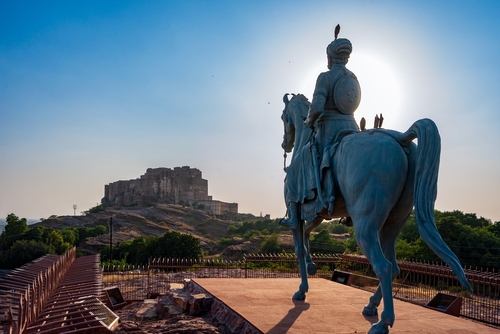
Jodhpur – The Blue City: As described above, indigo-painted houses create a cityscape of extraordinary visual coherence when seen from Mehrangarh Fort above.
Jaisalmer – The Golden City: Built entirely from locally quarried golden sandstone, Jaisalmer glows amber in the morning and evening light in a way that no paint could replicate. The color is geological rather than applied, the specific mineral content of the Thar Desert’s sandstone producing a range of golden shades from pale cream to deep amber depending on the time of day.
Udaipur – The White City: Udaipur’s whitewashed palaces and havelis, reflected in its lakes, have given it the nickname, though “white city” understates the range of cream, ivory, and pale gold that the city’s buildings actually produce in different lights.
Color at India’s Festivals
Understanding India’s color language transforms the festival experience entirely.
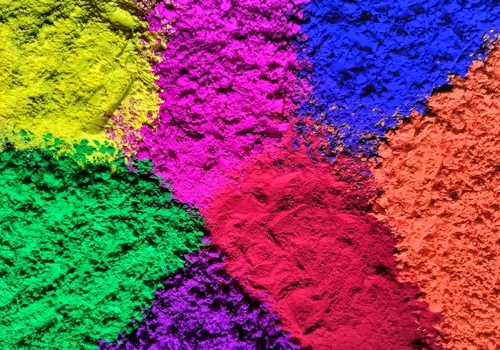
Holi – the festival of color, is not simply a celebration of color for its own sake. The colors thrown at Holi have specific traditional meanings. Red for love and fertility. Blue for the divine (Krishna, who played Holi with the gopis). Yellow for spring and knowledge. Green for the harvest and new growth. The modern version of Holi, where any color is thrown at anyone, has diluted this specificity. Traditional Holi in the villages of Mathura and Vrindavan still maintains the color vocabulary.
Navratri – the nine-night festival honoring Durga, assigns a specific color to each of the nine nights, each corresponding to one of Durga’s nine forms. Devotees dress in the color of the night throughout the festival. The visual effect, entire communities dressed in the same color for each evening of nine successive nights, is one of the most extraordinary collective color experiences in the world.
How to Read India’s Visual Language
At temples: The colors of the flowers offered, the tilak applied, and the deity’s clothing all encode specific meanings. Durga receives red. Saraswati receives white or yellow. Vishnu receives yellow or gold. Shiva receives white and blue.
At weddings: Red dominates the bride’s clothing. The groom typically wears cream or gold. The specific shade of the bride’s red varies by region, a deep crimson in north India, a different shade in Bengal, a combination of red and gold in south India.
On the street: The bindi color worn by a woman indicates marital status in traditional communities, red or dark maroon for married women, black for unmarried in some communities. The absence of sindoor in a married woman’s hair indicates widowhood in traditional Hindu communities.
In architecture: The color of a building’s outer wall sometimes indicates the community or caste that occupies it, the blue of Brahmin households in Jodhpur, the painted facades of merchant havelis in Shekhawati whose specific motifs indicated the family’s wealth and trade connections.
Frequently Asked Questions
Why is India so colorful compared to Western countries?
India’s use of color is rooted in religious, social, and climatic traditions that developed over thousands of years. Color serves as a communication system, indicating social status, religious devotion, marital status, and seasonal celebration in ways that Western color use generally does not. The specific intensity of Indian color is also partly climatic, the strong tropical light of the subcontinent demands saturated pigments that would appear garish in the diffuse light of northern Europe.
What colors should I avoid wearing in India?
White is associated with mourning in Hindu tradition, avoiding wearing all-white to weddings or celebrations. Black is also considered inauspicious at celebratory events in some communities. Saffron has specific religious associations, wearing it casually without understanding its significance can be considered disrespectful in some contexts.
What is the significance of the colors in the Indian flag?
The Indian national flag carries saffron (courage and sacrifice), white (peace and truth), and green (faith and prosperity). The blue Ashoka Chakra at the center represents dharma, the wheel of law and cosmic order.
Why are temples painted in such bright colors in south India?
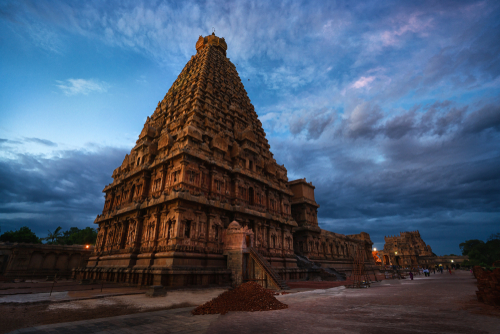
The brightly painted gopuram towers of south Indian Dravidian temples, covered in thousands of painted figures of gods, demons, and celestial beings, represent the boundary between the ordinary world and the sacred world within. The intensity of the color announces the transition from secular to sacred space.
Understanding India’s color language transforms every visual experience in the country, from the palace hotels of Rajasthan to the temple towers of Tamil Nadu to the festival processions of Kerala. At GeTS Holidays, we build itineraries for premium international travelers that go beyond the visual surface of India into the cultural depth that makes its beauty comprehensible. Begin at [www.getsholidays.com].