


Kochi Travel Guide for International Tourists: Kerala’s Most Extraordinary City (2026)
Kochi is India’s most trending international destination in 2026. This is not a marketing claim, it is the finding of travel search data across European...


 18884507235

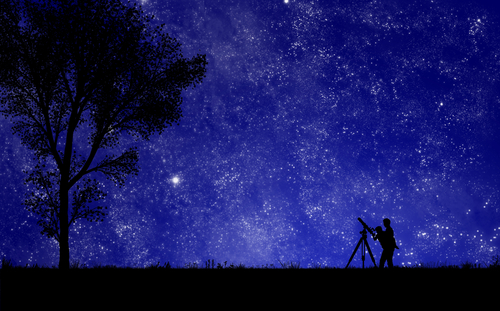
India is one of the finest stargazing destinations on earth. Most international travelers do not know this yet.
While Iceland gets the aurora hunters and Chile gets the professional astronomers, India offers something neither of those destinations can provide: the combination of world-class dark skies, ancient Buddhist monasteries, Himalayan landscapes, and Rajput desert forts, all under a canopy of stars so dense and so close that the experience of looking up feels genuinely different from anything available in the light-polluted skies of the Western world.
In 2026, astro-tourism has moved from a niche interest to a mainstream global travel movement. Dark sky journeys now feature in the travel planning conversations of travelers who have never owned a telescope and have no intention of buying one. They simply want to see the Milky Way, properly, with their own eyes, for the first time.
India delivers this. Consistently. At altitude. In settings of extraordinary beauty.
This guide covers everything international travelers need to know to plan a stargazing trip to India in 2026.
Several factors combine to make India exceptional for dark sky travel.
First, altitude. India’s Himalayan and trans-Himalayan regions, Ladakh, Spiti Valley, Uttarakhand, sit at elevations between 3,000 and 5,000 metres. At this altitude, atmospheric interference is minimal. The air is thin, dry, and extraordinarily clear. The seeing conditions, the astronomical term for atmospheric stability and clarity, are among the finest of any inhabited location in Asia.
Second, low light pollution. Ladakh’s Hanle region, Spiti Valley, the Rann of Kutch, and several other Indian dark sky locations are genuinely remote. Human settlement is sparse. Artificial light is minimal. The darkness here is the kind of darkness that urban dwellers in Europe, North America, and Australia have never experienced, complete, absolute, and extraordinary in its effect on the night sky.
Third, clear nights. Ladakh averages over 250 clear nights annually. Spiti Valley averages similar numbers. The Thar Desert of Rajasthan has excellent clear sky statistics between October and March. These are not destinations where you arrive hoping for clear skies. They are destinations where clear skies are the default.
Fourth, the combination of landscape and sky. A stargazing experience in Ladakh is not just any stargazing experience. It is a stargazing experience above 3,500 metres, surrounded by Himalayan peaks, next to a 1,000-year-old Buddhist monastery, with the silence of a high-altitude night so complete it has a texture of its own.
Astro-tourism is travel motivated wholly or partly by the desire to experience exceptional night skies. It ranges from casual stargazers who want to see the Milky Way for the first time to serious astrophotographers with professional equipment, to astronomers attending observatory programmes.
In 2026, travelers are embracing discovery and adventure, and 87% of global respondents like to leave room in their itinerary for unexpected local discoveries. Dark sky travel fits this pattern precisely. It is an experience that cannot be manufactured, cannot be replicated indoors, and cannot be experienced on demand in the cities where most international travelers live.
Several factors are driving the 2026 astro-tourism boom specifically.
Light pollution awareness has reached mainstream consciousness. Studies showing that 99% of the US and European population lives under light-polluted skies, and that one third of humanity cannot see the Milky Way from where they live, have created a genuine desire to experience natural darkness.
Astrophotography has become accessible. Smartphone cameras can now capture the Milky Way with reasonable quality. The barrier to astrophotography has dropped dramatically, and the desire to capture extraordinary night sky images is driving a new category of travel.
The search for genuine remoteness is one of the strongest travel trends of 2026. Over-tourism has triggered a backlash, travellers now actively avoid viral destinations because crowded checklist travel is losing its magic. Dark sky destinations are, by definition, remote and uncrowded. They offer real connection, lower prices, and meaningful economic impact.
The astro-spiritual dimension, the specific combination of ancient sacred sites and extraordinary night skies, is attracting a category of traveller motivated by both astronomical wonder and cultural depth simultaneously. India is the finest destination in the world for this specific combination.
Hanle is the finest stargazing destination in India and one of the finest in the world.
Located in the Changthang plateau of eastern Ladakh at 4,500 metres above sea level, Hanle is home to the Indian Astronomical Observatory, one of the highest optical telescopes in the world, operated by the Indian Institute of Astrophysics. The location was chosen specifically for its extraordinary atmospheric clarity, minimal light pollution, and exceptional seeing conditions.
In 2022, the Ladakh administration declared Hanle and the surrounding Changthang region India’s first Dark Sky Reserve, a protected area specifically designated to preserve natural darkness and promote responsible astro-tourism. The reserve covers an area of approximately 1,073 square kilometres. It is one of the largest dark sky reserves in Asia.
The night sky at Hanle is genuinely overwhelming. The Milky Way is visible to the naked eye as a broad, luminous band stretching from horizon to horizon. The density of stars, at 4,500 metres with exceptional atmospheric clarity, produces a sky that urban dwellers consistently describe as the most extraordinary thing they have ever seen.
At Hanle, you see:
The local Changpa nomadic community of Hanle has developed the Hanle Astro Village, a community-based astro-tourism initiative that provides homestay accommodation, guided night sky sessions, and telescope access to visitors.
Staying with a Changpa family in Hanle, eating traditional food, sleeping under yak wool blankets in a stone house at 4,500 metres, and then stepping outside at midnight to a sky of extraordinary intensity, is one of the most complete and most distinctive travel experiences available in India.
Permit required: Hanle is in a Protected Area near the Indian-Chinese border. Foreign nationals require an Inner Line Permit (ILP), arranged through a registered tour operator in Leh.
Getting there: Hanle is approximately 260 kilometres from Leh by road. The drive takes 7–8 hours on mountain roads through the Changthang plateau. A private vehicle with an experienced driver is essential.
Accommodation: The Hanle Astro Village homestays are the primary accommodation. Basic but genuine. Book in advance, capacity is limited deliberately to maintain the integrity of the dark sky environment.
Best time: May to September, when the roads are open. July and August have slightly more cloud cover from the monsoon periphery. June and September are the finest months for clear skies.
Spiti Valley is the second finest stargazing destination in India, and the one that offers the most complete astro-spiritual experience available anywhere on earth.
At an average elevation of 3,800 metres, with over 250 clear nights annually and virtually no artificial light pollution across its entire extent, Spiti produces night skies of extraordinary quality. However, what distinguishes Spiti from every other dark sky destination in the world is the combination of those skies with what sits beneath them.
Key Monastery, perched on a conical hilltop above the Spiti River at 4,000 metres, home to 300 monks following a tradition unchanged for centuries, is visible from the valley floor as a cluster of white and ochre buildings against the bare mountain. At night, the monastery is dark. The stars above it are overwhelming. The combination, a living Buddhist institution of the highest antiquity beneath one of the finest night skies in Asia, is available nowhere else on earth.
Tabo Monastery founded in 996 CE, the oldest continuously functioning monastery in the Himalayan region, sits in the widest section of the valley at 3,280 metres. The night sky over Tabo is extraordinary. Sleeping in the village guesthouse, stepping outside at 2am to a sky of such density and clarity that the monastery walls below are faintly illuminated by starlight alone, this is the Spiti astro-spiritual experience at its most complete.
Several operators in Kaza, Spiti’s main town, now offer dedicated stargazing experiences. These include:
Spiti is accessible by road from Manali (via Rohtang Pass and Kunzum Pass) or from Shimla (via Kinnaur). Both routes are open between June and October. A private vehicle with an experienced mountain driver is essential.
Read the full Spiti Valley travel guide on this site for complete practical planning information.
The Thar Desert of Rajasthan offers a stargazing experience of a completely different character from the Himalayan locations, lower altitude, warmer temperatures, and a landscape that is uniquely suited to the romantic dimension of dark sky travel.
The desert around Jaisalmer, where the sand dunes extend to the horizon in every direction, the nearest city lights are far away, and the silence of the desert night is broken only by the occasional sound of wind, produces night skies of genuine quality between October and March. The Milky Way is clearly visible. The stars are numerous enough that the sky feels genuinely alive.
The experience of lying on a dune at midnight, the sand still warm from the day’s sun, the sky overhead overwhelming in its density, the golden sandstone fort of Jaisalmer visible on the horizon, is one of the most distinctive stargazing experiences in Asia.
Luxury desert camps near Jaisalmer’s Sam Sand Dunes now offer dedicated stargazing programmes as part of their overnight packages. These include:
The best camps for stargazing: Suryagarh Jaisalmer and Serai Camp both offer excellent stargazing programmes alongside their luxury desert accommodation.
The Rann of Kutch in neighbouring Gujarat, India’s white salt desert, offers stargazing of exceptional quality between November and February during the Rann Utsav festival period. The flat white expanse of the Rann reflects the night sky in a way that produces a genuinely surreal experience. The stars above and their reflection below create an illusion of being surrounded by sky on all sides.
Coorg, the coffee-growing hill district of Karnataka at 1,500 metres, is India’s most accessible dark sky destination for international travellers who want exceptional stargazing without the altitude demands of Ladakh or Spiti.
The Western Ghats forests surrounding Coorg create a natural barrier against light pollution from the surrounding lowlands. The elevation is sufficient to produce significantly better atmospheric clarity than sea level. Additionally, Coorg’s annual average of clear nights is high by Indian standards, particularly between October and February.
What makes Coorg distinctive for stargazing:
Getting there: Coorg is 250 kilometres from Bengaluru, approximately 5 hours by road. Direct buses and private vehicles both connect the two.
Munsiyari is Uttarakhand’s finest and least known dark sky destination, a small hill town at 2,200 metres on the edge of the Kumaon Himalayas, surrounded by forest, and directly beneath one of the most extraordinary mountain panoramas in northern India.
The Panchachuli peaks, five summits rising above 6,000 metres, are visible from Munsiyari at dawn and dusk. At night, those same peaks are silhouetted against a sky of exceptional quality. The town has minimal light pollution. The surrounding forest absorbs sound and light equally. The result is a night sky experience that few international travellers have ever encountered.
Additionally, Munsiyari sits on the route to the Milam Glacier, one of the finest glacier treks in Uttarakhand, making it a natural base for travellers who want to combine trekking with stargazing in a single destination.
Getting there: Munsiyari is accessible from Kathgodam railway station (330 kilometres, approximately 9 hours by road) or from Pithoragarh (127 kilometres, approximately 4 hours).
Best time: April to June and September to November. The monsoon (July–August) brings cloud cover that reduces stargazing opportunities significantly.
The best time for stargazing in India varies by destination. However, these general rules apply across most locations.
October to March is the optimal window for most Indian stargazing destinations. Skies are clear, temperatures are manageable even at altitude, and the absence of monsoon cloud cover produces the most reliable dark sky conditions. This window works well for Rajasthan, Coorg, and Munsiyari.
May to September is the window for Ladakh and Spiti — the only period when roads to these high-altitude destinations are open. June and September are the finest months within this window. July and August bring some peripheral cloud cover from the monsoon system, though Ladakh and Spiti receive significantly less monsoon rainfall than the rest of India and clear nights remain common even in July.
New moon nights are the gold standard for stargazing regardless of location. A full moon washes out fainter stars and significantly reduces the visibility of the Milky Way. Plan your stargazing nights around the lunar calendar — the 5-day window centred on the new moon produces the darkest skies.
Specific astronomical events in 2026:
India’s dark sky destinations offer exceptional astrophotography opportunities. These practical notes apply to both dedicated photographers and smartphone users.
Modern smartphones, iPhone 15 and above, Google Pixel 8 and above, Samsung Galaxy S24 and above, are capable of capturing the Milky Way with their dedicated night mode or astrophotography mode.
Key settings:
Best smartphone stargazing locations in India: Hanle (Ladakh), Kaza (Spiti), Sam Sand Dunes (Jaisalmer). All three offer open horizons, minimal light pollution, and enough foreground interest to produce compositionally strong images.
Essential equipment:
Camera settings starting points:
Best astrophotography compositions in India:
The most distinctive and most differentiated stargazing experience that India offers, the one available nowhere else on earth, is the combination of ancient Buddhist monasteries and world-class dark skies.
In Ladakh and Spiti, these two things coexist in a way that produces something beyond either component alone.
A night at Key Monastery begins at dusk with the evening puja, the monks gathering in the assembly hall, butter lamps lit in the half-dark, the deep resonance of the long horns and drums carrying across the valley. By 8pm, the puja is complete. The monastery is quiet. The monks are in their cells. And the sky above the monastery, at 4,166 metres, with no other settlement visible in any direction, is beginning to reveal what was always there behind the daylight.
By 10pm, the Milky Way is overhead. The monastery below is dark. The stars are so numerous and so bright that the white walls of the monastery reflect their light faintly, visible only because of the absence of any other illumination. The silence is absolute. The cold is real. And the experience of standing between a 1,000-year-old living Buddhist institution and one of the finest night skies in Asia produces a quality of awareness that neither experience produces alone.
This is astro-spiritual travel. It is the most powerful argument for choosing India over Chile or Iceland or Norway for a dark sky journey. The sky may be comparable. The context is incomparable.
The finest astro-spiritual experiences in India:
Book through a specialist operator. Hanle requires an Inner Line Permit for foreign nationals, arranged only through a registered local operator. Spiti’s best stargazing programmes are run by operators who know the valley’s specific dark spots. A specialist operator handles permits, transport, accommodation, and stargazing programme logistics simultaneously.
Plan around the lunar calendar. Book your stargazing nights around the new moon. Most specialist operators can advise on optimal dates for your travel window.
Allow acclimatisation time. Both Hanle and Spiti are above 3,500 metres. Arriving directly from sea level and expecting to function well on the first night is unrealistic. Build acclimatisation days into your itinerary, spend two nights in Leh before travelling to Hanle, and two nights in Kaza before attempting high passes or strenuous activity.
Pack for extreme cold. Night temperatures at Hanle and Spiti drop to –5°C or below even in July and August. Thermal base layers, a down jacket, gloves, and a warm hat are essential for extended stargazing sessions. Standing still for an hour while photographing the night sky in thin air at altitude is significantly colder than moving.
Download astronomy apps. Star Walk 2, SkySafari, and Stellarium are the most useful apps for real-time star identification and planning. Download them before arriving — data connectivity in Hanle and Spiti is minimal.
Stargazing integrates naturally with several other India travel experiences.
Stargazing and wildlife safari – Ranthambore National Park in Rajasthan offers excellent dark skies within the park’s core zone after safari hours. Combining a tiger safari with evening stargazing from a luxury camp is one of the most distinctive multi-experience India itineraries available.
Stargazing and Ayurveda – Coorg’s proximity to Bengaluru and the Nilgiri Biosphere Reserve makes it a practical addition to a Kerala Ayurvedic retreat. Spend 10 days in Kerala for treatment and 3 days in Coorg for recovery, nature, and dark sky experiences.
Stargazing and Buddhist culture – the natural pairing for Ladakh and Spiti. Monastery visits by day, star sessions by night. This is the itinerary that most fully justifies choosing India over any other dark sky destination.
Stargazing and desert heritage – the Jaisalmer combination. Mehrangarh Fort and the old city by day, the Sam Sand Dunes by night. Rajasthan’s heritage circuit and its dark sky experience complement each other naturally.
Do I need a telescope to enjoy stargazing in India?
No. At India’s finest dark sky locations, Hanle, Spiti, the Thar Desert, the naked-eye experience is extraordinary. The Milky Way, visible planets, meteor showers, and the Andromeda Galaxy are all visible without any equipment. Telescopes enhance the experience but are not necessary for it. Most stargazing operators in Ladakh and Spiti provide telescope access as part of their programmes.
Is stargazing in India suitable for families with children?
Yes, with destination selection. Coorg and the Rajasthan desert camps are the most accessible for families. The altitude of Ladakh and Spiti is a consideration for young children — consult your paediatrician before taking children above 3,500 metres. The desert camps at Jaisalmer offer excellent stargazing programmes specifically designed for families.
Which Indian city is closest to a good stargazing destination?
Bengaluru is closest to Coorg (250 kilometres). Jaisalmer is accessible from Jodhpur (280 kilometres) or by direct flight from Delhi. Leh (for Hanle) is accessible by direct flight from Delhi (1 hour 15 minutes). Shimla or Manali are the gateways to Spiti.
What is the Hanle Dark Sky Reserve and how do I visit it?
The Hanle Dark Sky Reserve is India’s first officially designated dark sky reserve, established in 2022 in eastern Ladakh at 4,500 metres. It is accessible only by road from Leh (7–8 hours). Foreign nationals require an Inner Line Permit arranged through a registered tour operator. Accommodation is available in the Hanle Astro Village homestays. Book through a Leh-based operator with experience in the Changthang region.
Can I see the Milky Way from Ladakh in July and August?
Yes. Ladakh receives minimal monsoon rainfall compared to the rest of India. Clear nights are common even in July and August, though June and September are more reliable. The Milky Way is clearly visible from Hanle and the Pangong Lake area on clear nights throughout the May–September season.
Is astrophotography in India possible with a smartphone?
Yes. Modern smartphones with dedicated night mode or astrophotography mode can capture the Milky Way at locations like Hanle and Spiti. Use a tripod, maximise exposure time, shoot in RAW format where available, and point away from any horizon light. Results from flagship smartphones at these locations are genuinely impressive.
India’s dark sky destinations combine the finest stargazing in Asia with landscapes, monasteries, and cultural experiences that no other astro-tourism destination on earth can match. At GeTS Holidays, we build bespoke stargazing itineraries across India, from the Hanle Dark Sky Reserve in Ladakh to the Thar Desert of Rajasthan, combining night sky experiences with the heritage, wildlife, and cultural depth that make India’s dark sky journeys uniquely extraordinary. Begin at [www.getsholidays.com].
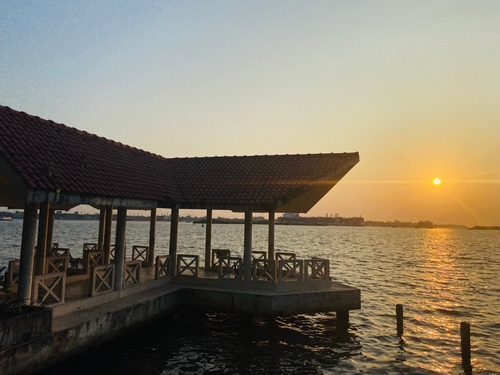
Kochi is India’s most trending international destination in 2026. This is not a marketing claim, it is the finding of travel search data across European...

Thailand has been the default Asian destination for Western travellers for three decades. It is familiar, efficient, beautiful, and well-understood. The beaches are excellent. The...
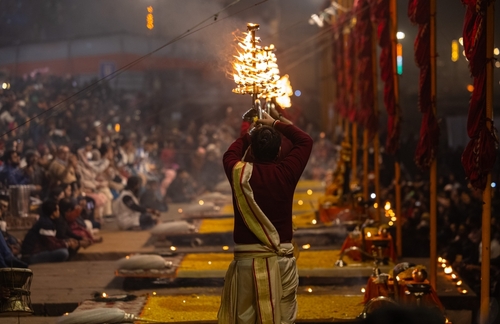
There is no city in the world like Varanasi. Not in Asia. Not anywhere. Varanasi is the oldest continuously inhabited city on earth, possibly 3,000...
You are one step closer to having the best journey of your lifetime! Talk to us, write to us all that you have envisioned for your India trip, and one of our travel experts will connect with you on priority. To help you explicitly we have WhatsApp and Email addresses!


