


Experiential Travel in India: Beyond Sightseeing for International Tourists (2026)
India’s most extraordinary travel experiences are not in its monuments. They are in a weaver’s workshop in Varanasi where a Banarasi silk sari takes three...


 18884507235


Sri Lanka is one of the most rewarding seven-day destinations in Asia. In a single week, international tourists can explore ancient UNESCO-listed cities, ride trains through emerald tea plantations, spot leopards on safari, and end the trip on a beach of extraordinary beauty.
The country is compact. Distances are manageable. And the variety of experiences available within a small geographic area makes Sri Lanka ideal for travellers who want depth without spending weeks in transit.
This complete 2026 itinerary covers the best of Sri Lanka for first-time international visitors.
Most international tourists need an Electronic Travel Authorisation (ETA) to enter Sri Lanka. However, Sri Lanka introduced a free visa scheme for citizens of several countries in 2024. Additionally, many Western nationalities now qualify for free entry under expanded visa-free arrangements in 2026.
Always check current entry requirements before booking. Visa policies in Sri Lanka have changed frequently in recent years.
Key practical facts:
Sri Lanka punches well above its weight as a travel destination. It is a small island, roughly the size of Ireland, but it contains remarkable variety.
Within a seven-day trip, international tourists experience:
Furthermore, Sri Lanka offers all of this at a price point that delivers outstanding value for international luxury travellers.
Most international flights land at Colombo’s Bandaranaike International Airport. The city itself is approximately 35 kilometres from the airport by road.
Colombo is Sri Lanka’s commercial capital and its most cosmopolitan city. It rewards a day of exploration before heading inland. However, do not linger longer than necessary, the more extraordinary parts of Sri Lanka lie beyond it.
Pettah Market is Colombo’s oldest and most chaotic bazaar. It sells everything from spices to electronics in lanes so narrow that two people can barely pass. Visit in the morning when it is at its most active.
Galle Face Green is a wide ocean-facing promenade where Colombo’s residents gather every evening. Street food vendors line the path. The Indian Ocean stretches west. It is the finest introduction to the city’s character.
The National Museum of Colombo holds the finest collection of Sri Lankan historical artefacts in the country. Additionally, the museum’s collection of Kandyan-era royal regalia is particularly impressive.
Gangaramaya Temple is an active Buddhist temple of considerable architectural complexity. It sits beside Beira Lake and is used by Colombo’s Buddhist community daily. Visit respectfully and remove footwear at the entrance.
For luxury international travellers, the Galle Face Hotel, a colonial-era seafront property operating since 1864, is the finest heritage accommodation in the city. Alternatively, the Shangri-La Colombo offers contemporary luxury with exceptional Indian Ocean views.
Sigiriya is approximately 175 kilometres northeast of Colombo. The drive takes 3.5-4 hours by road. Arrange a private vehicle through your operator, this is significantly more comfortable than public transport.
Sigiriya is Sri Lanka’s most iconic landmark and one of the finest archaeological sites in Asia. The rock fortress rises 200 metres from the surrounding jungle and was built by King Kashyapa in the 5th century CE.
The climb to the summit involves:
The summit view, across flat jungle stretching to the horizon in every direction, is one of the finest in Sri Lanka. Arrive early to avoid the afternoon heat and crowds.
Dambulla is 20 kilometres from Sigiriya and easily combined in the same day. It is Sri Lanka’s largest cave temple complex. Five caves contain over 150 Buddha statues and murals covering 2,100 square metres of cave ceiling. UNESCO listed the site as a World Heritage property in 1991.
Kandy is approximately 70 kilometres southwest of Sigiriya. The drive takes 2–2.5 hours through increasingly hilly terrain.
Kandy is Sri Lanka’s last royal capital and its most important cultural city. It sits in a valley around an artificial lake, surrounded by forested hills that the British colonial administration left largely intact. Moreover, Kandy holds the most sacred Buddhist relic in Sri Lanka, the tooth of the Buddha himself.
The Temple of the Tooth is the most important Buddhist site in Sri Lanka. The sacred tooth relic of the Buddha has been housed here since the 16th century. The temple complex sits on the lakefront and receives thousands of pilgrims daily.
Puja ceremonies are held three times daily, at 6:30am, 9:30am, and 6:30pm. The evening puja is the most atmospheric. Drums and traditional instruments accompany the ceremony. However, arrive 30 minutes early to secure a good viewing position.
The Kandy Esala Perahera, held annually in July or August over ten nights, is one of the finest Buddhist processions in Asia. Decorated elephants, traditional dancers, fire performers, and thousands of devotees move through the city streets each evening. Timing a Sri Lanka trip around this festival is strongly recommended.
The Peradeniya Botanical Gardens, 6 kilometres from Kandy, are among the finest in Asia. They cover 147 acres along a bend in the Mahaweli River. The orchid house, the avenue of royal palms, and the giant Javan fig tree (over 150 years old) are the highlights.
The train from Kandy to Ella is one of the most celebrated rail journeys in Asia. It covers approximately 140 kilometres through the central highlands over 5–6 hours.
The route passes through:
Book your tickets well in advance. Observation car seats sell out weeks ahead during peak season. Additionally, book an early morning departure, the light is better, and the views are clearest before noon.
Ella is a small hill town at 1,041 metres with a relaxed atmosphere and extraordinary surrounding landscape.
Little Adam’s Peak is a straightforward 2–3 hour return hike with panoramic views of the hill country. It is suitable for all fitness levels and rewards the effort with the finest views available from Ella.
Nine Arch Bridge is Ella’s most photographed landmark, a colonial-era viaduct built in 1921, now crossing a deep forest gorge on the main railway line. Visit in the morning when the light falls into the gorge from the east.
Ravana Falls, a 25-metre waterfall 6 kilometres from Ella, is easily reached by tuk-tuk and is worth 30 minutes of exploration.
Yala is approximately 130 kilometres southwest of Ella. The drive takes 2.5–3 hours through the southern lowlands.
Yala National Park is Sri Lanka’s most famous wildlife destination. It has the highest density of leopards of any national park in the world. Additionally, Yala supports large populations of Asian elephants, sloth bears, crocodiles, and over 200 bird species.
Morning and evening safaris (6:00–10:00am and 3:30–6:30pm) offer the best wildlife viewing. Leopards are most active in the early morning. Elephants gather near water sources in the late afternoon.
A standard Yala safari involves a 4-hour jeep drive through the park’s open scrub woodland. Your naturalist guide tracks animal movements and communicates with other vehicles to maximise sighting opportunities.
Leopard sighting rates at Yala during peak season are among the highest of any big cat destination in Asia. However, sightings are never guaranteed, these are wild animals in a large natural habitat.
Book your safari through your operator in advance. Park entry permits are limited and sell out during peak season (December–April).
Mirissa is approximately 60 kilometres west of Yala. The drive takes 1.5–2 hours along the southern coastal road.
Mirissa is widely considered the finest beach on Sri Lanka’s south coast. A curved bay of golden sand, backed by coconut palms, with calm turquoise water ideal for swimming. The beach faces south, which means the sunset falls behind the western headland rather than directly over the water, but the evening light on the bay is exceptional regardless.
The town behind the beach is small and relaxed. Good seafood restaurants line the beach road. Fresh tuna, prawns, and crab caught that morning are the specialities.
Blue whales visit the waters off Mirissa between November and April, specifically December to March is peak season. Sri Lanka’s south coast is one of the most reliable blue whale watching destinations in the world.
Boat trips depart at dawn and typically last 3-4 hours. Blue whales, sperm whales, and spinner dolphins are the most commonly sighted species. Book through a responsible operator who follows marine wildlife guidelines.
Galle Fort, 40 kilometres west of Mirissa, is one of the finest examples of European colonial architecture in Asia. The Dutch built the fort in the 17th century. It contains churches, mosques, a lighthouse, colonial-era mansions, and a thriving community of shops, cafes, and guesthouses within its walls.
It is UNESCO listed. It deserves 2–3 hours of unhurried walking. Visit in the late afternoon when the light on the old walls is warmest.
If you have more than 7 days, these additions significantly enrich the itinerary:
Sri Lanka works exceptionally well as a combined trip with India. The two countries share deep historical and cultural connections, Buddhism passed from India to Sri Lanka in the 3rd century BCE, yet they feel entirely distinct in character.
Practical routing options:
GeTS Holidays builds combined India and Sri Lanka itineraries for international travellers across every season. We manage the logistics, the connections, and the on-ground experience in both countries.
When is the best time to visit Sri Lanka?
The south and west coasts are best between November and April, dry, sunny, and ideal for beaches. The east coast is best between May and September. The cultural triangle and hill country are accessible year-round, though April and August can bring rain.
Do I need a visa to visit Sri Lanka?
Most international tourists require an Electronic Travel Authorisation (ETA) before arrival. Several nationalities now qualify for free ETAs or visa-free entry under 2026 arrangements. Always check current requirements with the Sri Lanka Tourism official portal before booking.
Is Sri Lanka safe for international tourists?
Yes. Sri Lanka is a safe destination for international visitors. The country has recovered strongly from the economic crisis of 2022 and tourism infrastructure is functioning well across all major destinations in 2026.
How much does a 7-day Sri Lanka trip cost?
A mid-range 7-day trip costs approximately $150–250 USD per person per day including accommodation, meals, transport, and activities. A luxury trip with five-star hotels and private transfers costs $400–800 USD per person per day.
Can I do this itinerary independently?
The itinerary is possible independently, though a private vehicle and driver significantly improves the experience. Several logistics, Yala safari permits, train tickets, and Sigiriya entry, require advance booking. Using a specialist operator removes these complications entirely.
How do I get from India to Sri Lanka?
Direct flights connect Colombo with Delhi, Mumbai, Chennai, Kochi, Bengaluru, and Hyderabad. Flight times from south India are 1–2 hours. Additionally, a ferry service connects Rameswaram in Tamil Nadu to Talaimannar in northern Sri Lanka for travellers who prefer a sea crossing.
Sri Lanka and India together form one of the finest combined travel experiences in Asia. At GeTS Holidays, we build seamless luxury itineraries across both countries, handling every detail from the first flight to the last transfer. Begin planning your journey at [www.getsholidays.com].
Last updated July 2026. Visa requirements and park permits are subject to change. Always confirm current regulations before booking.
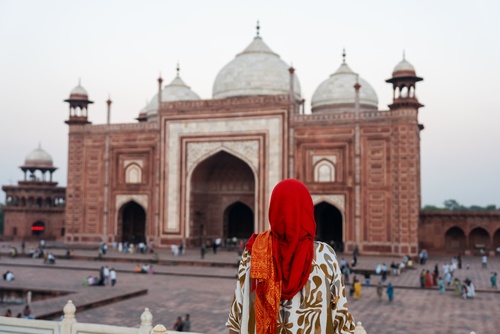
India’s most extraordinary travel experiences are not in its monuments. They are in a weaver’s workshop in Varanasi where a Banarasi silk sari takes three...
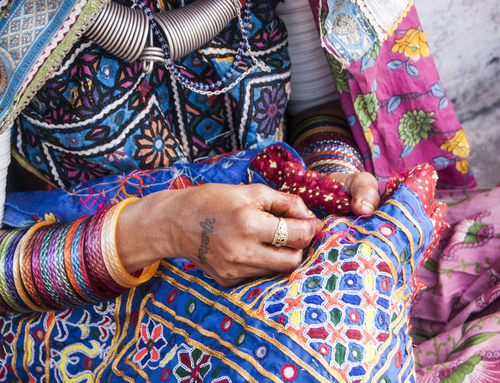
India has more distinct textile and craft traditions than any other country on earth. This is not an approximation. The combination of 28 states, dozens...
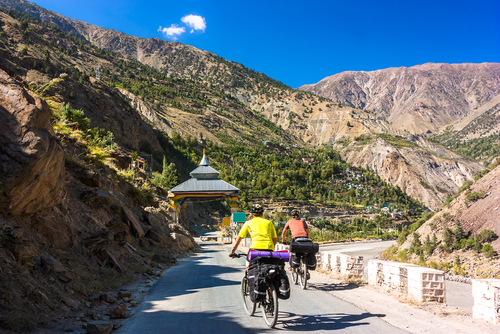
India bookings among adventure travellers surged 214% in the past year. Cycling is at the heart of that surge. International cyclists are discovering that India...
You are one step closer to having the best journey of your lifetime! Talk to us, write to us all that you have envisioned for your India trip, and one of our travel experts will connect with you on priority. To help you explicitly we have WhatsApp and Email addresses!


