


Experiential Travel in India: Beyond Sightseeing for International Tourists (2026)
India’s most extraordinary travel experiences are not in its monuments. They are in a weaver’s workshop in Varanasi where a Banarasi silk sari takes three...


 18884507235

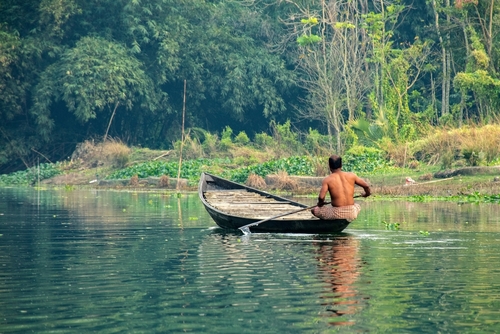
India rewards patience in a way few other countries do. The typical whirlwind itinerary, Delhi, Agra, Jaipur, a beach in Goa, ticks off the highlights but often leaves travelers with only a surface level impression of a country that has far more depth to offer. Slow travel in India means resisting the urge to rush, choosing fewer destinations, staying longer in each, and allowing genuine connection and curiosity to shape your journey instead of a checklist. If you’re planning a 2026 trip and want an experience beyond the tourist trail, here’s how to approach it.
Slow travel isn’t simply about moving at a relaxed pace, it’s a mindset shift. Instead of measuring a trip by how many cities or monuments you covered, slow travel measures success by depth of experience: how well you understood a place, how many genuine conversations you had, and how much you allowed yourself to be shaped by unplanned moments.
In India specifically, this often means choosing a single state or region and spending two to three weeks there rather than attempting to cover the entire subcontinent in a single trip. It also means being open to public transport, homestays, and unplanned detours rather than sticking rigidly to a pre-booked itinerary.
Beyond the well known circuit of Delhi, Agra, Jaipur, and Goa, India holds an enormous range of lesser known destinations that rarely make it onto standard tourist itineraries but offer some of the most rewarding travel experiences in the country.
Spiti Valley, Himachal Pradesh: A high altitude cold desert region bordering Tibet, Spiti offers ancient Buddhist monasteries, dramatic lunar landscapes, and a way of life that has changed little over centuries. It remains far less visited than nearby Ladakh, despite offering similarly stunning scenery.
Majuli Island, Assam: The world’s largest river island, Majuli is home to Vaishnavite monasteries known as satras, along with a rich tradition of mask making and traditional Assamese culture that most international travelers never encounter.
Chettinad, Tamil Nadu: Famous for its distinctive cuisine and grand, crumbling mansions built by wealthy merchant families, Chettinad offers a fascinating architectural and culinary detour that’s largely overlooked by travelers focused on Tamil Nadu’s temple towns.
Gokarna, Karnataka: Often described as what Goa looked like decades ago, Gokarna offers quieter beaches, a strong pilgrimage tradition, and a noticeably calmer atmosphere than its more famous coastal neighbor.
Nagaland and the Northeast States: India’s northeastern states remain some of the least visited by international tourists, despite offering distinct tribal cultures, dramatic landscapes, and events like the Hornbill Festival that showcase traditions found nowhere else in the country.
Rural Rajasthan beyond the forts: While Jaipur, Udaipur, and Jodhpur draw the crowds, villages around Bundi, Shekhawati, and Ranakpur offer a quieter glimpse into Rajasthani rural life, often through community run homestays rather than hotel chains.
Spending time in rural India, whether through a farm stay, village homestay, or simply a slower pass through smaller towns, offers a version of the country that’s fundamentally different from its cities. Life moves according to the agricultural calendar, hospitality is often built around genuine curiosity about visitors rather than transactional tourism, and daily rhythms revolve around markets, festivals, and community gatherings rather than traffic and deadlines.
Many rural regions across Rajasthan, Kerala, Himachal Pradesh, and Karnataka now offer well organized homestay networks, often run by local families or cooperative organizations, giving travelers a genuine window into daily life while also directly supporting local incomes.
Slow travel and responsible tourism naturally overlap. When you spend more time in fewer places, you have more opportunity to travel in ways that benefit local communities rather than simply passing through.
Practical ways to travel responsibly in India:
Pick one region, not the whole country. India is enormous, roughly the size of Western Europe, and trying to cover multiple regions in a short trip almost guarantees a rushed, surface level experience. Choose a single state or a small cluster of neighboring regions instead.
Build in unstructured days. Rather than filling every day with planned activities, leave space for wandering, unexpected conversations, or simply resting. Some of the most memorable travel moments in India happen in the gaps between planned activities.
Use trains over flights when possible. India’s rail network isn’t just practical, it’s also one of the best ways to observe the country’s changing landscapes and daily life up close. Sleeper or AC chair car journeys offer a window into ordinary Indian life that a flight simply can’t replicate.
Stay longer in fewer places. Instead of one or two nights in five different cities, consider staying four to five nights in two or three locations. This gives you time to move beyond the main tourist sites and start noticing the smaller, more textured details of a place.
Learn a few local phrases. Even basic greetings in Hindi or the regional language of the state you’re visiting go a long way in building rapport with locals, particularly in rural areas less accustomed to international visitors.
Rather than rushing through Delhi, Agra, and Jaipur, consider a slower alternative built entirely around Himachal Pradesh:
This kind of itinerary trades breadth for depth, offering a far richer understanding of a single region than a fast paced tour of multiple states ever could.
Slow travel in India isn’t about seeing less, it’s about experiencing more deeply. By choosing fewer destinations, embracing rural areas and homestays, using public transport, and building unstructured time into your itinerary, you’ll come away with a far more authentic and memorable understanding of the country. In 2026, as more travelers seek meaningful, low impact ways to explore, India’s off the beaten path regions offer some of the richest, most rewarding travel experiences the country has to offer, if you’re willing to slow down long enough to find them.
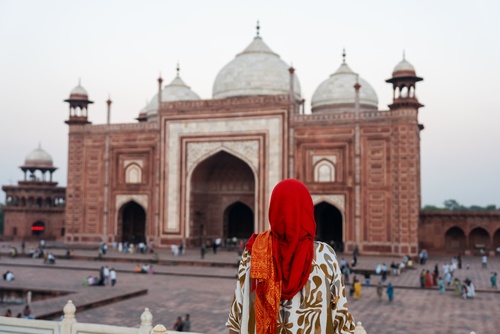
India’s most extraordinary travel experiences are not in its monuments. They are in a weaver’s workshop in Varanasi where a Banarasi silk sari takes three...
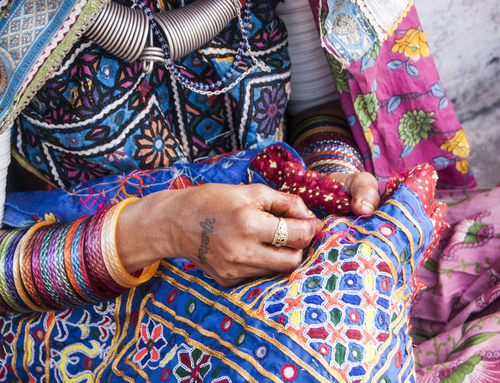
India has more distinct textile and craft traditions than any other country on earth. This is not an approximation. The combination of 28 states, dozens...
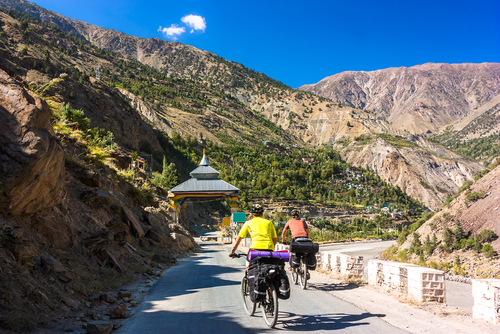
India bookings among adventure travellers surged 214% in the past year. Cycling is at the heart of that surge. International cyclists are discovering that India...
You are one step closer to having the best journey of your lifetime! Talk to us, write to us all that you have envisioned for your India trip, and one of our travel experts will connect with you on priority. To help you explicitly we have WhatsApp and Email addresses!


