


Christmas and New Year in India: Where to Celebrate the Holidays (2026)
Christmas in India for tourists is one of the best-value winter trips in Asia. December brings dry weather and long, sunny days. It also brings...


 18884507235

Where to go in India on a second trip is the question every returning traveller asks. Your first trip probably covered Delhi, Agra and Jaipur. Your second should not repeat it.
India rewards depth over repetition. This guide matches seven regions to the kind of traveller you have become. It also flags the festivals and permits that affect planning this winter.
Your first trip covered the icons. Your second should cover depth. Therefore, choose one or two regions rather than five.
Slow down as well. Pick places with fewer visitors and more local life. Additionally, a second trip lets you time your journey around a festival, and several falls this winter.
Seasoned travellers also gain from better access. Private guides, early-morning entry and small heritage stays all matter more the second time. They turn a sightseeing trip into a cultural one.
| Region | Best for | Festival hook |
| Madhya Pradesh | Temples and quiet heritage | Khajuraho Dance Festival (February) |
| Karnataka (Hampi) | Ruins and landscape | None needed |
| Tamil Nadu | Living temples and cuisine | None needed |
| Gujarat (Kutch) | Desert, craft and prehistory | Rann Utsav (1 Nov 2026–7 Mar 2027) |
| Northeast | Nature and tribal culture | Hornbill Festival (1–10 Dec 2026) |
| Odisha | Temple towns and dance | Konark Festival (1–5 Dec 2026) |
| Tea country | Slow stays and railways | Autumn and spring harvests |
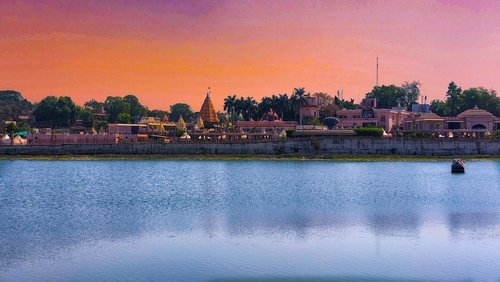
Orchha is a 16th-century town on the Betwa River. Royal palaces, temples and cenotaphs rise from its banks. The Raja Mahal and Jahangir Mahal anchor the skyline.
Few international visitors reach it. Consequently, the town feels calm and local. Walk the riverside at dawn, when the cenotaphs glow in early light.
Khajuraho is a UNESCO World Heritage Site. The Chandela dynasty built its temples between roughly 950 and 1050 CE. Fine sculpture covers the walls, with scenes of gods, musicians, animals and daily life.
Time your visit for February. The Khajuraho Dance Festival fills the temple complex with classical dance each year. The 52nd edition ran 20–26 February 2026 with free entry. The 2027 dates were unconfirmed at the time of writing.
Madhya Pradesh suits travellers who loved Agra’s Mughal monuments. The scale is smaller, but the craftsmanship is just as fine.
Hampi was the capital of the Vijayanagara Empire. Today its ruins spread across a landscape of enormous granite boulders. The site is UNESCO-listed.
Highlights include the Virupaksha Temple, which still hosts daily worship. The Vittala Temple complex features a famous stone chariot. Additionally, the riverside paths and boulder hills reward slow exploration.
Travellers who loved Rajasthan’s forts often loved Hampi next. The scale is similar, yet the setting is wilder and quieter.
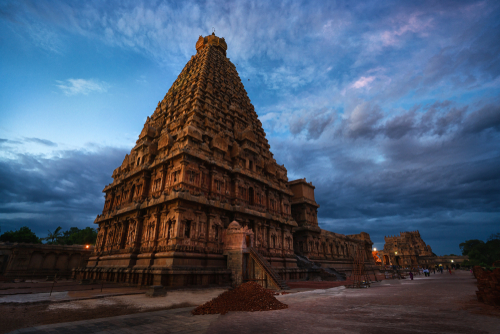
The Brihadeeswara Temple in Thanjavur dates to 1010 CE. It belongs to the UNESCO-listed Great Living Chola Temples. Two other temples, at Gangaikonda Cholapuram and Darasuram, complete the group.
Worship continues at all three. Therefore, you see living rituals rather than empty monuments.
Chettinad lies in central Tamil Nadu. Merchant families built grand mansions there. The region is also famous for its fiery, aromatic cuisine.
Stay in a restored mansion if you can. Then eat a home-cooked Chettinad meal. It is one of south India’s great culinary experiences.
For a hill-country finish, ride the Nilgiri Mountain Railway to Ooty. The train runs daily from Mettupalayam. Our tea-trail guide covers the Nilgiris in more detail.
Dholavira is a 4,500-year-old Indus Valley city and a UNESCO World Heritage Site. It sits on the edge of the White Rann. The city’s water-management system is among the great achievements of the Bronze Age.
Kutch is also one of India’s richest craft regions. Embroidery, weaving and block printing thrive in its villages. Bhuj is the usual base.
The Rann Utsav tent city runs from 1 November 2026 to 7 March 2027. Listed full-moon periods include 21–24 December, 20–23 January and 18–21 February. However, the official site noted a rain-related delay to the White Rann’s formation. Check conditions before you travel.
Meghalaya offers living root bridges and waterfall-filled valleys. The double-decker root bridge near Nongriat requires a long staircase descent. Mawlynnong is known for its clean, flower-lined lanes.
Assam offers Kaziranga’s one-horned rhinoceroses. It also offers Majuli, the river island that is a centre of Vaishnavite culture. Tea estates add a third dimension.
Nagaland hosts the Hornbill Festival, held 1–10 December 2026. It brings Naga tribes together for dance, music and craft.
Permit rules differ by state. For example, foreign nationals need a Protected Area Permit for Nagaland, compulsory since 17 December 2024. Confirm the rules for each state with your operator.
The Konark Sun Temple is a 13th-century stone chariot and a UNESCO site. Its carved wheels work as sundials. The Konark Festival of dance and music takes place nearby on 1–5 December 2026. It has run since 1986.
Bhubaneswar, the state capital, holds a dense cluster of ancient temples. Puri adds the Jagannath Temple and a long beach. Therefore, Odisha suits travellers who found Varanasi powerful and want a quieter, temple-focused journey.
| If you loved… | Try next… |
| Mughal monuments in Delhi and Agra | Orchha and Khajuraho |
| Rajasthan’s forts and palaces | Hampi and the Chola temples |
| Kerala’s backwaters and slow pace | Meghalaya and Assam’s river landscapes |
| Varanasi’s spiritual intensity | Konark and Odisha’s temple towns |
| Desert scenery near Jaisalmer | Kutch’s White Rann and Dholavira |
| Ladakh’s monasteries | Sikkim and Arunachal’s Buddhist valleys |
GeTS Holidays builds these routes with private guides and well-placed heritage stays.
October to March suits most regions. Specific events add reasons to choose a month. For example, Konark and Hornbill fall in early December, Rann Utsav runs through winter, and Khajuraho peaks in February.
India’s distances are large. Therefore, fly between regions rather than driving long stretches. One flight per region keeps the pace comfortable.
Permits affect the Northeast most. Foreign nationals need a Protected Area Permit for Nagaland. Apply well before travel, or ask your operator to do so.
Ten to fourteen days covers two regions properly. Longer trips risk the same rushing that spoiled many first visits.
What is the best place for a second trip to India?
It depends on your interests. Madhya Pradesh and Tamil Nadu suit heritage lovers. Kutch and the Northeast suit those who want landscape and culture. Hampi suits travellers who loved Rajasthan’s forts. Choose the region that contrasts most with your first trip.
How long should a second trip to India be?
Plan 10–14 days. That allows two regions without rushing. India’s distances are large, so every extra region costs travel time. Therefore, depth beats breadth on a second trip.
What is the best time for a second India trip?
October to March suits most regions. Specific events add reasons to choose a month. The Hornbill Festival is in December, Rann Utsav runs from November to March, and the Khajuraho Dance Festival is held in February.
Is the Northeast suitable for a second trip?
Yes, but plan permits carefully. Foreign nationals need a Protected Area Permit for Nagaland, and rules vary elsewhere. A specialist operator handles permits and logistics. Meghalaya and Assam combine well in a single itinerary.
Should I repeat the Golden Triangle?
Usually not. Delhi, Agra and Jaipur reward a revisit only with a new angle, such as a private guide or a festival. For most returning travellers, a new region delivers far more.
Can I combine two regions on a second trip?
Yes. Pair regions that share a flight route, such as Chennai and Hubballi for Tamil Nadu and Hampi. Avoid pairing distant regions in one short trip. Two regions in 12–14 days is the practical limit.
The best answer to where to go in India on a second trip is somewhere your first trip never reached. At GeTS Holidays, we build bespoke journeys for returning travellers across India, Bhutan, Nepal and Sri Lanka. Begin at [www.getsholidays.com].
Last updated October 2026. Festival dates and permit rules change. Confirm before booking.

Christmas in India for tourists is one of the best-value winter trips in Asia. December brings dry weather and long, sunny days. It also brings...
There is a specific frustration that serious food travelers experience when they return from India. They try to explain what they ate. They name the...
India’s ancient monuments are celebrated for their beauty. What is less often discussed, and what consistently produces the most profound reactions in intellectually motivated international...
You are one step closer to having the best journey of your lifetime! Talk to us, write to us all that you have envisioned for your India trip, and one of our travel experts will connect with you on priority. To help you explicitly we have WhatsApp and Email addresses!


