


Best Time to Visit Rajasthan, India: Weather, Seasons & Travel Tips
Rajasthan, India’s regal desert state, is a land where opulent palaces, golden sand dunes, colorful festivals, and centuries-old forts come together to create an unforgettable...


 18884507235

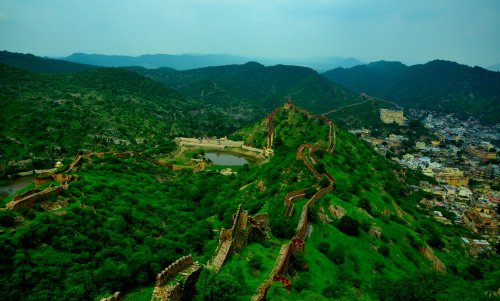
Everyone who has ever looked at a Rajasthan travel guide has read the same advice. Visit between October and March. Avoid the summer heat. And whatever you do, do not go during the monsoon.
This advice is not wrong exactly. October to March is magnificent. The weather is perfect, the festivals are in full swing, and the desert light in winter does things to sandstone that justify every photograph ever taken of it.
But it is also incomplete. Because the travellers who follow it, who arrive in Rajasthan in the peak season with every other international tourist, book the heritage hotels six months in advance, pay peak rates, and share the Amber Fort with several hundred other visitors at sunrise, are missing something that the off-season traveller discovers almost immediately upon arriving in Rajasthan between July and September.
They are missing Rajasthan alive.
The southwest monsoon reaches Rajasthan in early July, arriving from the southeast and moving gradually northwest across the state over the course of several weeks. By mid-July, most of Rajasthan is receiving rainfall, not the continuous, heavy downpours of Kerala or the northeastern states, but periodic, dramatic storms that arrive in the afternoon or evening with theatrical suddenness, drench the landscape, and then clear to reveal skies of extraordinary clarity and colour.
What these storms do to Rajasthan is remarkable.
The desert, the same landscape that appears in every travel photograph as brown and gold and dust-coloured, turns green. Not uniformly, not completely, but in the way that a dry landscape greens when water arrives: patches of vivid colour appearing in the scrub, the desert plants producing flowers of improbable brightness in the days after rain, the dried riverbeds filling with rushing water, the lakes and reservoirs rising to levels that the peak season visitor never sees.
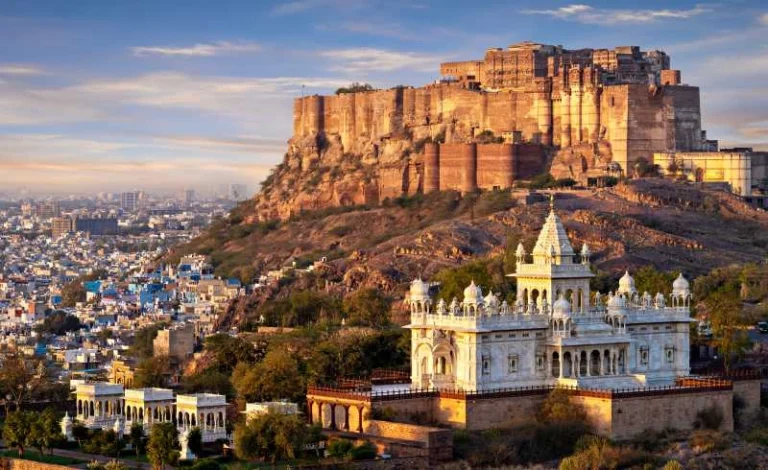
The light changes. Monsoon light in Rajasthan, the particular quality of illumination that comes when a storm is building on the horizon and the clouds are dramatic and close and the air is washed clean, is the finest light this landscape produces. Photographers who know this come specifically in the monsoon. The desert in July light, with a storm building behind Mehrangarh Fort and the blue city below it going dark under the clouds, this is the image that does not appear in the travel brochures, and it is more extraordinary than the ones that do.
The forts are empty. Or nearly so. The Amber Fort in October receives 5,000 to 8,000 visitors on a busy day. In August it receives perhaps 500. The difference, in the quality of the experience, in the ability to stand in a courtyard in silence and let the architecture speak without competing with the noise of thousands of other visitors, is the difference between seeing a great building and experiencing one.
Before the case for monsoon Rajasthan becomes too romantic, the practical reality deserves honest attention.
Rainfall in Rajasthan during the monsoon is not the constant grey drizzle of a northern European winter. It is periodic and dramatic, afternoon and evening storms that can be heavy for an hour or two and then clear entirely. Most days involve several hours of sunshine. The mornings are almost always clear. The storms, when they come, are visually spectacular rather than merely inconvenient.
Heat — the concern that sends most international travellers away from Rajasthan in summer, is significantly reduced by the monsoon. July and August temperatures in Jaipur and Jodhpur are typically 28–35°C rather than the 42–48°C of May and June. Combined with the rains, the weather is warm and humid rather than punishing. Air conditioning at hotels provides relief during the hottest hours. Early mornings and evenings are genuinely pleasant.
Jaisalmer — the desert city furthest west, closest to the Pakistan border, receives the least monsoon rainfall of any major Rajasthan destination and is genuinely still very hot in July and August. It is the one Rajasthan destination that the monsoon case applies to least convincingly. Jodhpur, Jaipur, Udaipur, Bundi, and Shekhawati all benefit significantly from the seasonal transformation.
Roads are generally good across Rajasthan, the state has invested heavily in road infrastructure, though heavy storms can cause localised flooding on lower roads and in urban areas. A competent driver with local knowledge navigates these without significant difficulty.
This is the argument that the peak-season brochure never makes, because it cannot: the monsoon season contains some of Rajasthan’s most significant and most visually extraordinary festivals, almost none of which are on the standard international tourist itinerary.
Teej, celebrated on the third day of the bright half of the Hindu lunar month of Shravan, is one of Rajasthan’s most joyful and most visually spectacular festivals, dedicated to the goddess Teej (a form of Parvati) and to the celebration of the monsoon’s arrival. Women dress in green, the colour of new growth and the monsoon, wear green bangles and apply henna to their hands, and gather to sing traditional songs, ride decorated swings hung from trees, and process through the streets in processions of considerable colour and noise.
In Jaipur, the Teej procession, a formal parade of the Teej goddess idol through the old city streets, accompanied by elephants, camels, dancers, musicians, and the full spectacle of Rajput ceremonial tradition, is one of the finest street festivals in Rajasthan and draws large crowds of domestic visitors. For international tourists, it is almost entirely undiscovered.
Nag Panchami, the festival of serpent worship, celebrated five days after Teej, is one of the most distinctive and most misunderstood festivals in Hindu tradition. Cobras are worshipped as representations of Shiva’s power, milk is offered at snake holes and at temples with snake iconography, and the day has a particular atmosphere in the older parts of Rajasthan’s cities, a quietness, a devotional intensity, a sense of ritual connection to the natural world, that the more spectacular festivals do not always produce.
A second Teej festival, celebrated approximately two weeks after the first, with its own distinct musical tradition, the Kajari songs, melancholic folk melodies about the separation of lovers during the monsoon, sung by women gathering in groups in the evenings. The Kajari tradition of Rajasthan is one of the finest regional folk music forms in north India and is almost entirely unknown outside the state.
Two of the most widely celebrated festivals in the Hindu calendar fall in August, Raksha Bandhan, the festival of sibling bonds, and Janmashtami, the celebration of Krishna’s birth. Both are observed across Rajasthan with a domestic warmth and community participation that the tourist-facing festivals of the peak season cannot replicate. Janmashtami at the Krishna temples of Nathdwara and Mathura, within day-trip range of Udaipur and Jaipur respectively, is one of the most atmospheric night festivals in north India.
Udaipur in the monsoon is arguably the most beautiful version of an already extraordinarily beautiful city. Lake Pichola, which in drought years and late in the dry season can drop to levels that expose its banks and reduce the lake palace’s reflection, fills to its full extent in the monsoon, the water rising to the ghats at the city’s edge and the reflection of the City Palace in the lake becoming perfectly clear.
The surrounding Aravalli hills, brown and dry for most of the year, go green. The waterfalls around Udaipur, Sajjangarh’s monsoon streams, the Jhamarkotra falls, flow with a volume that only the rains produce. And the city, relieved of its peak-season tourist density, returns to something closer to its own character, the evening boats on the lake carrying local families rather than camera-laden tourists, the ghats less crowded, the restaurants less rushed.
The Sajjangarh Palace, the Monsoon Palace, built by Maharana Sajjan Singh in 1884 specifically as a retreat during the rainy season, makes more sense in the monsoon than at any other time of year. The view from its hilltop position across the Udaipur lakes and the Aravalli hills on a day when the monsoon clouds are building on the horizon, the landscape going dark below and the palace catching the last light, is the view the maharana built it to see.
Jodhpur’s blue city, the indigo-painted houses of the old town tumbling down the hillside below Mehrangarh Fort, is at its most photogenic in the monsoon. The blue is deeper after rain, the air is clear, and the fort above, its massive sandstone walls the colour of the desert that surrounds it, is visible in a quality of light that the flat, bright illumination of the peak season never produces.
The Mehrangarh Fort in the monsoon, nearly empty of other tourists, its courtyards quiet, its museum galleries uncrowded, is as close to the experience of having a Rajasthan fort to yourself as it is possible to get. The sound of the call to prayer from the mosque in the old city below, drifting up to the fort ramparts in the still air after a rain, with no tour group commentary competing with it, is Jodhpur at its most itself.
Jaipur’s Amber Fort in the monsoon is a revelation for anyone who has previously visited in peak season. The hillside below the fort, bare and dusty in winter, is covered in green scrub after the rains, the Maota Lake before the fort filling to a level that reflects the fort’s image properly, and the surrounding Aravalli hills providing a backdrop of unexpected lushness.
The Nahargarh Fort on the ridge above Jaipur, best known as a sunset viewpoint, is at its most dramatic in the monsoon when the storms build over the city below and the lightning over the plains is visible from the fort walls with a scale and grandeur that perfectly suits the setting.
Bundi, always the most compelling argument for going beyond the obvious in Rajasthan, is at its finest in the monsoon. The step-wells fill. The palace hanging above the town catches the rain-washed light in ways that its frescoed interiors, seen through windows opened to the monsoon breeze, make even more extraordinary. The town’s natural water bodies; the Nawal Sagar Lake, the Jait Sagar Lake, reach their full extent, and the reflection of the palace in the Nawal Sagar on a still morning after a night of rain is one of the finest views in Rajasthan and one of the least visited.
Peak season Rajasthan heritage hotels; the palace hotels and havelis that constitute the finest accommodation in the state; operate at premium rates between October and March and at dramatically reduced rates during the monsoon.
The Taj Lake Palace in Udaipur, one of the finest hotels in Asia, fully booked months in advance in peak season, reduces its rates by 40 to 60 percent between July and September. The same applies across the heritage hotel landscape: properties that would be ₹25,000–50,000 per night in November are available for ₹12,000–20,000 in August.
This means that the monsoon season is when the luxury Rajasthan experience, staying in the finest palace hotels, eating in their formal dining rooms, having the pools and the courtyards largely to yourself; is most accessible to travellers whose budget in peak season would put those properties out of reach. The experience does not diminish in the rain. In many respects it improves: the intimacy of a nearly empty palace hotel, with staff attentiveness proportional to the lower guest numbers, is a quality of hospitality that peak-season occupancy simply cannot replicate.
Light, breathable clothing – cotton or linen in natural colours that do not show dust. The heat and humidity require natural fabrics that allow the skin to breathe.
A light waterproof jacket or packable rain poncho – for the afternoon storms. Not a heavy raincoat. Something that folds into a daypack.
Comfortable, waterproof sandals or shoes – roads and paths become wet and occasionally muddy. Footwear that dries quickly is significantly more practical than anything that does not.
Sunscreen SPF 50+ – the monsoon does not eliminate UV radiation, and the periods of sunshine between storms can be intense.
Insect repellent – the monsoon increases mosquito activity across Rajasthan. DEET-based repellent is the most effective. Take antimalarial medication as prescribed by your travel medicine specialist before departure.
Is Rajasthan safe to visit during the monsoon?
Yes, for most of the state and most of the season. Flash flooding can occur in lower-lying areas after heavy storms, avoid dry riverbeds (nalas) during and immediately after heavy rain, and follow your driver’s guidance on road conditions.
Which Rajasthan destination is best in the monsoon?
Udaipur benefits most dramatically from the seasonal transformation, the lake fills, the surrounding hills green, and the city is at its most beautiful. Bundi is the most rewarding for travellers seeking the authentic monsoon experience away from tourist infrastructure. Jodhpur offers the finest fort experience without crowds.
Are the heritage hotels open during the monsoon?
Most are. Some smaller properties close for maintenance during July and August, confirm directly with your chosen hotel or through your operator before booking.
Is the Thar Desert worth visiting in the monsoon?
Jaisalmer and the western desert receive less monsoon rainfall than eastern Rajasthan and remain very hot. The sand dunes near Jaisalmer do not transform significantly in the monsoon. Eastern and central Rajasthan; Udaipur, Jodhpur, Jaipur, Bundi, benefit far more from the seasonal change.
Rajasthan in the monsoon requires knowing which properties are open, which roads are reliable, and which experiences are at their finest in the rains, knowledge that comes from having been here in every season. At GeTS Holidays, we build monsoon Rajasthan itineraries for international travellers who want the finest version of this extraordinary state at the finest value it offers. The conversation starts at [www.getsholidays.com].
Last updated July 2026.
Rajasthan, India’s regal desert state, is a land where opulent palaces, golden sand dunes, colorful festivals, and centuries-old forts come together to create an unforgettable...
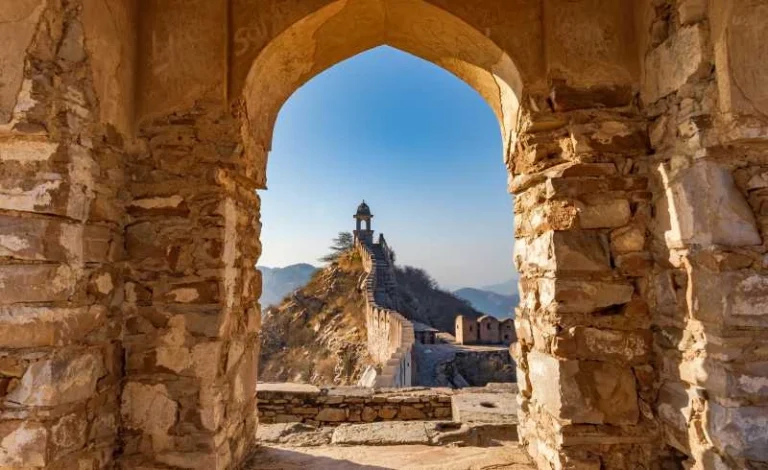
Jaipur, the vibrant capital of Rajasthan, is a city where royal heritage, rich culture, and colorful streets converge. Known as the Pink City for its...
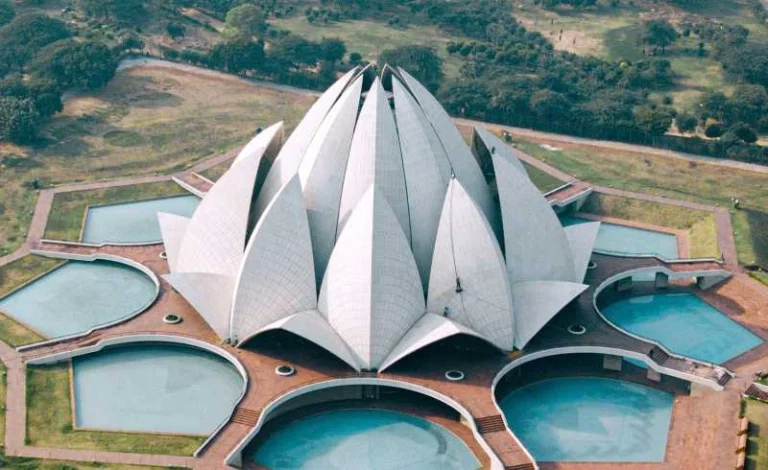
September in India feels like nature’s encore. The monsoon clouds begin to drift away, leaving behind lush valleys, roaring waterfalls, brimming lakes, and a countryside...
You are one step closer to having the best journey of your lifetime! Talk to us, write to us all that you have envisioned for your India trip, and one of our travel experts will connect with you on priority. To help you explicitly we have WhatsApp and Email addresses!


