


Experiential Travel in India: Beyond Sightseeing for International Tourists (2026)
India’s most extraordinary travel experiences are not in its monuments. They are in a weaver’s workshop in Varanasi where a Banarasi silk sari takes three...


 18884507235

For first-time visitors to India, one of the biggest planning questions is where to start. North and South India often feel like two different countries entirely, with distinct languages, cuisines, architecture, and travel rhythms. Both are incredible, but they suit different kinds of travelers. Here’s a detailed comparison to help you decide where to begin your Indian journey.
North India is home to many of the country’s most iconic landmarks. The Taj Mahal in Agra, the forts and palaces of Rajasthan, the ghats of Varanasi, and the Himalayan foothills all fall within this region. If your image of India involves Mughal architecture, desert palaces, and bustling bazaars, North India delivers on nearly every stereotype in the best way.
Highlights include:
Travel style: North India tends to be more intense and chaotic. Traffic, crowds, and constant activity are part of the experience, especially in cities like Delhi and Agra. The food leans toward rich, wheat based dishes, tandoori preparations, and dairy heavy curries.
Best time to visit: October to March, since summers in North India can be brutally hot, especially in Rajasthan and the Delhi plains.
South India offers a slower, greener, and in many ways more accessible introduction to the country, particularly for travelers who find North India’s intensity overwhelming. States like Kerala, Tamil Nadu, and Karnataka feature ancient temple architecture, backwaters, hill stations, and a strong culture of hospitality that’s noticeably gentler in pace.
Highlights include:
Travel style: South India generally feels calmer and more organized. Public infrastructure in cities like Bengaluru, Kochi, and Chennai tends to be more developed, and English is more widely spoken in tourist areas. Food is rice based, with a strong emphasis on coconut, curry leaves, and fermented dishes like dosa and idli.
Best time to visit: November to February for most of the region, though Kerala and the Western Ghats can be visited comfortably through much of the year, barring the monsoon months of June to September.
South India is generally considered easier for a first visit, especially for travelers wary of chaos, pollution, or overwhelming crowds. North India, while more iconic, requires a bit more patience and flexibility.
If seeing the Taj Mahal and Rajasthan’s forts is non negotiable for your first India trip, North India has to come first. These sites are genuinely unique and can’t be substituted elsewhere in the country.
Both regions offer exceptional food, but they’re very different. North Indian food is heartier and richer, while South Indian food is lighter, tangier, and often healthier by comparison. If you have dietary restrictions, South India’s coconut and rice based cuisine may be easier to navigate for vegetarians and vegans.
North India rewards travelers who enjoy history, architecture, and a bit of organized chaos. South India rewards those who want a mix of culture and relaxation, particularly around the backwaters and hill stations.
If you’re traveling in the peak of Indian summer (April to June), South India’s coastal breezes and hill stations offer more comfortable options than the scorching plains of Rajasthan and Delhi.
If your trip allows for two to three weeks, it’s entirely possible to experience both regions in a single visit. A common route is to start in Delhi, cover the Golden Triangle and Rajasthan, then fly south to Kochi or Bengaluru to explore Kerala’s backwaters and Karnataka’s hill stations. Domestic flights in India are frequent and relatively affordable, making this kind of combined itinerary more practical than it might seem.
If you want the most recognizable, historically rich introduction to India and don’t mind a bit of chaos, start with North India. If you’d prefer a gentler, greener entry point with easier logistics and calmer cities, start with South India.
Ultimately, there’s no wrong choice. Both regions offer completely different but equally rewarding sides of India, and many travelers find themselves planning a second trip specifically to see the half they missed the first time around.
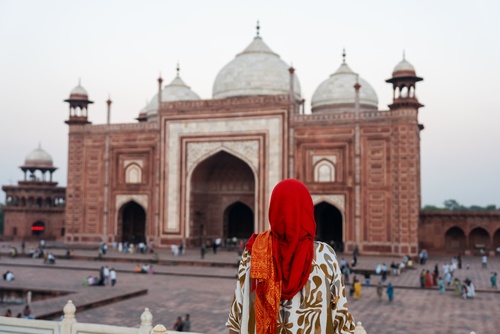
India’s most extraordinary travel experiences are not in its monuments. They are in a weaver’s workshop in Varanasi where a Banarasi silk sari takes three...
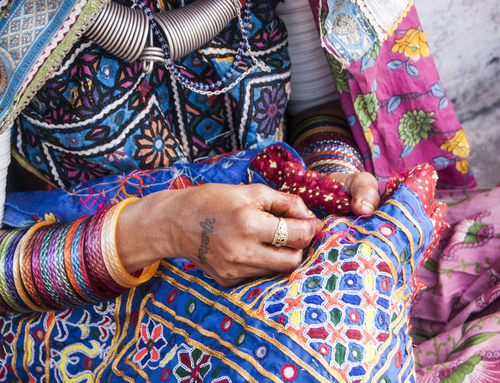
India has more distinct textile and craft traditions than any other country on earth. This is not an approximation. The combination of 28 states, dozens...
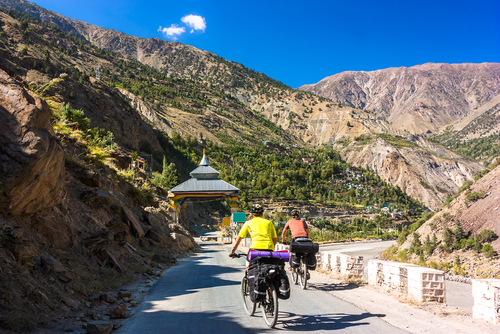
India bookings among adventure travellers surged 214% in the past year. Cycling is at the heart of that surge. International cyclists are discovering that India...
You are one step closer to having the best journey of your lifetime! Talk to us, write to us all that you have envisioned for your India trip, and one of our travel experts will connect with you on priority. To help you explicitly we have WhatsApp and Email addresses!


