October 23, 2026
Most international tourists who visit Rajasthan’s palace hotels do not realise something extraordinary: the families who built those palaces are still here.
India’s 565 royal families were never abolished. The privy purses that funded their households were eliminated in 1971, and their formal titles carry no constitutional recognition. But the families themselves, the Maharaja of Jaipur, the Maharana of Udaipur, the Maharaja of Jodhpur, the royal families of Mysuru, Cooch Behar, Travancore, and hundreds of others, continue to live, in many cases in their ancestral properties, maintaining cultural traditions that connect directly to centuries of royal history.
For premium international travellers, this creates one of the most exclusive and most genuinely distinctive travel opportunities available anywhere in the world. Not the experience of sleeping in a building that used to be a palace. The experience of engaging directly with the living culture that the palace was built to express.
Why India’s Royal Families Still Matter
The elimination of privy purses in 1971 forced India’s royal families to find new purposes for their ancestral properties and new ways of maintaining their cultural roles. Many converted their palaces into hotels. Several established charitable foundations. Some entered politics. Others became patrons of the arts, craft traditions, and conservation programmes that their families had supported for generations.
What none of them did was disappear.
The current Maharaja of Jaipur, Sawai Padmanabh Singh, is a polo player of international standing who represented India at the sport his family has patronised for generations. The Maharana of Udaipur, Arvind Singh Mewar, actively manages the City Palace complex and the cultural institutions his family has maintained. The royal family of Mysuru participates publicly in the Dasara festival that their dynasty has celebrated for over 400 years.
These are not ceremonial roles maintained for tourist consumption. They are living continuations of cultural traditions that the families consider genuine responsibilities, and that produce some of the most extraordinary experiences available to international visitors in India.
The Royal Families and Their Palaces
Jaipur – The Pink City’s Living Royalty
The royal family of Jaipur, the Kachwaha clan, has ruled the region since the 12th century. The current Maharaja, Sawai Padmanabh Singh, inherited the title at the age of 12 in 2011 and has grown into one of the most internationally recognised young Indian royals, a polo player, a conservationist, and an active custodian of the family’s extraordinary cultural heritage.
The City Palace – still partly a royal residence, is open to visitors. The museum within it contains one of the finest collections of royal artefacts, textiles, and weapons in Rajasthan. The Chandra Mahal, the section that remains the family’s private residence, is visible from the public areas, its upper floors still occupied.
Polo at Jaipur – the city’s polo culture, maintained by the royal family, is one of the finest polo traditions in Asia. The Jaipur Polo Ground hosts matches between October and March. Attending a match, and understanding the sport’s deep connection to Rajput warrior culture, is one of the most distinctive experiences available in Jaipur.
Private access: Through specialist operators with established family relationships, it is occasionally possible to arrange private visits to areas of the City Palace not open to the general public, or attendance at events hosted by the family. These experiences are not advertised. They require the right operator and genuine advance planning.
Udaipur – The Maharana of Mewar
The Maharana of Udaipur holds what many historians consider the oldest continuously documented royal lineage in the world; the Mewar dynasty claims descent from the sun god Surya through an unbroken line of 76 generations. The current Maharana, Arvind Singh Mewar, is the 76th in that line.
The Mewar royal family’s relationship with their cultural heritage is among the most active of any Indian royal family. The Maharana of Mewar Charitable Foundation manages the City Palace museum, the royal trust’s conservation programmes, and the annual festivals that the dynasty has celebrated without interruption for centuries.
The City Palace – the largest palace complex in Rajasthan, is managed by the foundation as both a living cultural institution and a museum. The private apartments of the current family occupy the upper floors of the Chandra Mahal section. The museum below contains extraordinary royal collections.
The Gangaur Festival – celebrated by the Mewar royal family in March or April, is one of the finest royal ceremonies in Rajasthan. The royal procession across Lake Pichola, with the family’s ceremonial boats and the accompaniment of traditional musicians, is a living continuation of a tradition that has been observed by the Mewar dynasty for centuries.
The Taj Lake Palace – the 1746 pleasure palace built on an island in Lake Pichola by Maharana Jagat Singh II, is now managed by the Taj Hotels group. However, the Mewar family’s connection to the lake and its palaces remains active and visible throughout Udaipur.
Jodhpur – The Blue City’s Maharaja
The Maharaja of Jodhpur, Gaj Singh II, known universally as Bapji, is one of India’s most publicly engaged royal figures. A former diplomat, a conservationist, and the custodian of one of Rajasthan’s finest palace complexes, he has spent decades actively managing the Jodhpur royal family’s cultural and philanthropic legacy.
Umaid Bhawan Palace – the 347-room Art Deco palace completed in 1943, is divided between the Maharaja’s private residence, a Taj-managed hotel, and a museum. The Maharaja still lives in the private sector. The museum wing documents the palace’s construction and the Jodhpur royal family’s history with considerable depth.
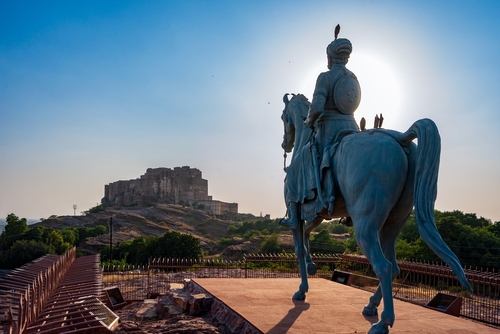
Mehrangarh Fort – managed by the Mehrangarh Museum Trust, established by the Maharaja, is widely considered the finest fort in India. The museum within it is one of the most thoughtfully curated heritage collections in Rajasthan, reflecting the family’s genuine investment in presenting their history with accuracy and depth.
Private dinners at Umaid Bhawan: Through specialist operators, private dining experiences in the palace’s formal rooms, occasionally hosted by members of the royal family, are available to premium visitors. These are among the most sought-after and least-advertised experiences in Rajasthan.
Mysuru – Karnataka’s Royal Heritage
The royal family of Mysuru, the Wadiyar dynasty, ruled the Kingdom of Mysore for nearly 600 years. The current head of the family, Yaduveer Krishnadatta Chamaraja Wadiyar, continues the dynasty’s cultural traditions with particular emphasis on the annual Dasara festival that the Wadiyars have celebrated for over 400 years.
The Mysore Palace – the official residence of the Wadiyar family, the third most visited monument in India after the Taj Mahal and the Red Fort, is illuminated by 100,000 light bulbs every Sunday evening and during the Dasara festival, producing one of the finest spectacles in south Indian heritage tourism.
The Dasara celebrations – held in September or October over ten days, are the finest expression of the Mysuru royal family’s living cultural role. The procession on Vijayadasami, with the gold howdah elephant carrying the idol of the goddess Chamundeshwari, is a ceremony of genuine historical continuity maintained with the family’s active participation.
Travancore – Kerala’s Royal Legacy
The royal family of Travancore, one of the most progressive and most culturally significant of India’s former princely states, maintains one of Kerala’s richest cultural legacies. The family’s patronage of Kerala’s classical arts, Kathakali, Mohiniyattam, Carnatic music, has been continuous for centuries.
The Padmanabhaswamy Temple in Thiruvananthapuram, one of the wealthiest temples in the world, whose vaults famously contained treasures valued at over $20 billion when opened for inventory in 2011, remains under the administration of the Travancore royal family. The relationship between the family and the temple deity is considered an active spiritual bond, not a ceremonial formality.
How to Experience India’s Royal World as an International Visitor
Staying in Royal Properties
The most accessible entry point into India’s royal world is staying in the heritage hotels that royal families have developed from their ancestral properties. However, not all palace hotels have equal royal connection.
Properties with active family involvement:
- Umaid Bhawan Palace, Jodhpur – the Maharaja still lives here. The family’s presence is felt throughout the property
- Samode Palace, near Jaipur – owned and operated by the Samode royal family, whose members are actively involved in daily management
- Shiv Niwas Palace, Udaipur – operated by the Mewar royal family’s own HRH Hotels group, ensuring that revenue supports the family’s cultural and conservation programmes directly
- Falaknuma Palace, Hyderabad – the former palace of the Nizam of Hyderabad, now managed by Taj Hotels, retaining extraordinary collections of the Nizam’s art and furniture
Private Dining and Royal Experiences
Several royal families, through established relationships with specialist operators, host private dining experiences for international visitors in their ancestral properties. These are not restaurant experiences. They are private meals in historic rooms, sometimes with family members present, with menus drawn from traditional royal recipes prepared by hereditary family cooks.
The Mewar royal family occasionally hosts private dinners in the City Palace for groups arranged through specialist operators with long-standing family relationships.
The Jodhpur royal family has hosted private events at Umaid Bhawan for international visitors through established operator relationships.
The Jaipur royal family’s polo events provide a natural social context for international visitors to engage with Rajput sporting culture in a setting that is genuinely royal rather than theatrically staged.
Royal Craft and Cultural Patronage
India’s royal families have historically been the primary patrons of the craft traditions that make Rajasthan, Karnataka, and Kerala so extraordinary for artisan tourism. In many cases, the families maintain these relationships today, workshops that have supplied the royal household for generations continue to operate under family patronage.
Visiting these workshops, block printers, miniature painters, zardozi embroiderers, stone carvers, through operators who have relationships with the royal families provides access to artisan traditions at their most historically rooted. The craftspeople in these workshops are not tourist-facing commercial operators. They are hereditary artisans whose families have worked for the same royal household for generations.
Attending Royal Ceremonies and Festivals
The finest experiences of India’s living royal culture are the ceremonies and festivals that the families have maintained across centuries.
Mysuru Dasara – the Wadiyar family’s royal procession. October.
Udaipur Gangaur – the Mewar family’s lake procession. March–April.
Jaipur Polo Season – the Jaipur royal family’s polo matches. October–March.
Pushkar Fair royal participation – several Rajput royal families participate in the Pushkar fair’s ceremonial events. October–November.
Practical Guide
Access requires the right operator. The private experiences, dining, palace visits beyond the public areas, attendance at family events, require specialist operators with established, long-standing relationships with the royal families. These relationships are built over years and cannot be fabricated. Ask your operator specifically about their royal family connections before booking.
Respect is non-negotiable. India’s royal families are private individuals as well as public cultural figures. The protocols around approaching them, photographing them, and engaging with their properties and staff require the same respect that any encounter with a person of significant cultural standing demands.
The best experiences are not advertised. The private dinners, the polo invitations, the after-hours palace visits, none of these appear on booking platforms. They exist in the relationships between specialist operators and the families, and they are accessed through those relationships rather than through any public channel.
Frequently Asked Questions
Are India’s royal families accessible to international tourists?
In a structured, respectful context, yes. The palace hotels, the managed museums, and the public festivals all provide genuine access to royal heritage. The more exclusive experiences, private dining, events hosted by family members, require specialist operators with established relationships.
Do India’s maharajas still have power?
Constitutional power, no. The privy purses were eliminated in 1971 and the titles carry no legal recognition. Cultural, social, and in some cases economic power, yes, significantly. Several royal families remain among the most influential figures in their regions.
Which Indian royal family has the oldest lineage?
The Mewar dynasty of Udaipur claims the oldest documented royal lineage, 76 generations of continuous succession, the longest of any royal family in the world still living in its ancestral territory.
Can I meet a maharaja during my India trip?
Through the right operator with the right relationships, yes, in a structured context. Private dining at Umaid Bhawan, polo events in Jaipur, and festival participation in Udaipur all provide natural opportunities for genuine engagement with royal family members.
India’s royal families represent one of the most extraordinary and most exclusive dimensions of the country’s heritage, and accessing their world properly requires specialist knowledge and established relationships. At GeTS Holidays, we build itineraries for premium international travellers that go beyond the palace hotel stay into the living royal culture that those palaces were built to express. Begin at [www.getsholidays.com].