


Varanasi Travel Guide for International Tourists: What to Expect and How to Prepare (2026)
There is no city in the world like Varanasi. Not in Asia. Not anywhere. Varanasi is the oldest continuously inhabited city on earth, possibly 3,000...


 18884507235


Thailand has been the default Asian destination for Western travellers for three decades. It is familiar, efficient, beautiful, and well-understood. The beaches are excellent. The food is extraordinary. The temples are magnificent. The infrastructure is impeccable.
India is none of those things in the same way. It is louder, more complex, more demanding, and infinitely more layered. It asks more of you. And it gives back more in return.
For premium travellers from the US, UK, and Europe weighing these two destinations, many of whom have already done Thailand and are considering India for the first time, the comparison is rarely as straightforward as it appears. This guide makes it honest.
Thailand offers a highly refined travel experience. Everything is designed to work smoothly for international visitors. The infrastructure, the hospitality, the food, and the beaches are all delivered with a consistency and efficiency that India cannot match on those specific terms.
India offers something Thailand cannot, genuine civilisational depth. Five thousand years of continuous human history. Twenty-eight states each with its own distinct culture, language, cuisine, and artistic tradition. A landscape that contains everything from Arctic-altitude deserts to tropical backwaters to ancient temples still in daily use after a thousand years.
Choosing between them depends entirely on what you are actually looking for.
India’s cultural depth is simply without parallel in Asia. The monuments of Rajasthan, the cave temples of Ellora and Ajanta, the living Buddhist circuit of Bihar, the Dravidian temple cities of Tamil Nadu, the Mughal architecture of Agra and Delhi, these represent 5,000 years of unbroken human civilization at the highest levels of architectural and artistic achievement.
Crucially, India’s culture is not preserved behind museum glass. It is living. The Meenakshi Temple in Madurai receives 15,000 pilgrims daily. The ghats of Varanasi have been in continuous use for 3,000 years. The craft traditions of Rajasthan and Gujarat are practised by artisans whose family lineages connect directly to the royal courts that patronised them centuries ago.
For premium travellers with genuine cultural curiosity, India delivers an experience of a completely different order from any other destination in Asia.
Thailand’s cultural offering is real and rewarding, the temples of Chiang Mai, the ancient city of Ayutthaya, the royal architecture of Bangkok. However, it operates on a shorter historical timeline and a narrower cultural range than India. Most of Thailand’s significant cultural sites date from the 13th century onwards. Many of its most celebrated temples are actively managed as tourist attractions rather than as living religious institutions.
Verdict: India wins decisively for cultural depth, historical significance, and the experience of engaging with a living civilisation.
India’s food culture is one of the most diverse, most sophisticated, and most underestimated in the world. Twenty-eight distinct regional culinary traditions, from Kashmir’s wazwan to Kerala’s Onam Sadya, from Lucknow’s dum biryani to Chettinad’s fiery curry, constitute a culinary landscape of extraordinary breadth.
For serious food travellers, India is unrivalled in Asia. The depth of regional variation, the quality of street food traditions in cities like Old Delhi, Varanasi, and Kolkata, and the extraordinary private dining experiences available through the right operators make India one of the world’s great food destinations.
Thai food is among the most internationally beloved cuisines on earth, and it is genuinely excellent in Thailand. The balance of sweet, sour, salty, and spicy in Thai cooking is sophisticated and consistent. The street food culture of Bangkok and Chiang Mai is extraordinary.
However, Thai food, unlike Indian food, is broadly consistent across the country. The regional variation that makes India’s culinary landscape so inexhaustible is less pronounced in Thailand. A traveller who has eaten well in Bangkok has experienced most of what Thai food offers.
Verdict: Draw, both countries are exceptional food destinations. India wins on variety and regional depth. Thailand wins on consistency and immediate accessibility for international palates.
India has 7,500 kilometres of coastline. Its finest beaches, Radhanagar on the Andaman Islands, the southern Goa beaches, Kerala’s Varkala cliffs, Karnataka’s undeveloped Tulu Nadu coast, are extraordinary. The Andaman Islands in particular offer water quality and marine biodiversity that compare favourably with the best of Southeast Asia.
However, India’s beaches require more effort to reach and more knowledge to find at their best. The infrastructure at Indian beach destinations is less consistently developed than Thailand’s.
Thailand’s beaches are its strongest suit. Krabi, Koh Lanta, the Similan Islands, and the Andaman coast deliver beach experiences of consistent excellence with well-developed infrastructure, excellent water sports, and a resort sector of international quality.
For pure beach holiday purposes, Thailand’s beaches are more reliably excellent and more easily accessible than India’s.
Verdict: Thailand wins for pure beach holidays. India’s Andaman Islands are competitive at the top end but require more planning.
India’s luxury travel offering is extraordinary, and largely underappreciated internationally. The palace hotels of Rajasthan, the luxury tented safari camps of the tiger reserves, the Ayurvedic retreat centres of Kerala, and the luxury houseboat experiences of the backwaters deliver experiences that have no equivalent anywhere in Thailand.
The exchange rate means that luxury in India, genuine, historic, extraordinary luxury, costs a fraction of equivalent luxury in Thailand or any European destination. A night at the Taj Lake Palace in Udaipur costs less than a standard room at a Bangkok five-star. A week-long Ayurvedic Panchakarma programme in Kerala costs less than a weekend spa break at a Thai resort.
For premium travellers, India’s luxury landscape is one of the most compelling value propositions in global travel.
Thailand’s luxury sector is excellent and well-established, the Aman properties in Bangkok and Chiang Rai, the Six Senses in Koh Samui, and numerous exceptional beach resorts deliver international luxury standards with Thai hospitality.
However, Thailand’s luxury offering, while excellent, is broadly comparable to luxury available in other Southeast Asian and international destinations. It does not offer the specific, irreplaceable character of sleeping in a 400-year-old palace, riding through a tiger reserve at dawn in an open jeep, or receiving Ayurvedic treatment from a physician whose family has practised medicine for 12 generations.
Verdict: India wins for the uniqueness and value of its luxury experiences. Thailand wins for consistency and international accessibility.
Thailand is easier. Full stop. The infrastructure for international tourists is more consistently developed. English is more widely spoken in tourist areas. The transport between destinations is simpler. The food is less likely to challenge unaccustomed digestive systems. The sensory environment is less intense.
India requires more preparation, more flexibility, and more patience. It rewards these qualities generously. But it asks for them first.
Both countries are safe for international tourists in their main tourist areas with standard precautions. Thailand’s tourist infrastructure is more consistently managed. India requires more active awareness, particularly around common tourist-area scams, but is not dangerous for well-prepared travellers.
Thailand offers visa-free entry for citizens of the US, UK, and most European countries for stays of up to 60 days. India requires an e-Visa application before travel, straightforward to obtain online, processed within 3–5 business days, valid for one year with multiple entries.
Both countries offer excellent value for Western travellers. India edges Thailand at the luxury end, palace hotels and bespoke experiences cost significantly less in India than equivalent luxury in Thailand. At the budget and mid-range levels, costs are broadly comparable.
Both countries have optimal visiting windows that partially overlap. October to February is excellent for most of India and for most of Thailand. April to September is Himalayan season in India, when Ladakh and Kashmir are at their finest, and shoulder or monsoon season for most of Thailand.
Choose India if:
You are a premium traveller with genuine cultural curiosity who wants an experience of genuine depth and complexity. You want to engage with one of the world’s great civilisations first hand, its monuments, its food traditions, its living religious culture, and its extraordinary landscape variety.
You want luxury that is genuinely irreplaceable, palace hotels, private safaris, Ayurvedic retreats, rather than internationally standardised five-star comfort.
You have already done Thailand and are ready for Asia at a different level of intensity and reward.
You want the kind of journey that produces stories rather than photographs, experiences that stay with you not because they were beautiful but because they were genuinely extraordinary.
Choose Thailand if:
You want your first Asian trip to be manageable, beautiful, and immediately rewarding without significant preparation or tolerance for complexity.
You want world-class beaches as your primary experience. You want excellent food in a straightforward environment. You want luxury that delivers consistent international standards.
You are travelling with people, children, older relatives, or companions, for whom India’s intensity might be genuinely difficult.
Yes, and for travellers with three weeks or more, the combination is one of the finest Asia itineraries available. India first for cultural depth, heritage, and luxury experiences. Thailand last for beach recovery and Southeast Asian contrast.
The two countries complement each other precisely because they are so different. India’s intensity makes Thailand’s ease feel like relief. Thailand’s polish makes India’s rawness feel more vivid in retrospect.
Is India or Thailand better for a first-time Asia trip?
Thailand is the more conventional first Asia trip, easier, more immediately rewarding, and better infrastructured for first-time international visitors. India is the most extraordinary first Asia trip for travellers who arrive prepared and curious. Premium seasoned travellers consistently rate India higher in retrospect.
Is India more expensive than Thailand?
Broadly comparable at mid-range. India is significantly better value at the luxury end — palace hotels, private safaris, and bespoke experiences cost considerably less in India than equivalent luxury in Thailand.
Which has better food – India or Thailand?
Both are exceptional. India wins on variety and regional depth, 28 distinct culinary traditions make it the most inexhaustible food destination. Thailand wins on immediate accessibility and consistency for international palates.
How long do you need to visit India vs Thailand?
A meaningful India trip requires a minimum of 10 days, ideally 14. Thailand can be rewarding in 7–10 days for a focused itinerary. India’s distances and complexity reward longer stays more proportionally than Thailand.
Is India safe compared to Thailand?
Both are safe for well-prepared international travellers in their main tourist areas. Thailand’s tourist infrastructure is more consistently managed. India requires more active awareness but is not dangerous for travellers who prepare appropriately.
India offers something Thailand cannot, a journey through one of the world’s great civilisations, experienced in landscapes of extraordinary variety, at a luxury level that delivers genuine value. At GeTS Holidays, we build bespoke luxury itineraries across India, Bhutan, Nepal, and Sri Lanka for premium international travellers who are ready for Asia at its most extraordinary. Begin at [www.getsholidays.com].
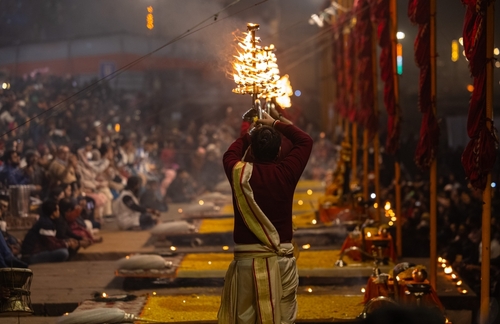
There is no city in the world like Varanasi. Not in Asia. Not anywhere. Varanasi is the oldest continuously inhabited city on earth, possibly 3,000...
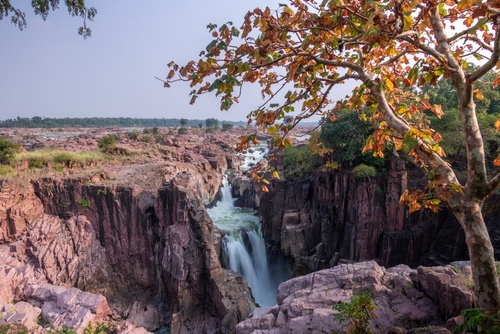
October is India’s finest month. This is a strong claim for a country with 28 states, a dozen distinct climatic zones, and a seasonal calendar...
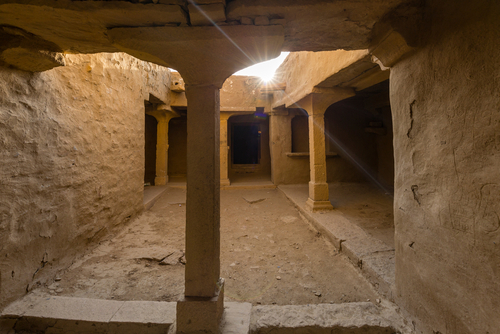
Not all travel is about beauty. Some of the most powerful journeys are about bearing witness. Dark tourism; travel to sites associated with death, tragedy,...
You are one step closer to having the best journey of your lifetime! Talk to us, write to us all that you have envisioned for your India trip, and one of our travel experts will connect with you on priority. To help you explicitly we have WhatsApp and Email addresses!


