


Experiential Travel in India: Beyond Sightseeing for International Tourists (2026)
India’s most extraordinary travel experiences are not in its monuments. They are in a weaver’s workshop in Varanasi where a Banarasi silk sari takes three...


 18884507235

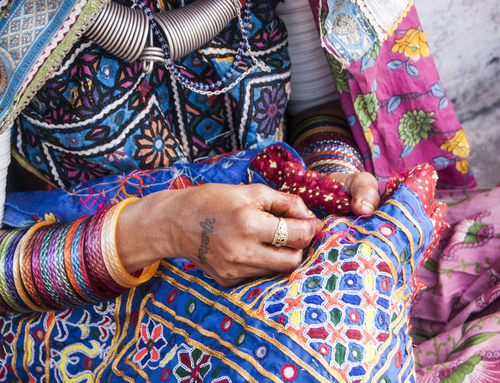
India has more distinct textile and craft traditions than any other country on earth.
This is not an approximation. The combination of 28 states, dozens of distinct weaving communities, centuries of royal patronage, and an extraordinary diversity of raw materials, silk, cotton, wool, grass, metal, clay, wood, and stone, has produced a craft landscape of staggering breadth and depth.
For international travellers with an interest in fashion, textiles, design, and artisan culture, India offers a journey through living craft traditions that no museum collection and no retail experience can replicate. The finest Indian textiles are not in shops. They are in the workshops and homes of the families who have been making them for generations.
This guide covers the most rewarding textile and craft trail experiences for international visitors across India in 2026.
India’s textile traditions are among the oldest continuously practised craft forms in the world. Several of them are UNESCO-recognised intangible cultural heritage. Several more are on the Geographical Indication register, legally protected designations, like Champagne or Parmigiano-Reggiano, that can only be applied to products made in specific places using specific techniques.
Additionally, India’s craft traditions are under genuine pressure. Mechanisation, fast fashion, and the migration of younger generations to urban employment are eroding craft communities that took centuries to develop. Visiting these communities, and buying directly from artisans at fair prices, is one of the most directly beneficial things an international traveller can do for India’s cultural heritage.
The craft trail described in this guide moves roughly from northwest to south and east, beginning in Rajasthan and Gujarat, moving through the textile heartlands of Uttar Pradesh and Madhya Pradesh, and finishing in the weaving traditions of south and east India.
Rajasthan is the richest single state for craft tourism in India. Its traditions span block printing, tie-dye, embroidery, blue pottery, leatherwork, miniature painting, stone carving, and jewellery making, each with its own geographic centre, its own community of practitioners, and its own centuries of history.
Two villages outside Jaipur, Sanganer and Bagru, are the twin capitals of Rajasthani block printing, and they practise distinct traditions.
Sanganer printing uses fine, detailed wooden blocks on white fabric. The patterns are intricate, the colours are multiple, and the registration, the precise alignment of successive blocks to build a complex pattern, requires skills developed over years of practice. Sanganer’s white-on-white and multicolour floral prints are the ones most familiar to international buyers of Indian block-printed textiles.
Bagru printing uses a resist-dyeing technique, mud resist applied before dyeing produces patterns of a different, bolder character. The colours are earthy, indigo, madder red, black and the aesthetic is more graphic and less delicate than Sanganer’s work.
Both villages have working workshops open to visitors. The experience of watching a master printer align a block with the precision of a surgeon, applying exactly the right pressure, and producing a pattern of extraordinary regularity, by hand, without any mechanical guide, recalibrates how you think about handmade objects permanently.
Jaipur’s blue pottery tradition is unlike any other ceramic tradition in India. It uses no clay, the body is made from ground quartz, glass, and a binding agent. It uses no kiln in the conventional sense, firing temperatures are lower than standard ceramics. And the distinctive turquoise-and-cobalt palette comes from metallic oxide pigments applied to a white slip ground.
The tradition was brought to Jaipur by Mughal artisans from Central Asia and Persia in the 17th century and has been maintained by a small community of artisans ever since. Several workshops in Jaipur offer demonstrations and hands-on sessions, making a piece from scratch, applying the pigments, and understanding the firing process.
Bandhani, the ancient Rajasthani tie-dye tradition, involves tying thousands of tiny knots in fabric before dyeing, each knot producing a small circle of undyed colour in the finished piece. A single Bandhani dupatta (scarf) may contain 75,000 individual knots, each tied by hand by artisans, predominantly women, working in family groups.
The finest Bandhani work comes from Jodhpur and Jaipur, and the workshops producing it are family operations that have been tying knots for generations. Visiting one, watching the speed and precision with which experienced artisans tie 1,000 knots per hour, is a lesson in the value of handmade objects that no retail experience provides.
Gujarat is India’s finest state for textile embroidery traditions. The Kutch district alone supports over 20 distinct embroidery styles, each specific to a particular community, each with its own colour palette, stitch vocabulary, and symbolic language.
The embroidery traditions of Kutch, practised by communities including the Rabari, Ahir, Jat, and Mutwa, use silk thread, mirrors, beads, and shells in combinations of extraordinary visual richness. Each community’s embroidery is instantly distinguishable by its palette and pattern vocabulary, the Rabari’s deep reds and blacks with tiny mirror work, the Ahir’s bold geometric patterns in primary colours, the Mutwa’s restrained white-on-white work of extraordinary delicacy.
The Kutch Mahila Vikas Sangathan (KMVS) and the Khamir craft resource centre in Bhuj are the finest starting points for international visitors seeking genuine craft engagement in Kutch. Both organisations work directly with artisan communities and facilitate visits that benefit producers directly.
The Patola silk saris of Patan are among the most technically demanding textiles produced anywhere in the world. They are double ikat, meaning both the warp and the weft threads are individually resist-dyed before weaving, requiring the weaver to align thousands of pre-dyed threads so that the pattern emerges from the intersection of warp and weft simultaneously.
A single Patola sari takes 4–6 months to weave. A master weaver produces perhaps two per year. The price reflects this, genuine Patola saris command prices of ₹2–10 lakh ($2,500–12,000 USD) and upwards.
Only two families in Patan still practice the double ikat Patola technique. Visiting their workshops, watching the extraordinary precision with which a Patola weaver aligns pre-dyed threads on a handloom, is one of the most impressive craft demonstrations available in India.
Banarasi silk is among the most celebrated textile traditions in the world, a silk weaving tradition of extraordinary complexity and beauty, practised in Varanasi for at least 500 years.
A genuine Banarasi sari is woven on a handloom using silk thread and real gold or silver zari (metallic thread). The patterns, typically Mughal-influenced floral and geometric motifs, are programmed into the loom using a Jacquard mechanism that translates a paper punch-card pattern into the lifting sequence of the loom’s heddles. A complex Banarasi sari takes 3 months to weave on a handloom.
The weaving community is concentrated in the Peeli Kothi and Madanpura areas of Varanasi. Visiting a working handloom workshop, watching the shuttle fly between the warp threads, the pattern emerging row by row from what appears to be pure chaos, is one of the finest craft experiences in India.
Lucknow’s Chikankari tradition, a white-on-white shadow embroidery on fine muslin, traditionally done entirely in white thread, is one of India’s most delicate and most distinctive craft traditions. It was developed under Nawabi patronage in the 18th century for the court’s summer garments, the white-on-white design being both aesthetically refined and practically cooling.
Contemporary Chikankari has expanded beyond white-on-white into colour, but the finest traditional work remains monochromatic and extraordinarily subtle, the patterns visible only in certain light conditions, the stitches so fine that a magnifying glass reveals their complexity.
The craft is practised primarily by women in Lucknow’s old city in a cottage industry that employs hundreds of thousands of artisans. Visiting the workshops of established designers who work directly with traditional embroiderers, Lucknow has several, providing access to the full production chain from artisan to finished garment.
Kanchipuram silk saris are among the most prized in India, heavy, richly coloured, woven with real gold zari borders and pallu (end panel) in patterns of great intricacy. They are traditionally worn at weddings and formal occasions and are considered family heirlooms, passed from mother to daughter across generations.
The weaving community is concentrated in Kanchipuram town, 75 kilometres from Chennai. The finest workshops, several of them family operations maintaining traditional designs and genuine silk and zari, welcome visitors for guided tours of the weaving process.
Pochampally, a village outside Hyderabad, is the capital of Telugu ikat weaving, a tradition recognised by UNESCO as an Intangible Cultural Heritage. The single ikat process, dyeing warp threads before weaving to create geometric patterns, produces textiles of a distinctive blurred, impressionistic quality that is entirely different from the crisp precision of block printing or Banarasi silk.
The village itself is a living craft community, almost every household is involved in weaving at some stage of the production process. Walking through Pochampally on a weekday morning, hearing the rhythm of handlooms from every house, watching the pre-dyed threads being stretched and prepared for weaving, this is craft tourism at its most unmediated.
Pattachitra, intricate narrative paintings on cloth or dried palm leaf, depicting scenes from Hindu mythology in a style unchanged for centuries, is Odisha’s most celebrated craft tradition. The paintings are created in the village of Raghurajpur near Puri, where the entire community is engaged in Pattachitra production.
Raghurajpur is one of India’s finest craft village experiences, a single street of traditional houses whose walls are painted with murals, each family practising their specific role in the craft production chain, from grinding natural pigments to applying the final lacquer coat. Visiting during production hours and commissioning a painting directly from a master artist produces a souvenir of genuine cultural significance.
Buy directly from artisans wherever possible. The economic benefit of a craft purchase goes entirely to the artisan when bought at source. Avoid purchasing Indian textiles from urban shops and airport stores where the artisan receives no direct benefit.
Understand what you are buying. India’s craft market has a significant problem with machine-made imitations sold as handmade originals. A genuine block-printed fabric has slight irregularities at the block joins. A genuine Banarasi sari is heavy and the zari has a specific lustre. A genuine Patola sari is reversible, the pattern is identical on both sides. Ask questions. A genuine artisan will always be able to explain their process.
Allow time. A textile and craft trail cannot be rushed. Workshops operate on their own schedules. Artisans are working, not waiting. The finest experiences are those where you arrive with time to spare and stay until you have seen enough.
Combine with heritage experiences. Jaipur’s craft workshops and Amber Fort. Varanasi’s silk weaving and its ghats. Puri’s Pattachitra village and the Jagannath Temple. The craft traditions and the heritage landscapes of India are inseparable, each explains the other.
What is the best Indian state for textile tourism?
Rajasthan offers the widest variety of craft traditions in a single state. Gujarat’s Kutch district offers the deepest embroidery tradition. Uttar Pradesh has the finest silk weaving. For a comprehensive textile trail, a circuit covering Rajasthan, Gujarat, and Varanasi delivers the most complete picture of India’s textile heritage.
Where can I buy genuine Indian handloom textiles?
Buy directly from artisan workshops, government emporiums (which carry certified genuine handloom products), and craft cooperatives with verified artisan benefit-sharing. The Crafts Museum in Delhi has an excellent shop with certified genuine craft products from across India.
How do I distinguish genuine handmade textiles from machine-made imitations?
Genuine handloom fabrics have slight irregularities, variations in thread tension, minor pattern misalignments, and a texture that machine-made fabric cannot replicate. Ask the seller to show you the selvedge (edge) of the fabric, handloom selvedges are slightly uneven. Genuine block-printed fabric shows slight colour variation at block joins.
Is it appropriate to photograph artisans at work?
Always ask permission before photographing. Most working artisans are comfortable being photographed and many appreciate the interest. Never photograph without asking, it is both a courtesy and a cultural obligation.
India’s textile and craft traditions are among the world’s most extraordinary, and experiencing them properly means going beyond the shops to the workshops, the villages, and the families who have maintained these traditions for generations. At GeTS Holidays, we build craft trail itineraries for international travellers that combine direct artisan access with the heritage and cultural experiences that give India’s craft traditions their full context. Begin at [www.getsholidays.com].
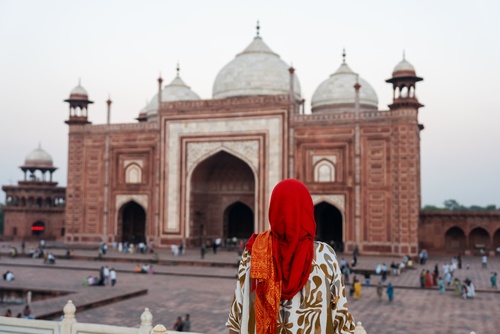
India’s most extraordinary travel experiences are not in its monuments. They are in a weaver’s workshop in Varanasi where a Banarasi silk sari takes three...
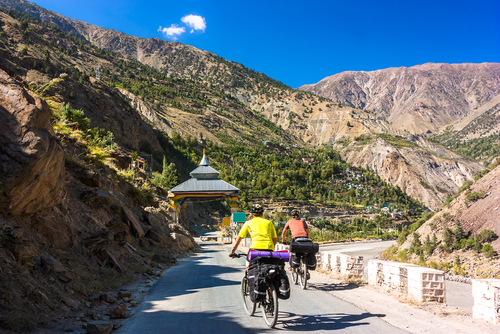
India bookings among adventure travellers surged 214% in the past year. Cycling is at the heart of that surge. International cyclists are discovering that India...

Five thousand years ago, while the pyramids of Egypt were still being built, a sophisticated city of 20,000 people was flourishing on a small island...
You are one step closer to having the best journey of your lifetime! Talk to us, write to us all that you have envisioned for your India trip, and one of our travel experts will connect with you on priority. To help you explicitly we have WhatsApp and Email addresses!


