October 15, 2026
October is India’s finest month.
This is a strong claim for a country with 28 states, a dozen distinct climatic zones, and a seasonal calendar of extraordinary complexity. But the data supports it, and so does the experience of premium international travellers who have visited India across multiple seasons.
October sits at India’s seasonal inflection point. The southwest monsoon, which has drenched the subcontinent since June, withdraws in September and early October, leaving behind a landscape of startling freshness. The air is clean. The vegetation is intensely green. The rivers and lakes are full. The dust that defines India’s dry season is gone. And the sky, the brilliant blue of post-monsoon India, produces a quality of light that photographers and travellers consistently describe as the finest available anywhere in the country.
At the same time, October marks the beginning of India’s peak cultural season. The festival calendar ignites. The palace hotels of Rajasthan fill with the first visitors of the new season. The wildlife reserves open their gates after the monsoon closure. And the temperatures, which have been punishing since April, become genuinely comfortable across the country.
For premium international travellers from the US, UK, and Europe, October represents the ideal convergence of perfect weather, extraordinary festivals, excellent wildlife, and the full operational capacity of India’s finest hotels and experiences.
The Post-Monsoon Transformation
Understanding what the monsoon does to India is the key to understanding why October is so compelling.
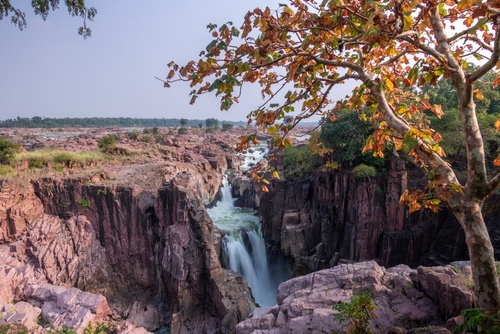
Between June and September, India’s landscape undergoes a complete transformation. The dry, dusty terrain of the hot season becomes green. Rajasthan’s desert scrub produces unexpected bursts of colour. Kerala’s backwaters fill to their full extent. The Western Ghats produce waterfalls of extraordinary scale. The Himalayan rivers run fast and clear with glacial melt.
By October, this transformation is complete, and the rain has stopped. What remains is India at its most vivid: a landscape that has been washed clean and renewed, illuminated by a post-monsoon sun that produces the finest light of the year.
The specific quality of October light in India, particularly in Rajasthan and the Himalayan foothills, is one of the most discussed subjects in Indian photography. The air is clear, the shadows are deep, and the golden hour before sunset produces colours on sandstone, marble, and whitewashed walls that no other season replicates.
The Festival Calendar: October’s Extraordinary Cultural Window
October is India’s most festival-dense month. For premium international travellers who want to time their visit around cultural events, it is unmatched.
Diwali – The Festival of Lights
Diwali, India’s most widely celebrated festival, falls in October or November depending on the lunar calendar. In 2026, Diwali falls in late October.
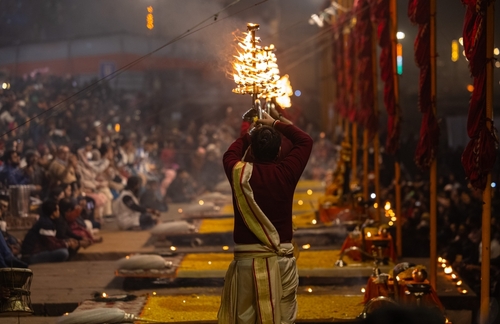
Diwali transforms India. Every house, every shop, every street, and every temple is illuminated by oil lamps and electric lights. The darkness of the new moon night, on which Diwali always falls, is replaced by a landscape of light that extends as far as the eye can see in every direction.
The finest Diwali experiences for international visitors:
Varanasi – the Dev Deepawali, held 15 days after Diwali on the Kartik full moon (November in 2026), is Varanasi’s own elaboration of the festival. Over a million oil lamps are lit on the 84 ghats simultaneously. The city produces a display of devotional light that has no parallel anywhere in the world. Book accommodation 4–6 months in advance.
Jaipur – the Pink City illuminated for Diwali, with the City Palace, Hawa Mahal, and fort walls all lit, and the old city’s pink facades glowing in the lamplight.
Udaipur – Diwali in Udaipur is particularly beautiful. The lakes reflect the city’s illumination. The City Palace and the Lake Palace are lit. Boat rides on Lake Pichola on Diwali night produce images of extraordinary beauty.
Pushkar Camel Fair
The Pushkar Camel Fair, held annually in late October or early November in the sacred town of Pushkar in Rajasthan, is one of the oldest, largest, and most visually extraordinary livestock fairs in the world.
Over 50,000 camels, horses, and cattle are brought to Pushkar for five days of trading, racing, and competition. The landscape of the desert around Pushkar is filled with tents and campfires. The decorated camels, the turbaned herders in traditional dress, the dust catching the late afternoon light, the visual intensity is unlike anything else in India’s festival calendar.
The Pushkar fair coincides with the Kartik Purnima full moon, the same lunar event that produces the Dev Deepawali in Varanasi. The religious dimension of Pushkar, the sacred lake, the Brahma Temple, the ritual bathing on Kartik Purnima, runs alongside the commercial fair in a combination of the sacred and the temporal that is entirely characteristic of how Indian public life operates.
Practical note: Accommodation in Pushkar during the fair is extremely limited. Most visitors stay in tent camps set up specifically for the period. Book 4–6 months in advance.
Navratri and Dussehra
Navratri, the nine-night festival celebrating the goddess Durga, precedes Diwali by approximately three weeks, typically falling in early October. Dussehra, marking the victory of Rama over Ravana, follows on the tenth day.
Mysuru (Mysore) Dussehra is the finest Dussehra celebration in India for international visitors. The Mysore Palace is illuminated by 100,000 light bulbs every evening for the ten days of the festival. A grand procession on Vijayadasami (the tenth day), with a gold howdah elephant carrying the idol of the goddess, accompanied by caparisoned elephants, horses, bands, and thousands of participants, moves through the city in a display of ceremonial magnificence that has been continuous for over 400 years.
Mysuru Dussehra is one of the finest heritage festivals in south India and one of the most rewarding cultural experiences available to international visitors in October. Book accommodation in Mysuru 4–6 months in advance for the Dussehra period.
Where to Go in India in October
Rajasthan
October is the opening of Rajasthan’s season, and it opens magnificently.
The desert landscape is greener than at any other time of year after the monsoon rains. The air is clear. The heritage hotels have emerged from their summer maintenance closure and are operating at full capacity. The festival energy, Navratri, Dussehra, Diwali, and the Pushkar Fair, fills the calendar from the first week of October through to mid-November.
October temperatures in Rajasthan: 25–35°C during the day, dropping to 15–20°C at night. Comfortable for sightseeing. Warm enough for evening outdoor dining.
Best Rajasthan October experiences: Diwali in Udaipur or Jaipur. The Pushkar Camel Fair. Sunrise at Amber Fort before the October crowds build to December levels. Desert camp nights in Jaisalmer when the air is cool and the stars are at their October best.
Kerala
October marks the transition from Kerala’s monsoon into its finest season. The backwaters are at their fullest extent, the rains of the previous months have raised the water levels throughout the canal network. The waterfalls of the Western Ghats are still running at full force. And the landscape, intensely green from the monsoon, is at its most vivid.
Onam, Kerala’s harvest festival, falls in August or September, just before October. If your travel extends into late September, timing the trip around Onam produces one of the finest cultural experiences in south India.
October temperatures in Kerala: 27–33°C on the coast, cooler in the hill stations. Post-monsoon humidity is higher than December–February but manageable.
Best Kerala October experiences: Backwaters houseboat at their fullest and most beautiful. Waterfalls at Athirapilly and Vazhachal at peak flow. The tea estates of Munnar still deeply green from the monsoon rains.
Ladakh
October is Ladakh’s final month of full accessibility before the winter closes the mountain passes. It is also, many experienced Ladakh travellers argue, its finest month.
The summer crowds have largely departed by mid-October. The landscape has shifted from summer’s vivid greens and blues to autumn’s deeper, more complex palette, the valley floors amber and rust, the mountains in their most dramatic pre-winter state, the sky a deeper blue than any other season produces.
The temperatures drop sharply, particularly at night, where sub-zero conditions are possible from mid-October onwards. This requires preparation. The reward is Ladakh at its quietest and its most atmospheric.
Practical note: The Manali-Leh highway typically closes in late October. Fly in and out of Leh to avoid being caught by an early road closure.
The Himalayan Foothills – Uttarakhand and Himachal Pradesh
October in the Himalayan foothills of Uttarakhand and Himachal Pradesh, the rhododendron forests, the apple orchards of Kinnaur, the valley walks around Shimla and Manali, produces a quality of autumn colour and mountain clarity that rewards travellers specifically seeking Himalayan experiences without Ladakh’s altitude demands.
The apple harvest in Kinnaur and the Kullu Valley happens in September and October, a specific and extraordinary agricultural cultural experience that is entirely seasonal and entirely unavailable at any other time of year.
Wildlife Safaris in October
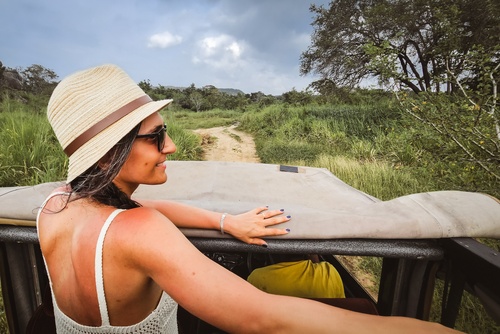
October is an excellent month for wildlife safaris in India’s major tiger reserves.
The parks reopen after the monsoon closure (most tiger reserves close from approximately July 1 to October 15). The first weeks of October, when the parks have just reopened, offer a specific quality of experience: the vegetation is lush from the monsoon, the water sources are full, and the tigers are active and visible in a landscape that the summer’s sparse cover does not produce.
Ranthambore – reopens in October with fresh vegetation and active tiger sightings. The fort ruins within the park, medieval, dramatic, and extraordinary as a safari backdrop, are particularly beautiful in the October light.
Kanha and Bandhavgarh – central India’s finest tiger reserves reopen in October to the first visitors of the new season. The sal forests are green and dense, the meadows are lush, and the wildlife activity is high after the monsoon’s undisturbed months.
Kaziranga – Assam’s rhinoceros reserve is at its most active in October and November, when the floodwaters from the Brahmaputra have receded and the animals have returned to the lower ground from the hills where they sheltered during the floods.
What to Pack for India in October
Packing for an October India trip requires accounting for several different environments simultaneously.
For the plains (Rajasthan, Delhi, Agra): Light cotton clothing for the day. A light layer for evenings, October nights in Rajasthan can drop to 15°C by late month. Sunscreen SPF 50+, the post-monsoon sun is intense.
For Kerala: Light, breathable clothing throughout. The post-monsoon humidity requires natural fabrics. A light rain layer for occasional showers in early October.
For Ladakh: Serious warm layers, a down jacket, thermal base layers, warm gloves, and a hat. October nights in Leh drop to single figures. At Pangong Lake they can reach –5°C or below.
For all destinations: Insect repellent, post-monsoon India has higher mosquito activity than the dry season. Comfortable walking shoes. Modest clothing for temple and festival visits.
Booking Considerations for October Travel
October is the beginning of India’s peak season. Several practical planning points apply specifically to this month.
Book accommodation early. The finest palace hotels in Rajasthan, Taj Lake Palace, Umaid Bhawan, Samode Palace, begin filling from October onwards. For Diwali and Pushkar Fair periods, booking 4–6 months in advance is essential. For general October travel, 3–4 months ahead is recommended.
Book safari permits in advance. Tiger reserve permits for October, the first weeks after reopening, are among the most sought-after of the year. Book through your operator as early as possible.
Allow flexibility around Diwali. Transport during Diwali, trains, domestic flights, and road travel, is heavily loaded. Build flexibility into your itinerary around the festival dates. Arrive at your Diwali destination at least 2 days before and plan to stay 2 days after.
Frequently Asked Questions
Is October a good time to visit India for first-time international visitors?
Yes, it is one of the best. The weather is excellent across most of India, the festival calendar is extraordinary, the wildlife is active, and the full capacity of India’s finest hotels and experiences is available. October is consistently among the top two or three months recommended for first-time visitors, alongside November and February.
What is the weather like in India in October?
It varies significantly by region. Rajasthan: 25–35°C daytime, 15–20°C nights. Kerala: 27–33°C with higher humidity. Delhi and Agra: 25–33°C, comfortable and clear. Ladakh: 5–15°C daytime, –5 to 5°C nights. The Himalayan foothills: 15–25°C, crisp and clear.
When exactly does Diwali fall in October 2026?
Diwali in 2026 falls on October 20. The Dev Deepawali in Varanasi, the most spectacular Diwali-related festival, falls on November 4, 2026, on the Kartik Purnima full moon.
Is the Pushkar Camel Fair in October or November in 2026?
The Pushkar Camel Fair in 2026 runs from October 28 to November 5, with the main trading days on October 30–31 and the Kartik Purnima celebration on November 4–5.
Are India’s tiger reserves open in October?
Most major tiger reserves reopen on October 15 after the monsoon closure. Some open slightly earlier or later depending on the year and the specific reserve. Ranthambore, Kanha, Bandhavgarh, and Tadoba all typically reopen in mid-October. Confirm current opening dates with your operator before booking.
Should I visit India in October or November?
Both are excellent. October offers the post-monsoon freshness, the opening of the safari season, and the Diwali and Pushkar festival window. November offers slightly cooler temperatures, the Dev Deepawali in Varanasi, and the beginning of the Rajasthan peak season with full hotel availability. For first-time visitors who want festivals, October is the stronger month. For those prioritising weather and comfort over festivals, November is marginally more reliable.
October is India at its most extraordinary, festival-filled, freshly washed by the monsoon, and alive with the energy of a new season beginning. At GeTS Holidays, we build October India itineraries for premium international travellers that combine the finest festival experiences with the best of the season’s wildlife, heritage, and cultural offerings, timed precisely to make the most of India’s finest month. Begin at [www.getsholidays.com