


Experiential Travel in India: Beyond Sightseeing for International Tourists (2026)
India’s most extraordinary travel experiences are not in its monuments. They are in a weaver’s workshop in Varanasi where a Banarasi silk sari takes three...


 18884507235

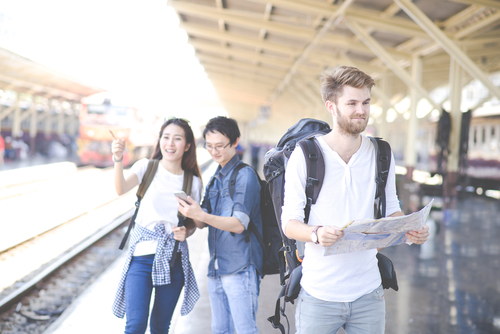
India is having a millennial and Gen Z moment, and international young travellers are driving it.
The 28–45 age bracket is now the fastest-growing inbound segment for India travel from the US, UK, and Europe. These are not backpackers on shoestring budgets. They are experience-driven travellers with disposable income, specific interests, and an active resistance to the standard tourist circuit.
They want offbeat destinations. Immersive cultural experiences. Food that is genuinely local. Accommodation with character. And they want all of it to be shareable, not performatively, but authentically.
India delivers every single one of these things at a level no other Asian destination can match. This guide covers the India that millennial and Gen Z international travellers are actually looking for.
India’s appeal to young international travelers is built on several specific characteristics.
Authenticity at scale. India’s cultural traditions, its food markets, its festivals, its craft traditions, its spiritual practices, are not curated for tourists. They are alive, ongoing, and accessible to any visitor who shows genuine curiosity. This is exactly what experience-driven young travelers are searching for.
Value for money. India’s exchange rate means that millennial travelers who want quality, boutique accommodation, excellent restaurants, and private guides, can access it at a fraction of what equivalent quality costs in Europe or Southeast Asia.
Infinite Instagram potential, authentically. The colors, the architecture, the landscapes, and the human moments of India produce images of extraordinary quality without any manufactured staging. Hampi’s boulder landscape. Jodhpur’s blue city. The Holi festival. The backwaters at dawn. These images exist because India actually looks like this.
Depth beyond the surface. Gen Z travelers specifically are searching for meaning rather than mere experience. India’s philosophical traditions, its wellness culture, and the genuine human connections it facilitates produce a quality of travel that social media-optimized destinations cannot replicate.
Hampi is India’s finest destination for young international travelers who want ancient history without the tour bus experience.
The ruins of Vijayanagara, spread across 26 square kilometres of an extraordinary landscape of enormous granite boulders, are UNESCO listed and genuinely extraordinary. The Vittala Temple’s musical pillars, the Lotus Mahal, the elephant stables, and the ancient market street are all accessible by bicycle through a landscape that looks like nowhere else on earth.
Hampi also has an excellent cafe and guesthouse scene built around the Hippie Island area, relaxed, international, and sociable in a way that Rajasthan’s heritage circuit rarely is.
Getting there: Overnight train from Bengaluru to Hospete Junction, then 13 kilometres to Hampi.
Pondicherry, the former French colonial settlement on the east coast, is India’s most photogenic coastal town and one of its most popular with young international travelers.
The French Quarter’s yellow and white colonial buildings, the bougainvillea-draped lanes, the excellent cafes and bistros, the Sri Aurobindo Ashram and the experimental township of Auroville nearby, all of it creates an atmosphere that is simultaneously distinctly Indian and unlike anywhere else in India.
Getting there: 3 hours by road from Chennai, or 6 hours from Bengaluru.
Jodhpur’s Blue City, the indigo-painted houses of the old town tumbling down the hillside below Mehrangarh Fort, is one of India’s most Instagram-worthy destinations. However, millennial travellers who spend more than a day here discover that it is also one of the most genuinely atmospheric.
The lanes of the old city are filled with local life, spice shops, chai stalls, textile workshops, and the daily rhythms of a community that has lived here for centuries. The rooftop cafes with fort views produce images that require no filter.
Varanasi’s ghats are famous. Its lanes are not, and they are extraordinary.
The old city behind the ghats is a medieval labyrinth of temples, flower markets, chai shops, silk weaving workshops, and classical music schools. Young international travellers who spend time in these lanes, with a local guide who can explain what they are looking at, consistently describe the experience as the most powerful of their India trip.
Meghalaya is India’s fastest-rising destination among young international travelers and for obvious reasons.
The living root bridges. The world’s cleanest river at Dawki. The world’s wettest place at Cherrapunji. The cliff camping at Laitlum Canyons. The caves of Mawsmai. And throughout all of it, a landscape of extraordinary green drama that produces images of genuine rarity.
Additionally, Meghalaya’s matrilineal culture, property passing through the mother’s line, is a subject of genuine interest to young travelers interested in social structures and gender dynamics.
Getting there: Fly to Guwahati from Delhi or Kolkata, then drive 2 hours to Shillong.
Young international travelers are increasingly rejecting the multi-city sprint in favor of depth. Spending 10 days in one region, Rajasthan, Kerala, or the Northeast, rather than rushing through five states in two weeks produces a richer and more shareable experience.
India rewards this approach more than most destinations. The longer you stay in one place, the more it reveals.
India’s regional food cultures are one of its greatest assets for millennial food travelers. Guided street food walks in Old Delhi, Varanasi, and Kolkata. Cooking classes in Jaipur and Kochi. Farm-to-table meals at organic estates in Coorg and Munnar. Market visits in any Indian city at any time of year.
The food experiences available in India are more varied, more authentic, and more genuinely local than anything available in Southeast Asia’s more tourist-facing culinary landscape.
India’s craft traditions, block printing in Jaipur, stone carving in Mahabalipuram, Kanchipuram silk weaving, blue pottery in Jaipur, Warli painting in Maharashtra, are among the finest in the world and almost entirely accessible to visitors who know where to look.
Workshops with master artisans, visits to working craft cooperatives, and the ability to buy directly from the makers, at prices that reflect genuine craft value rather than tourist markup, are experiences that young travelers increasingly prioritize over monument visiting.
Several Indian NGOs and community organizations offer structured volunteer experiences for international travelers, teaching, conservation work, and community development projects. These are worth researching carefully, the quality and ethics vary significantly. Seek organizations with transparent accounting, local community leadership, and clear impact metrics.
Get a local SIM card immediately. Data connectivity enables Uber, Ola, Google Maps, Zomato, and WhatsApp, the five apps that make independent India travel significantly easier.
Use app-based transport exclusively in cities. Uber and Ola provide fixed fares, GPS tracking, and driver identification. They eliminate the negotiation and potential overcharging of unmetered taxis.
Book accommodation in advance for peak season. India’s finest boutique guesthouses and heritage properties fill quickly between October and February. Book 4–6 weeks ahead for the best options.
Travel slower than you think you need to. Every experienced India traveler gives this advice. It is correct every time. The distance between Indian cities is deceptive on a map and significant on the ground.
Engage with people. India’s greatest asset for young travelers is its people. The conversations, the invitations, and the human connections that India facilitates are what most millennial and Gen Z travelers remember most vividly after returning home.
Is India safe for young solo international travelers?
Yes, with standard precautions. Use app-based transport, book accommodation in established areas, share your itinerary with someone at home, and trust your instincts. Read the India Solo Travel Guide on this site for comprehensive safety information.
What is the best Indian destination for first-time millennial travelers?
Pondicherry or Hampi for those who want something beyond the standard circuit. Jaipur for those who want the Rajasthan experience with excellent infrastructure. Rishikesh for those interested in wellness, yoga, and adventure.
How much does a millennial India trip cost per day?
A comfortable mid-range trip, boutique accommodation, good restaurants, occasional private transport, costs approximately $80–150 USD per day. A budget trip is achievable at $40–60 USD per day. A luxury experience costs $300–500 USD per day.
What apps do millennial travelers need in India?
Uber and Ola for transport. Google Maps with offline areas downloaded. Zomato for restaurant discovery. IRCTC Rail Connect for train bookings. Splitwise for group expense management. Instagram for obvious reasons, India will give you content.
India’s most extraordinary experiences are not always on the standard tourist circuit, and finding them requires local knowledge and genuine curiosity about what lies beyond the guidebook. At GeTS Holidays, we build India itineraries for young international travelers that combine iconic experiences with the offbeat, the immersive, and the genuinely unexpected. Begin at [www.getsholidays.com].
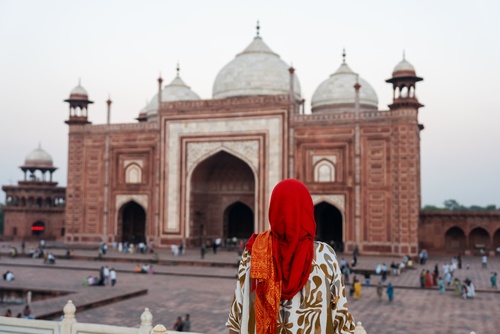
India’s most extraordinary travel experiences are not in its monuments. They are in a weaver’s workshop in Varanasi where a Banarasi silk sari takes three...
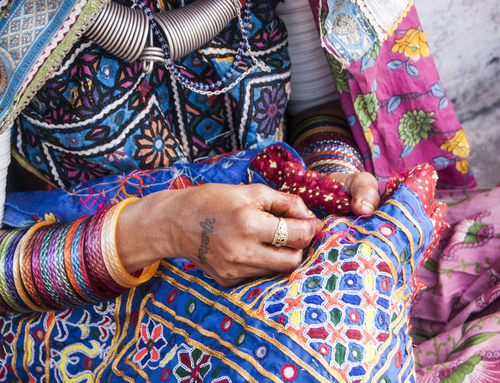
India has more distinct textile and craft traditions than any other country on earth. This is not an approximation. The combination of 28 states, dozens...
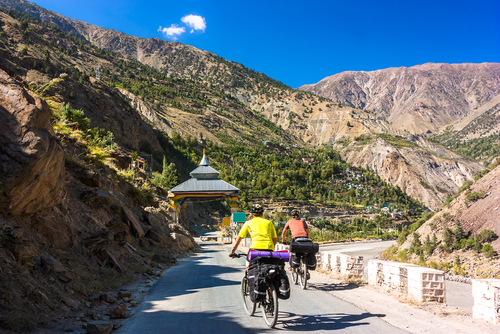
India bookings among adventure travellers surged 214% in the past year. Cycling is at the heart of that surge. International cyclists are discovering that India...
You are one step closer to having the best journey of your lifetime! Talk to us, write to us all that you have envisioned for your India trip, and one of our travel experts will connect with you on priority. To help you explicitly we have WhatsApp and Email addresses!


