


India Textile and Craft Trail: A Journey Through India’s Greatest Artisan Traditions (2026)
India has more distinct textile and craft traditions than any other country on earth. This is not an approximation. The combination of 28 states, dozens...


 18884507235

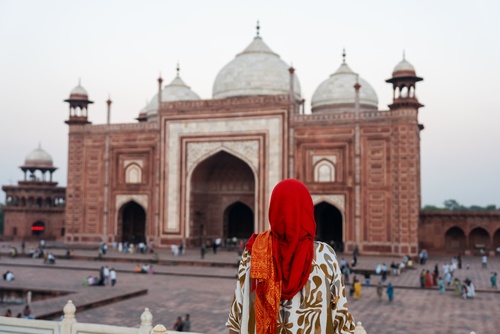
India’s most extraordinary travel experiences are not in its monuments.
They are in a weaver’s workshop in Varanasi where a Banarasi silk sari takes three months to complete. In a Rajasthani village where a master block printer demonstrates a technique unchanged for 400 years. In a Kerala family kitchen where a grandmother teaches fish curry recipes that have never been written down.
New models are emerging across India, from textile trails in Kutch to heritage homestays in Chettinad and culinary journeys through Kerala’s spice regions. The focus is shifting from accommodation and monuments to end-to-end experience design that blends culture, adventure, wellness, and storytelling.
For international travellers seeking depth over checklists, India offers more immersive experiences per square kilometre than any other destination in the world.
Experiential travel means engaging with a destination rather than simply observing it. It means doing, making, learning, and connecting, not just visiting.
In India, experiential travel takes many forms. It might be spending a morning with a traditional puppeteer in Rajasthan. Learning to cook a regional dish in a family home. Staying with a tribal community in Odisha. Walking a textile trail through Gujarat’s craft villages. Harvesting tea on an Assam estate.
These experiences share three qualities. They are genuinely immersive, requiring participation rather than passive observation. They connect directly with local communities. And they produce memories of a completely different order from standard sightseeing.
India’s heritage homestay movement has matured significantly in 2026. Across Rajasthan, Tamil Nadu, Kerala, and the Northeast, historic properties, ancestral havelis, colonial bungalows, royal guesthouses, traditional village homes, now offer accommodation that is simultaneously historically extraordinary and genuinely comfortable.
The Chettinad region of Tamil Nadu contains the finest concentration of heritage homestay experiences in south India. The Nattukotai Chettiar merchant community built palatial mansions here in the 18th and 19th centuries, vast, elaborately decorated properties with Belgian glass, Italian marble, Burmese teak, and local craftsmanship combined in a style found nowhere else in India.
Many of these mansions are now operated by descendants of the original families as heritage guesthouses. Staying in one means sleeping in rooms where the family’s trading history is literally embedded in the architecture, the Burma teak pillars brought by ship, the Venetian chandeliers purchased on trading missions, the locally made tiles whose patterns encode the family’s prosperity.
The food in Chettinad is as extraordinary as the architecture. Meals are prepared using family recipes of considerable complexity, spice combinations that took generations to develop and are not written down anywhere.
The painted haveli mansions of Shekhawati, the open-air art gallery of Rajasthan, offer heritage homestay experiences in buildings whose walls are covered in extraordinary frescoes. Staying inside a 200-year-old painted haveli, waking to walls covered in mythological and historical narratives, and eating breakfast in a courtyard whose every surface has been decorated by craftsmen long dead, this is experiential travel at its most complete.
Kerala’s Responsible Tourism Mission has developed a network of village homestays that provide authentic Kerala life alongside genuine community benefit. Guests participate in paddy farming, coconut processing, traditional cooking, backwater fishing, and toddy tapping alongside host families whose daily lives have barely changed in generations.
India’s regional food cultures are among its greatest and most accessible experiential travel assets. The finest culinary immersion experiences go far beyond cooking classes.
Walking through a working spice plantation in Thekkady or Munnar, identifying fresh cardamom, black pepper, cinnamon, and nutmeg on the plant, understanding the history of the spice trade that brought Phoenician, Arab, Chinese, and eventually European ships to this coastline, is a sensory and historical experience of considerable depth.
The finest spice farm experiences include a guided plantation walk, a spice identification session, a cooking demonstration using fresh spices, and a traditional Kerala meal. They take half a day and produce a relationship with Indian cooking that no restaurant experience can replicate.
The markets of Old Delhi, Khari Baoli (Asia’s largest spice market), Dariba Kalan (silver jewellery), Kinari Bazaar (wedding embellishments), are experiential travel at their most intense. A guided market walk with a specialist food guide, eating at stalls that have been perfecting single dishes for generations, and understanding the social and historical geography of a market that has operated continuously since the Mughal era, this is Old Delhi as it actually is, rather than as the tourist circuit presents it.
Several operators across India facilitate private home dining experiences, meals cooked and served by local families in their homes, using recipes that have been passed through generations and that are unavailable in any restaurant.
In Varanasi, this means a Brahmin household meal of extraordinary simplicity and purity. In Lucknow, an Awadhi family’s dum-cooked biryani and galouti kebabs. In Kerala, a Syrian Christian family’s fish preparations using a culinary tradition that dates to the earliest Christian communities in India. These meals are not performances. They are genuine hospitality, and the experience of eating them is one of the most humanly connecting things available to an international traveller in India.
India’s craft traditions are among the finest on earth. The experiential travel opportunity, visiting working artisans, learning techniques, understanding the cultural and historical context of specific crafts, is extraordinary and almost entirely underutilised by international visitors.
Jaipur’s block printing tradition, using hand-carved wooden blocks to print intricate patterns on fabric in a technique that has barely changed in 400 years, is one of Rajasthan’s most accessible craft experiences. Several working workshops in the Sanganer and Bagru areas outside Jaipur welcome visitors for guided tours and hands-on printing sessions.
The experience of carving a simple block, mixing natural dyes, and printing a pattern on fabric, however imperfect the result, produces a relationship with handmade textiles that transforms how you look at block-printed fabric for the rest of your life.
Khurja in Uttar Pradesh is India’s pottery capital, a town of 600 pottery workshops producing ceramic ware that is exported across Asia. A half-day in Khurja, watching potters throw, fire, and glaze in workshops that have operated for generations, is an industrial craft experience of genuine fascination.
Jaipur’s blue pottery tradition, a Turco-Persian technique introduced by Mughal artisans that uses no clay and no kiln in the conventional sense, producing a distinctive turquoise-glazed ceramic found nowhere else in India, offers workshops where international visitors learn the technique alongside working artisans.
Dhokra, the lost-wax brass casting technique practised by tribal communities in Odisha and Chhattisgarh, is one of India’s oldest and most distinctive craft traditions. The process of creating a wax model, encasing it in clay, melting the wax out, and pouring molten brass into the resulting mould, watched in a traditional workshop, is as close to ancient metallurgy as any traveller can get in the modern world.
India’s experiential travel landscape includes several extraordinary opportunities to engage with living history, traditions so old and so continuous that participating in them feels genuinely significant.
Kalarippayattu – the ancient Kerala martial art that many historians consider the world’s oldest surviving fighting system, and the ancestor of Chinese kung fu, is practised daily in traditional kalaris (training halls) across Kerala. Watching a Kalarippayattu demonstration is extraordinary. Participating in a training session, however basic, is transformative.
Several kalaris in Thiruvananthapuram and Thrissur offer structured training programmes for international visitors ranging from single sessions to week-long intensives.
Varanasi has been the capital of north Indian classical music for centuries. The gharanas (hereditary music schools) of Varanasi maintain lineages of musical knowledge that extend back through generations of master musicians. Several senior musicians in the city offer private sessions and concerts for international visitors who are genuinely interested, not tourist performances, but real music in the homes and practice spaces where it has always been made.
The Jantar Mantar in Jaipur, an 18th-century astronomical observatory whose instruments still function with remarkable precision, offers guided sessions with astronomers who can explain the complex mathematics and observational science embedded in each instrument. Combined with a visit to a traditional Jyotish (Vedic astrology) practitioner for a consultative session, this produces an experiential engagement with India’s astronomical tradition that no standard monument visit approaches.
The finest experiential travel in India involves slowing down, spending enough time in one place that the layers begin to reveal themselves.
Several villages in rural Rajasthan, particularly in the Marwar and Shekhawati regions, offer structured village stay programmes where international visitors live with local families for 2–5 days. Daily activities include traditional farming, cattle care, cooking, craft making, and participation in whatever community events are occurring during the visit.
Staying on a working tea estate, sleeping in the colonial-era planter’s bungalow, walking the estate at dawn when the pluckers are working, visiting the processing factory, and drinking the finished tea from the bushes visible from your breakfast table, is a slow travel experience that combines luxury with genuine agricultural immersion.
How to find genuine experiential travel in India: The difference between a genuine experiential programme and a tourist performance is community ownership and authentic participation. Ask specifically: Does the community benefit directly? Is the experience available regardless of tourist season? Are you doing something alongside local people rather than watching them perform for you?
Best regions for experiential travel: Kerala for culinary and wellness immersion. Rajasthan for craft, village stays, and living heritage. Tamil Nadu’s Chettinad for heritage homestays. Odisha for tribal craft. Assam for tea estate and river culture. Varanasi for music, food, and spiritual immersion.
Best time: October to March for most experiential programmes. Monsoon season (June–September) is ideal for Kerala’s culinary and wellness experiences.
What is the difference between experiential travel and standard tourism in India?
Standard tourism involves visiting sites and observing. Experiential travel involves participating, cooking, making, learning, staying with communities, and engaging directly with cultural practices. The difference in what you remember six months later is significant.
Are experiential travel programmes in India suitable for luxury travellers?
Yes. India’s finest experiential programmes, private home dining, heritage homestays, artisan workshops with master craftspeople, are entirely compatible with luxury travel. The experience is immersive. The comfort is not compromised.
How do I find genuine experiential travel programmes rather than tourist performances?
Use a specialist operator with direct community relationships. Ask specifically about benefit-sharing arrangements with host communities. Look for programmes that have been operating for several years with consistent community involvement.
Can experiential travel be combined with standard India sightseeing?
Yes, and this combination produces the richest India itinerary available. A block printing workshop in Jaipur on the morning before Amber Fort. A home dining experience in Varanasi between ghat visits. A spice farm walk in Kerala between backwater and wildlife experiences.
India’s most extraordinary experiences are not in its monuments, they are in the living traditions, the family kitchens, the artisan workshops, and the village communities that most international visitors never reach. At GeTS Holidays, we build experiential India itineraries that go beyond the standard circuit, combining immersive cultural encounters with the comfort and quality that luxury travel demands. Begin at [www.getsholidays.com].
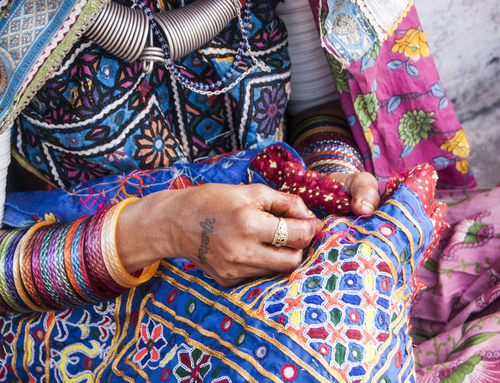
India has more distinct textile and craft traditions than any other country on earth. This is not an approximation. The combination of 28 states, dozens...
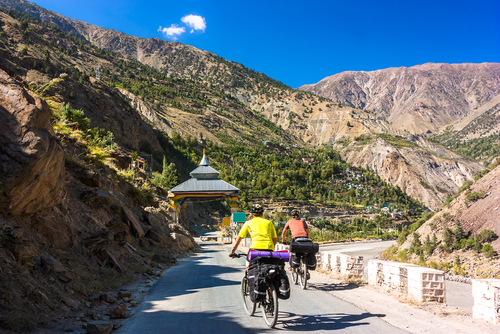
India bookings among adventure travellers surged 214% in the past year. Cycling is at the heart of that surge. International cyclists are discovering that India...
Five thousand years ago, while the pyramids of Egypt were still being built, a sophisticated city of 20,000 people was flourishing on a small island...
You are one step closer to having the best journey of your lifetime! Talk to us, write to us all that you have envisioned for your India trip, and one of our travel experts will connect with you on priority. To help you explicitly we have WhatsApp and Email addresses!


