


Experiential Travel in India: Beyond Sightseeing for International Tourists (2026)
India’s most extraordinary travel experiences are not in its monuments. They are in a weaver’s workshop in Varanasi where a Banarasi silk sari takes three...


 18884507235

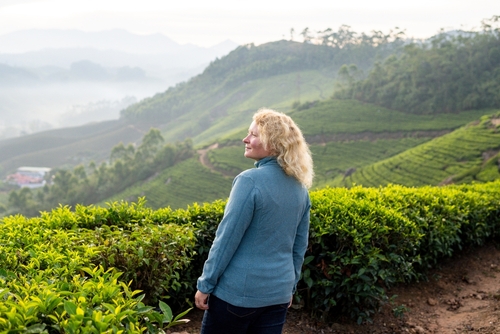
India is one of Asia’s finest eco-tourism destinations, and in 2026, international travellers are discovering this in increasing numbers.
Post-pandemic travellers from Europe, the US, and Australia arrive with sustainability checklists that include carbon offset programmes, plastic-free accommodations, and locally sourced meals. India’s eco-tourism sector has matured significantly to meet this demand, with community-based tourism initiatives, organic certified states, responsible wildlife safari protocols, and eco-lodge networks that rival the best sustainable travel infrastructure anywhere in Asia.
This complete guide covers the best eco-tourism destinations and experiences in India for international sustainable travellers in 2026.
India’s eco-tourism credentials are stronger than most international travellers realise.
Biodiversity. India is one of the world’s twelve megadiverse countries, containing over 7% of the world’s biodiversity within its borders. The Western Ghats, the Eastern Himalayas, and the Sundarbans are all UNESCO-designated biodiversity hotspots.
Community-based tourism. Kerala’s Responsible Tourism Mission, one of the most developed community-based tourism programmes in Asia, directly channels tourism revenue to local communities through homestays, village tourism, and craft cooperatives.
Organic certification. Sikkim became India’s first fully organic state in 2016. Its entire agricultural land operates without synthetic pesticides or fertilisers. Staying and eating in Sikkim is one of the most genuinely organic travel experiences in Asia.
Conservation success stories. Project Tiger has grown India’s tiger population from fewer than 1,800 in 2010 to over 3,600 in 2026. The one-horned rhinoceros has recovered from fewer than 200 animals to over 3,700. These are among the most significant wildlife conservation achievements in the world.
Sikkim is India’s finest eco-tourism destination for travellers who prioritise environmental responsibility without compromising on beauty or experience.
The state’s commitment to organic farming is total, every farm, every restaurant, every hotel operates without synthetic chemicals. The food in Sikkim, local vegetables, organic dairy, foraged ingredients from the surrounding forests, is among the finest and most genuine farm-to-table eating in India.
The landscape is extraordinary. Kangchenjunga, the third highest mountain on earth, is visible from Gangtok on clear mornings. The rhododendron forests turn red and pink in April. The Buddhist monasteries perched on ridgelines throughout the state have maintained their cultural traditions with minimal commercial compromise.
Eco-tourism highlights:
Kerala’s Responsible Tourism Mission has been operating since 2007 and is consistently cited as one of the most effective community-based tourism programmes in Asia.
The programme channels tourism revenue directly to local communities through a network of village tourism experiences, community kitchens, craft cooperatives, and rural homestays. Visitors who participate get access to authentic Kerala life, paddy farming, coconut processing, traditional cooking, and backwater fishing, while the economic benefit stays in the community rather than flowing to outside operators.
Eco-tourism highlights:
The Sundarbans, the world’s largest mangrove forest, a UNESCO World Heritage Site straddling the India-Bangladesh border, is one of the most extraordinary eco-tourism destinations in Asia.
The landscape is unlike any other on earth: a labyrinth of waterways, mudflats, and mangrove roots where the boundary between land and water shifts with every tide. Royal Bengal tigers swim between islands in saltwater. Irrawaddy dolphins move through the channels. The birdlife, kingfishers, herons, sea eagles, is extraordinary.
Boat safaris through the waterways are the primary experience. Responsible operators use solar-powered or low-emission boats, support local fishing communities, and follow strict wildlife disturbance protocols.
Practical note: The Sundarbans requires a permit and must be visited with a registered operator. Visit between October and March for the best wildlife viewing and most comfortable conditions.
Coorg’s coffee estate culture has produced one of India’s finest examples of responsible agricultural tourism. The great estates, Kainmane, Bittangala, and others, offer accommodation within working coffee, cardamom, and pepper plantations, combining luxury with genuine agricultural immersion.
The surrounding Brahmagiri Wildlife Sanctuary and the adjacent Nagarhole National Park provide wildlife experiences of considerable quality, elephants, leopards, gaur, and extraordinary birdlife, in a forested landscape of remarkable beauty.
Several Coorg properties have achieved genuine sustainability credentials, solar power, rainwater harvesting, organic farming, and zero single-use plastic policies that go beyond marketing language.
The Great Himalayan National Park, a UNESCO World Heritage Site in Himachal Pradesh, is one of India’s finest wilderness destinations for eco-conscious travellers. It protects 1,171 square kilometres of alpine terrain, including the catchment areas of several major Himalayan rivers.
The park supports populations of snow leopard, Himalayan brown bear, musk deer, and the western tragopan pheasant. Trekking within the park is managed under strict protocols, limited group sizes, no camping fires, carry-in carry-out waste policies, and mandatory local guide employment.
India’s eco-lodge sector has developed significantly. These properties consistently deliver genuine sustainability credentials rather than greenwashing.
CGH Earth, Kerala, a collection of properties across Kerala combining architectural sensitivity, environmental responsibility, and community benefit. Each property integrates with its surrounding ecosystem rather than imposing upon it.
Evolve Back (formerly Orange County), Coorg and Kabini, luxury eco-resorts using solar energy, rainwater harvesting, and organic farming while delivering accommodation of the highest quality.
The Fern Hotels, a sustainability-certified hotel group operating across India with verified environmental management systems, plastic-free policies, and community employment programmes.
Community homestays across Kerala, Sikkim, and Northeast India, the most genuinely sustainable accommodation available in India, where every rupee spent goes directly to the host family.
India’s wildlife safari sector has adopted increasingly rigorous sustainability protocols in 2026.
Tiger reserves now operate zone-by-zone cap systems, limiting the number of vehicles in specific safari zones at any given time. Digital lottery systems for core zone safaris have been introduced at Ranthambore, Bandhavgarh, and Kanha, reducing overcrowding and wildlife disturbance.
The Nilgiri Biosphere Reserve has emerged as a dark-sky tourism destination, combining wildlife watching with astronomical experiences in a protected landscape of extraordinary ecological value.
Principles of responsible wildlife safari:
Reduce plastic. Carry a reusable water bottle with a filter, this eliminates the need for single-use plastic bottles throughout your trip. India’s plastic waste challenge is significant. Every avoided plastic bottle is a genuine contribution.
Use local transport where practical. India’s train network is one of the most fuel-efficient transport systems in Asia. Choosing a train over domestic flight for journeys under 500 kilometres significantly reduces your trip’s carbon footprint.
Stay in community-owned accommodation. Choosing a community homestay over a chain hotel keeps tourism revenue within the local economy rather than exporting it to corporate headquarters.
Buy crafts at source. Purchasing directly from artisans eliminates the intermediary markup, ensures the artisan receives fair value, and keeps craft traditions economically viable.
Offset your international flight. India’s distance from the US and Europe makes flight emissions a significant component of any trip’s carbon footprint. Use a verified carbon offset programme, Gold Standard or Verified Carbon Standard, to offset what cannot be avoided.
Which Indian state is best for eco-tourism?
Sikkim for its organic certification and extraordinary natural beauty. Kerala for its Responsible Tourism Mission and community-based tourism infrastructure. Both deliver genuine eco-tourism credentials rather than marketing language.
Are there eco-certified hotels in India?
Yes. CGH Earth in Kerala, Evolve Back in Karnataka, and The Fern Hotels group across India all carry verified sustainability certifications. Additionally, community homestays in Kerala, Sikkim, and Northeast India provide the most genuinely sustainable accommodation available.
Is wildlife safari in India sustainable?
At well-managed reserves with responsible operators, yes. Choose operators who employ local guides, follow zone cap protocols, and contribute to conservation programmes. The digital lottery systems now in place at major tiger reserves significantly reduce overcrowding.
Can I combine eco-tourism with luxury travel in India?
Yes, and this is one of India’s most distinctive offerings. Properties like Evolve Back in Coorg and the CGH Earth collection in Kerala deliver genuine luxury within a genuine sustainability framework. Luxury and responsibility are not mutually exclusive in India’s finest eco-tourism properties.
Sustainable travel in India requires knowing which properties and operators genuinely deliver on their environmental commitments. At GeTS Holidays, we work exclusively with eco-certified properties, community-based tourism initiatives, and responsible wildlife safari operators to build sustainable luxury itineraries across India that benefit local communities and conservation programmes directly. Begin at [www.getsholidays.com].

India’s most extraordinary travel experiences are not in its monuments. They are in a weaver’s workshop in Varanasi where a Banarasi silk sari takes three...

India has more distinct textile and craft traditions than any other country on earth. This is not an approximation. The combination of 28 states, dozens...
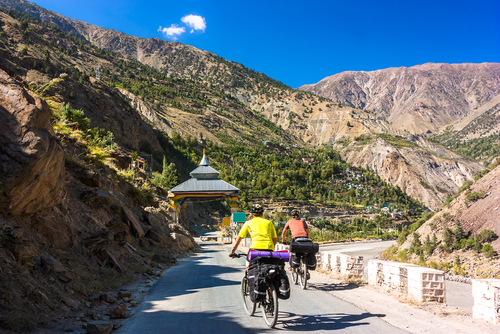
India bookings among adventure travellers surged 214% in the past year. Cycling is at the heart of that surge. International cyclists are discovering that India...
You are one step closer to having the best journey of your lifetime! Talk to us, write to us all that you have envisioned for your India trip, and one of our travel experts will connect with you on priority. To help you explicitly we have WhatsApp and Email addresses!


