


Experiential Travel in India: Beyond Sightseeing for International Tourists (2026)
India’s most extraordinary travel experiences are not in its monuments. They are in a weaver’s workshop in Varanasi where a Banarasi silk sari takes three...


 18884507235

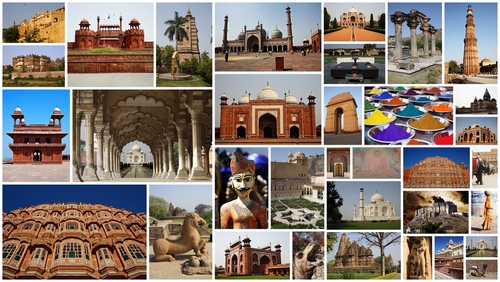
Most international travelers treat Delhi as a beginning and an end. They land, spend a day or two navigating its monuments, and move on; to Agra, to Jaipur, to wherever the itinerary takes them next. Delhi is the gateway, the starting point, the place where the trip begins before the real India reveals itself somewhere further down the road.
This is a significant misreading of one of the most extraordinary cities on earth.
Delhi is not a gateway. It is a destination of staggering depth, a city built on the ruins of seven previous cities, each of which was the capital of a different empire, each of which left behind monuments and neighbourhoods and cultural traditions that are still visible, still alive, still generating the particular energy that comes from 1,000 years of continuous political and cultural significance.
It is also, for the international traveler, the finest base in India. Within a radius of five hours by road or rail, Delhi places you within reach of the Taj Mahal, the forts of Rajasthan, the sacred ghats of Varanasi, the Himalayan foothills of Uttarakhand, the tiger reserves of Madhya Pradesh, and the golden dunes of the Thar Desert. No other city in India offers this combination of depth within its own boundaries and range within its extended reach.
This guide covers both, Delhi itself, explored properly, and the extraordinary destinations that radiate outward from it in every direction.
Before planning what to see in Delhi, it helps to understand what Delhi actually is, because it is not, in any conventional sense, a single city.
Delhi has been built, destroyed, abandoned, and rebuilt at least seven times over a thousand years by successive empires, the Tomars, the Chahamanas, the Delhi Sultanate, the Khiljis, the Tughlaqs, the Mughals, and finally the British, each of which constructed its own capital on or near the ruins of the last. The result is a city of extraordinary archaeological layering: medieval fortifications sitting beside Mughal tombs sitting beside British colonial bungalows sitting beside glass-and-steel corporate towers, the entire accumulation spread across a metropolitan area of over 1,400 square kilometres.
Understanding this layering, knowing that the Qutb Minar was built in 1193 on the foundations of 27 demolished Jain temples, that Humayun’s Tomb of 1570 directly influenced the Taj Mahal built 60 years later, that Lutyens’ Delhi of 1931 was designed to express British imperial permanence just 16 years before the British left, transforms what you are looking at from a collection of monuments into a continuous story of power, ambition, and the impermanence of empires.
Delhi rewards the traveller who reads it as a palimpsest, a text written over and over on the same surface, each version partially erasing and partially preserving the one before.
Old Delhi – Shahjahanabad, built by Mughal Emperor Shah Jahan between 1638 and 1648; is the most intense and most rewarding part of the city for first-time visitors, and the most commonly mishandled. Most tourists arrive, walk briefly through Chandni Chowk, visit the Red Fort, and leave feeling that they have experienced it. They have experienced its surface.
The Red Fort, Lal Qila, is the starting point and worth every moment spent inside it. The red sandstone walls run for 2.4 kilometres around a complex of marble pavilions, audience halls, and gardens that represent the peak of Mughal architectural achievement in Delhi. The Diwan-i-Aam (Hall of Public Audience) and the Diwan-i-Khas (Hall of Private Audience) – where the Peacock Throne once stood, looted by the Persian conqueror Nadir Shah in 1739 – convey the scale and the ambition of a court that ruled an empire of 150 million people. Visit in the morning before the heat builds, and hire a good guide rather than relying on the audio tour.
Chandni Chowk; the great Mughal boulevard that ran from the Red Fort to the now-demolished Lahori Gate, is best experienced on foot or by cycle rickshaw in the early morning, before the traffic reaches its afternoon peak. The lane system that runs off the main boulevard, each lane historically dedicated to a specific trade, some still maintaining that identity, is where Old Delhi’s real texture lives. Dariba Kalan for silver jewellery. Kinari Bazaar for wedding decorations and zardozi embroidery. Khari Baoli, Asia’s largest spice market, where the smell of dried chillies and turmeric and fenugreek hangs in the air with a density that makes the eyes water from twenty metres away.
The Jama Masjid, built by Shah Jahan between 1644 and 1656, the largest mosque in India – commands a view over Old Delhi from its courtyard that has barely changed in 400 years. The red sandstone and white marble of the prayer hall, the two minarets from which the call to prayer still echoes across the rooftops five times daily, and the sheer scale of the courtyard – capable of holding 25,000 worshippers, make it one of the most powerful architectural experiences in the city.
Eat in Old Delhi. This is non-negotiable. The food culture of Old Delhi, particularly the Mughal culinary tradition maintained in specific establishments that have been operating for generations, is one of the most extraordinary in Asia. Karim’s, in the lane behind the Jama Masjid, has been serving nihari and mutton korma to the people of Delhi since 1913. Paranthe Wali Gali, the Lane of Stuffed Breads, has been frying parathas in ghee since the 19th century. The kulfi at Kuremal Mahavir Prasad Kulfi Wale in Sitaram Bazaar, stuffed inside seasonal fruits, served on a winter morning, is a specific pleasure available nowhere else on earth.
Eight kilometres south of Old Delhi, the planned capital that Edwin Lutyens and Herbert Baker designed for the British Raj, commissioned in 1911, completed in 1931, abandoned by its architects barely 16 years later when India achieved Independence, is one of the finest examples of imperial urban planning in the world and one of the most quietly melancholy.
Rajpath; now renamed Kartavya Path, the great ceremonial boulevard connecting India Gate to Rashtrapati Bhavan (the Presidential Palace), is best walked at dawn when the light is low and the boulevard is empty and the scale of what Lutyens designed, buildings set so far apart that the spaces between them are themselves monumental, is fully apparent.
India Gate; the war memorial arch designed by Lutyens, built in 1931 to commemorate the 70,000 Indian soldiers who died in the First World War, is where Delhi comes in the evenings, particularly on weekends, to walk and eat street food and sit on the lawns. The combination of a memorial of genuine historical weight and the relaxed, familial energy of the city using it as a park on a Friday evening is entirely characteristic of how Delhi inhabits its own history, with ease rather than reverence.
Humayun’s Tomb, built in 1570 by the Mughal Emperor Humayun’s widow, the first garden tomb on the Indian subcontinent and the direct architectural ancestor of the Taj Mahal, sits in Mughal gardens of extraordinary serenity in the Nizamuddin neighbourhood. At dawn, before the tour groups arrive, with the dew still on the grass and the light catching the red sandstone and white marble of the tomb’s facade, it is one of the most beautiful buildings in India and one of the most underappreciated given its proximity to more famous monuments.
The Qutb Minar Complex, the 73-metre sandstone minaret built in 1193, the oldest surviving Islamic architecture in India, surrounded by the ruins of Delhi’s first medieval capital, is best visited in the late afternoon when the light turns the red sandstone warm and the long shadows of the ruins fall across the lawns. The Iron Pillar of Delhi, a 7-metre column of extraordinarily pure iron cast in the 4th or 5th century CE that has stood in the open air for 1,600 years without rusting, stands in the courtyard with the quiet confidence of an object that has outlasted every empire that claimed to own it.
South Delhi is where Delhi’s archaeological depth is most dramatically visible, and most consistently ignored by international visitors whose itineraries do not reach beyond the main monument circuit.
Mehrauli, the village that grew around the Qutb Minar complex, is a living archaeological landscape of medieval tombs, mosques, step-wells, and fortifications spread across an area that rewards an entire morning of slow walking. The Balban’s Tomb, dating to 1287, is the first building in India to use the true arch, a structural innovation that changed Indian architecture permanently, and sits in a quiet park that receives a fraction of the visitors that the Qutb Minar 500 metres away attracts.
Hauz Khas, a 13th-century reservoir built by Alauddin Khalji, surrounded by the ruins of a 14th-century madrasa and mosque on its banks, has been partially colonised by Delhi’s restaurant and bar culture, producing the particular Delhi phenomenon of young people eating and drinking among 700-year-old ruins with complete unselfconsciousness. The ruins themselves, particularly at sunset when the light falls across the water, are worth visiting regardless of whether you eat at the restaurants surrounding them.
Lodi Garden, 90 acres of manicured parkland containing the 15th-century tombs of the Sayyid and Lodi dynasty rulers, is one of the finest urban historical spaces in Asia and one of Delhi’s most democratic public spaces: monuments of extraordinary architectural quality freely accessible to everyone, shared equally by history tourists, morning joggers, yoga practitioners, and families eating their Sunday lunch on the grass around 600-year-old tombs.
Shahpur Jat, a former village absorbed into south Delhi’s urban fabric, now a neighbourhood of independent fashion designers, concept stores, art studios, and cafes in a street layout that still follows the organic logic of the village it once was, is where Delhi’s creative industries have made their home, and a morning spent walking its lanes gives a sense of the city’s contemporary cultural energy that the monument circuit never reaches.
Khan Market, a colonial-era market in central Delhi, now one of the most expensive retail addresses in Asia, is where Delhi’s professional and diplomatic class shops, eats, and reads. The bookshops here are excellent. The restaurants range from casual to very good. The people-watching is extraordinary.
Dilli Haat, an open-air craft market near INA that brings artisans from every state in India to sell their work directly to buyers, is the best single place in Delhi to buy authentic Indian handicrafts, textiles, and food from regional cuisines that are otherwise unavailable in the capital.
This is where Delhi’s strategic position becomes truly extraordinary. Within a five-hour radius by road or rail, Delhi offers a range of day trips and short extensions that no other Indian city can match.
The Taj Mahal is the most visited monument in India and the most important single reason most international travelers come to the country. From Delhi, it is accessible as a long day trip, though spending one night in Agra, allowing a sunrise visit to the Taj before the crowds arrive and an evening at the Mehtab Bagh on the opposite bank of the Yamuna where the monument is reflected in the river, is significantly more rewarding than the rushed day trip.
Fatehpur Sikri, Akbar’s abandoned Mughal capital 40 kilometres from Agra, one of the most perfectly preserved ghost cities in the world, adds three hours to the Agra day and transforms the trip from a monument visit into a historical journey.
Jaipur is the most common extension from Delhi, and for good reason, the Pink City’s Amber Fort, City Palace, and Jantar Mantar form the natural conclusion of the Golden Triangle circuit. But Rajasthan extends far beyond Jaipur, and Delhi’s position makes the entire state accessible: Udaipur is 9 hours by road, Jodhpur is 8 hours, Jaisalmer is 11 hours. For travelers with a week or more, a Rajasthan loop departing from and returning to Delhi covers some of the finest heritage travel in the world.
The Himalayan foothills begin just five hours north of Delhi, and the twin towns of Haridwar and Rishikesh, where the Ganga emerges from the mountains onto the plains, offer one of the most complete contrasts available as a Delhi extension. Haridwar’s evening Ganga Aarti, performed every sunset on the main ghat with brass lamps and chanting and the river running fast and cold in front of you, is one of the most moving ritual experiences in north India. Rishikesh, twenty minutes further up the river, is the yoga and white-water rafting capital of India, a town of ashrams and adventure operators and cafes on the riverbank where the water is green and fast and the Himalayan foothills rise on both sides.
Varanasi, the oldest living city in the world, possibly 3,000 years old, and the holiest city in Hinduism, is best reached from Delhi overnight by train, arriving in the early morning in time for the dawn boat ride on the Ganga. A three-night stay in Varanasi, the dawn boat ride, the evening Ganga Aarti, the cremation ghats, the old city’s labyrinthine lanes, followed by a day at Sarnath where the Buddha gave his first teaching, forms one of the most profound and most distinctively Indian experiences available anywhere in the subcontinent.
India’s oldest national park, established in 1936, named after the hunter-turned-conservationist Jim Corbett who spent decades in these forests, lies in the Himalayan foothills of Uttarakhand, five hours northeast of Delhi. It is the finest wildlife destination accessible as a short break from the capital: jeep safaris through sal forest in search of tigers and elephants, the Ramganga River running through the park’s central valleys, and a range of accommodation from simple forest lodges to luxury tented camps that make a two-night wildlife extension from Delhi entirely practical.
Amritsar, home to the Golden Temple, the holiest site in Sikhism, and to the Wagah Border ceremony where Indian and Pakistani soldiers perform an elaborate flag-lowering ritual every evening as the two countries’ flags are brought down simultaneously, is accessible from Delhi by the overnight train or by a morning flight followed by two days that cover both the spiritual and the geopolitical dimensions of India’s northwest. The Golden Temple at dawn, before the city wakes, with the gold reflected in the sacred pool and the sound of kirtan drifting across the water, is one of the most powerful experiences India offers.
Delhi’s accommodation landscape covers every category from budget guesthouses in Paharganj to some of the finest luxury hotels in Asia. For international travelers, the choice of neighbourhood matters as much as the choice of hotel.
Lutyens’ Delhi, the zone around India Gate, Connaught Place, and the diplomatic enclave, is the most central location for monument sightseeing, with the Red Fort, Humayun’s Tomb, Qutb Minar, and the main shopping areas all within reasonable distance. The Imperial on Janpath, a 1931 heritage hotel whose corridors are lined with original colonial-era paintings and whose afternoon tea is one of Delhi’s finest rituals, is the most characterful luxury option in this zone.
South Delhi, particularly the Defence Colony, Greater Kailash, and Hauz Khas areas, offers a quieter, more residential base closer to the southern monuments and the neighbourhood restaurants and markets that give a more authentic sense of how Delhi’s middle class actually lives.
Aerocity, the hotel zone adjacent to the international airport, is the most practical choice for travelers with early departures or late arrivals, with a range of international chain hotels connected to the terminal by a short Metro ride.
Getting Around: Delhi’s Metro is one of the finest urban rail systems in Asia, clean, air-conditioned, reliable, and covering the city comprehensively. It is the most practical way to move between major monuments and neighbourhoods, and it eliminates the traffic variable entirely. Uber and Ola operate reliably across Delhi for point-to-point journeys where the Metro is impractical.
Best Time to Visit: October to March is the optimal window, pleasant temperatures, clear skies, and the city at its most active culturally. December and January can be cold, particularly at night, and Delhi’s winter fog occasionally disrupts flights and visibility. April to June is very hot. The monsoon (July–September) brings relief from the heat but also high humidity and occasional flooding.
Safety: Delhi is a safe city for international tourists in the main tourist and commercial areas. Standard urban precautions apply, use app-based transport rather than unmetered taxis, keep bags secure in crowded markets, and be aware of the standard tourist-area scams (fake tourist offices near the railway station, drivers claiming your hotel has closed). These are minor and avoidable with basic awareness.
Food and Water: Drink bottled water only. Eat freely and adventurously, Delhi’s food scene, from street food to high-end restaurants, is one of the finest in Asia. The Mughal culinary tradition of Old Delhi, the Punjabi dhaba culture of the main roads, the South Indian restaurants of Connaught Place, and the contemporary Indian fine dining of south Delhi’s restaurant neighbourhood together constitute a culinary landscape of extraordinary diversity that rewards every meal taken seriously.
Delhi is not a starting point. It is not a transit city. It is one of the great urban experiences on earth, a place of 1,000 years of imperial ambition, extraordinary food, living cultural traditions, and a position at the centre of north India’s travel map that makes it the most strategically valuable base any international traveller to India can choose.
The city rewards time. Give it more than you planned to, and it will give back more than you expected.
Planning your Delhi base and the extensions that radiate outward from it? GeTS Holidays builds bespoke luxury itineraries across Delhi and the full sweep of north India, from the Taj Mahal to the tiger reserves to the Himalayan foothills, tailored to exactly what each traveller is looking for. Begin at [www.getsholidays.com].
Last updated July 2026.
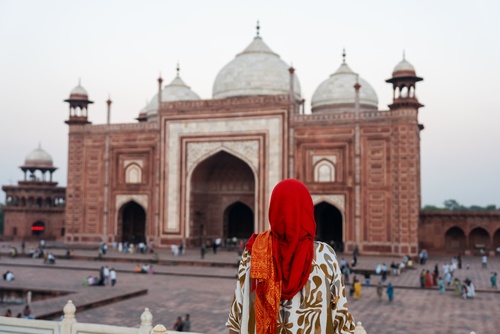
India’s most extraordinary travel experiences are not in its monuments. They are in a weaver’s workshop in Varanasi where a Banarasi silk sari takes three...

India has more distinct textile and craft traditions than any other country on earth. This is not an approximation. The combination of 28 states, dozens...
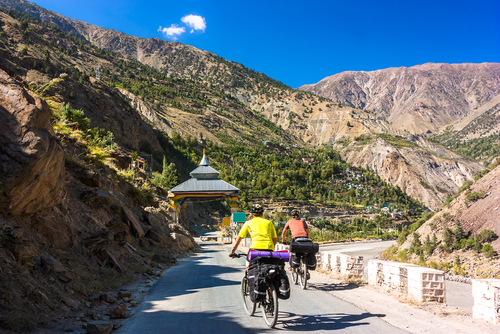
India bookings among adventure travellers surged 214% in the past year. Cycling is at the heart of that surge. International cyclists are discovering that India...
You are one step closer to having the best journey of your lifetime! Talk to us, write to us all that you have envisioned for your India trip, and one of our travel experts will connect with you on priority. To help you explicitly we have WhatsApp and Email addresses!


