


Experiential Travel in India: Beyond Sightseeing for International Tourists (2026)
India’s most extraordinary travel experiences are not in its monuments. They are in a weaver’s workshop in Varanasi where a Banarasi silk sari takes three...


 18884507235

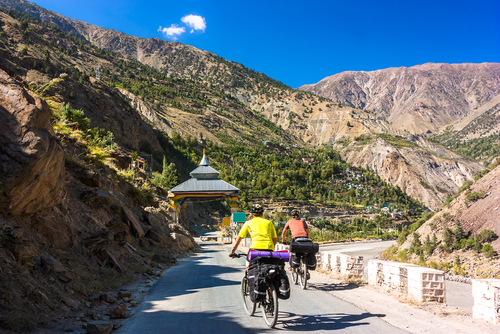
India bookings among adventure travellers surged 214% in the past year. Cycling is at the heart of that surge.
International cyclists are discovering that India offers some of the most varied, most visually extraordinary, and most culturally rich cycling terrain in Asia. The Himalayan passes. The backroads of Rajasthan’s painted villages. The coastal paths of Kerala. The coffee estate roads of Coorg. The high-altitude moonscape of Ladakh and Spiti.
Each of these cycling environments is entirely distinct. Together they make India one of the most diverse cycling destinations on earth.
This complete guide covers the best cycling routes, practical planning information, and everything international cyclists need to know about cycling in India in 2026.
Cycling is the finest way to experience India’s villages, landscapes, and daily life at a human pace.
A car or bus passes through a village in seconds. A bicycle stops at the chai stall, notices the painted doorway, follows the sound of a folk instrument down a lane. India’s most extraordinary experiences are not on the main road. They are on the backroads, and those backroads are best explored on two wheels.
Additionally, cycling in India is a genuinely social experience. The curiosity that Indian people show toward international cyclists, the waves, the conversations, the invitations for chai, creates a quality of human connection that motorised travel never produces.
The terrain is as varied as the culture. India offers everything from flat coastal paths to some of the highest paved roads on earth.
Rajasthan is India’s finest cycling destination for heritage-focused international cyclists. The combination of extraordinary monuments, painted villages, desert landscapes, and a road network that, outside the major cities, is manageable for experienced cyclists makes it ideal for multi-day touring.
The classic Rajasthan cycling circuit:
Jaipur to Pushkar (150 kilometres, 2–3 days), through the Aravalli hills on roads that pass painted havelis, ancient step-wells, and village markets. The route crosses the Ajmer region and descends into the Pushkar valley, one of the most scenic approaches to any Indian town.
Jodhpur to Jaisalmer (285 kilometres, 4–5 days), through the Thar Desert on roads that become increasingly empty and increasingly dramatic as you move west. The villages along this route, many of them inhabited by the same communities for centuries, are among the most visually distinctive in Rajasthan.
Jaisalmer to Bikaner (330 kilometres, 5–6 days), through the deep desert, passing the extraordinary Jain temples of Osian, the fossil park near Akal, and the sand dunes that define the western edge of the Thar.
Best season: October to February. March begins to warm. April to September is too hot for road cycling in Rajasthan.
Kerala’s cycling landscape is the most gentle and the most immediately beautiful in India, a combination of coastal paths, backwater towpaths, hill station roads through tea and spice plantations, and village backroads connecting fishing communities along the Arabian Sea coast.
The Kerala cycling trail:
Fort Kochi to Alleppey (55 kilometres, 1 day), along the coastal road through fishing villages, Chinese fishing net communities, and the beginning of the backwater network. Flat, accessible, and visually extraordinary.
Alleppey to Kumarakom (15 kilometres), the backwater path alongside the main canals, passing traditional houseboats, paddy fields, and the daily life of the waterway communities.
Munnar hill circuit (60–100 kilometres per day, 2–3 days), through the tea estates of the Western Ghats at 1,600–2,000 metres. Cool temperatures, spectacular scenery, and roads that wind through tea bushes as far as the eye can see. Moderate climbing, suitable for cyclists with some hill experience.
Best season: October to February for the coast. March to May for the hill stations, when the plains are hot but the hills are pleasant.
Ladakh is India’s most dramatic and most demanding cycling destination, and one of the most extraordinary cycling environments on earth.
The Manali–Leh highway, crossing five mountain passes including the 5,359-metre Khardung La, one of the highest motorable roads in the world, is the most famous cycling route in India. International cyclists travel specifically to ride it. The combination of extreme altitude, dramatic scenery, and the physical challenge of climbing to over 5,000 metres on a loaded bicycle produces an experience that serious cyclists describe as among the finest of their lives.
Key Ladakh cycling routes:
Manali to Leh (479 kilometres, 10–14 days) – the classic route. It crosses Rohtang Pass, Baralacha La, Nakee La, Lachung La, and Tanglang La. Extremely demanding. Requires excellent physical fitness and altitude acclimatisation. Rewarded by scenery of extraordinary scale and the satisfaction of one of cycling’s great accomplishments.
Leh to Nubra Valley (120 kilometres, 2 days) – over Khardung La and down into the Nubra Valley through scenery that shifts from high-altitude desert to the unexpected sand dunes and Bactrian camels of the valley floor.
Leh to Pangong Lake (160 kilometres, 2 days) – over Chang La pass to the lake whose colour shifts from deep indigo to turquoise across the day. One of the most visually rewarding single cycling days available in India.
Best season: June to September. The passes are closed by snow from October to May.
Critical altitude note: Cycling at Ladakh’s altitudes requires specific preparation. Do not attempt the Manali–Leh highway without spending at least 3 days acclimatising in Leh first. Consult your physician before planning high-altitude cycling. Symptoms of altitude sickness, headache, nausea, fatigue, require immediate descent.
Coorg’s coffee estate roads, winding through plantations of coffee, cardamom, and pepper at 1,000–1,500 metres in the Western Ghats, offer some of the finest leisure cycling in India. The roads are quiet, the scenery is beautiful, and the temperature is comfortable year-round.
Several Coorg coffee estates offer dedicated cycling experiences, guided rides through the plantation with stops at processing facilities, spice gardens, and viewpoints. These are accessible to cyclists of all levels and combine perfectly with the estate’s accommodation and Coorg’s wider wildlife and nature experiences.
The Northeast is India’s emerging cycling frontier, and one of the finest cycling landscapes in Asia for adventurous international riders.
Meghalaya – the roads through the Khasi Hills, the valleys approaching the living root bridges, and the descent from Shillong toward Dawki and the Bangladesh border offer cycling of extraordinary scenic quality on roads that see very little traffic.
Sikkim – the road from Gangtok into North Sikkim, climbing through rhododendron forests toward the Yumthang Valley, is one of the most beautiful cycling ascents in India. The high-altitude terrain is demanding. The views of Kangchenjunga and the surrounding peaks are extraordinary.
Best season: October to April for Meghalaya. April to June for Sikkim’s rhododendron season.
Most major international airlines allow bicycles as checked luggage with advance notice and appropriate packaging. Bring your own bike if you are particular about fit and component specification, quality road and mountain bikes are available for hire in major cycling destinations but may not meet the standards of experienced riders.
Packing your bike for international travel: Disassemble pedals, handlebars, and front wheel. Deflate tyres to 50% pressure. Use a hardshell bike case or a padded soft bag. Carry essential tools and spare parts, inner tubes, tyre levers, multi-tool, chain lube, in your checked luggage.
Quality bicycle hire is available in the main cycling destinations:
Guided cycling tours provide route knowledge, luggage transfer, accommodation booking, and emergency support. They are recommended for international cyclists unfamiliar with Indian roads, for high-altitude routes where route-finding and emergency management are critical, and for routes through areas where English signage is limited.
Independent cycling is practical for experienced cycle tourers on well-established routes, the Kerala coastal circuit, Rajasthan’s main heritage circuit, and Coorg’s estate roads. Offline maps (Maps.me with India maps downloaded) and a local SIM card with data are essential.
Indian roads vary significantly in quality. Main national highways are generally well-surfaced. Secondary state roads are variable. Rural roads can be rough.
Safety priorities for cycling in India:
Is cycling in India safe for international cyclists?
Yes, with appropriate preparation and defensive riding habits. The greatest safety risks are traffic on main roads and altitude on Himalayan routes. Using quiet backroads wherever possible, wearing high-visibility clothing, and never cycling at night significantly reduces risk.
What is the best India cycling route for beginners?
The Kerala coastal circuit, Fort Kochi to Alleppey, is the most accessible for international cyclists without previous India cycling experience. It is flat, visually beautiful, and on roads with manageable traffic levels.
Can I rent a quality bicycle in India?
Yes in the main cycling destinations, Jaipur, Fort Kochi, Leh, and Coorg all have bicycle hire available. Quality varies, inspect any hired bicycle carefully before setting out and request a test ride.
How physically fit do I need to be for Ladakh cycling?
Very fit, with specific cycling fitness built over several months before departure. The Manali–Leh highway involves cumulative climbing of over 15,000 metres across the full route. Altitude adds significantly to the physical demand at the high passes. This is not a route for occasional cyclists.
What is the best time of year for cycling in India?
October to February for Rajasthan and Kerala. June to September for Ladakh and Spiti. October to May for Coorg and the Northeast.
Cycling in India requires route knowledge, the right logistics support, and a partner who knows which roads to use and which to avoid. At GeTS Holidays, we build bespoke cycling itineraries across India, from Rajasthan’s heritage backroads to Ladakh’s high passes, combining the independence of cycling with the support infrastructure that makes a cycling journey genuinely comfortable and safe. Begin at [www.getsholidays.com].
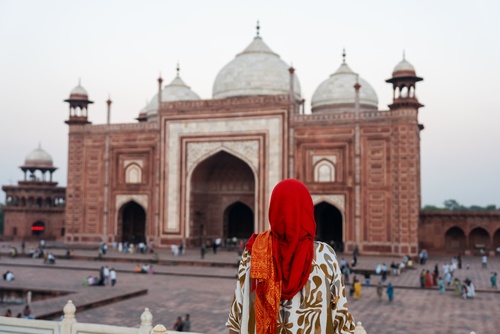
India’s most extraordinary travel experiences are not in its monuments. They are in a weaver’s workshop in Varanasi where a Banarasi silk sari takes three...
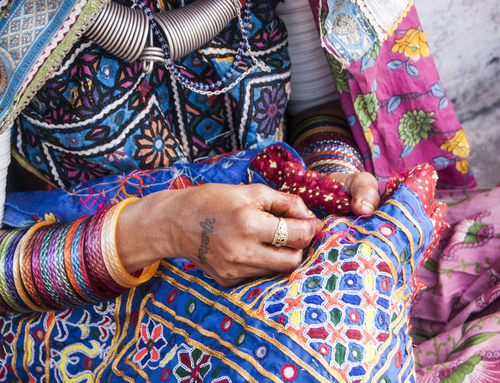
India has more distinct textile and craft traditions than any other country on earth. This is not an approximation. The combination of 28 states, dozens...
Five thousand years ago, while the pyramids of Egypt were still being built, a sophisticated city of 20,000 people was flourishing on a small island...
You are one step closer to having the best journey of your lifetime! Talk to us, write to us all that you have envisioned for your India trip, and one of our travel experts will connect with you on priority. To help you explicitly we have WhatsApp and Email addresses!


