


Kochi Travel Guide for International Tourists: Kerala’s Most Extraordinary City (2026)
Kochi is India’s most trending international destination in 2026. This is not a marketing claim, it is the finding of travel search data across European...


 18884507235

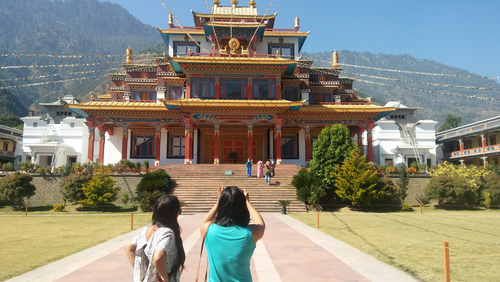
India is the birthplace of Buddhism. Every significant event in the Buddha’s life happened here, his enlightenment, his first teaching, his death. For Buddhist pilgrims and culturally curious international travellers alike, India’s Buddhist circuit is one of the most meaningful journeys available anywhere in the world.
In 2026, Buddhist tourism in India is growing rapidly. Visitors from Sri Lanka, Thailand, Japan, Korea, Taiwan, and increasingly from the US, UK, and Europe are travelling specifically to walk the same ground the Buddha walked 2,500 years ago.
This guide covers the complete Buddhist pilgrimage circuit for international visitors.
Buddhism spread from India across Asia over 2,500 years. However, the physical sites where it began, the places of the Buddha’s birth, enlightenment, teaching, and death, remain in India and Nepal.
These are not reconstructions. They are the actual locations, excavated and documented by archaeologists, venerated by pilgrims across centuries, and alive today with a spiritual energy that visitors of every faith consistently describe as extraordinary.
Additionally, India’s Buddhist sites reward the historically curious traveller as deeply as the spiritually motivated pilgrim. The art, architecture, and history concentrated on this circuit represent some of the finest cultural experiences available in South Asia.
Bodh Gaya is the most sacred site in Buddhism. It is where Siddhartha Gautama sat under a Bodhi tree approximately 2,500 years ago and attained enlightenment, becoming the Buddha.
The Mahabodhi Temple, a UNESCO World Heritage Site built over the exact spot of the enlightenment, is the centrepiece. A descendant of the original Bodhi tree grows beside it. Monks and nuns from every Buddhist tradition in the world sit in meditation around it at all hours of the day and night.
The atmosphere at Bodh Gaya is unlike any other pilgrimage site in India. It is quiet, international, and deeply meditative. Monks in the robes of Sri Lanka, Tibet, Japan, Korea, and Bhutan meditate alongside each other in the same sacred space with a sense of shared purpose that transcends national and sectarian differences.
Best time to visit: October to March. The Tibetan community is present in large numbers. The Dalai Lama frequently teaches here in January.
Getting there: Fly to Gaya Airport from Delhi, Kolkata, or Mumbai. Drive 13 kilometres to Bodh Gaya.
Sarnath is where the Buddha gave his first teaching after attaining enlightenment, the Dhammacakkappavattana Sutta, the discourse that set the wheel of dharma in motion.
The Dhamek Stupa, a cylindrical sandstone structure rising 28 metres from the ground, built in the 5th century CE on the site of the first teaching, is the centrepiece of Sarnath’s archaeological park. The surrounding ruins of monasteries and shrines extend across a well-maintained archaeological landscape.
The Sarnath Museum contains the finest collection of Mauryan and Gupta-period Buddhist sculpture in existence. Most significantly, it houses the Lion Capital of Ashoka, the 3rd-century BCE column capital that became India’s national emblem. The four lions of this capital appear on every Indian passport and every government document. The original stands in a provincial museum that charges ₹25 entry.
Getting there: Sarnath is 10 kilometres from Varanasi. Combined with a Varanasi visit, the combination of the ghats and the Buddhist site makes a uniquely powerful two-destination experience.
Kushinagar is where the Buddha died, entering Parinirvana, at the age of approximately 80. It is the most meditative and least visited of the four principal sites.
The Mahaparinirvana Temple houses a 6-metre reclining Buddha statue of considerable antiquity, depicting the Buddha in his final moments. The stillness of the statue and the quietness of the temple, far fewer visitors than Bodh Gaya or Sarnath, create an atmosphere of genuine contemplative depth.
International Buddhist communities have built temples and monasteries around Kushinagar from Japan, China, Sri Lanka, Thailand, Myanmar, and Korea. Walking between them gives a vivid sense of how a single teaching tradition diversified across an entire continent.
Getting there: Kushinagar is 52 kilometres from Gorakhpur, which has rail connections to Delhi, Varanasi, and Kolkata.
Lumbini, the Buddha’s birthplace, sits just across the Indian border in Nepal. It is a natural extension of the Indian Buddhist circuit and entirely practical to include.
The Maya Devi Temple marks the exact spot of the birth. The Ashoka Pillar nearby, erected by Emperor Ashoka in 249 BCE to mark the site, is one of the finest surviving Ashokan inscriptions in existence.
Getting there: Lumbini is accessible from Kushinagar (approximately 2 hours by road across the Sonauli border crossing). A valid Indian visa covers the circuit up to the border. A separate Nepal visa is required, available on arrival for most nationalities.
Nalanda was the world’s first residential university, operating for 700 years before its destruction in 1193 CE. At its peak, it enrolled over 10,000 students from across Asia. Its library burned for three months after the Ghurid invasion.
The excavated ruins, 14 hectares of monasteries, lecture halls, and temples, are one of the most significant archaeological sites in Asia. The Nalanda Archaeological Museum contains sculptures and artefacts of considerable quality.
Combine with: Rajgir, an ancient city of deep Buddhist significance 12 kilometres away, for a full Bihar heritage day.
The Buddhist monuments at Sanchi, built under Emperor Ashoka in the 3rd century BCE, are the oldest surviving stone structures in India. The Great Stupa’s carved gateways (toranas) are among the finest examples of early Indian sculpture in existence.
Sanchi is one of India’s most undervisited UNESCO sites. A morning here, on a hilltop with the plains of Madhya Pradesh stretching away below, is one of the most serene cultural experiences in India.
Best overall time: October to March for the full circuit.
Recommended duration: 8–10 days covers the four principal sites and Nalanda comfortably. Adding Sanchi requires 2–3 additional days.
Suggested routing: Delhi → Bodh Gaya (fly) → Nalanda (day trip) → Rajgir → Varanasi (train) → Sarnath (day trip) → Kushinagar (road) → Lumbini (road, cross border) → Delhi (fly from Gorakhpur or Varanasi)
Visa note: A standard Indian tourist visa covers all Indian sites on this circuit. A separate Nepal visa is required for Lumbini, available on arrival for most nationalities at the Sonauli border crossing.
Dress code: Dress modestly at all Buddhist sites. Remove footwear before entering temples. Photography is generally permitted in archaeological areas but restricted inside active temple sanctuaries.
Do I need to be Buddhist to visit India’s Buddhist sites?
No. India’s Buddhist sites welcome visitors of all faiths and none. Respectful curiosity is the only requirement.
How do I combine the Buddhist circuit with other Indian experiences?
Varanasi is the most natural combination, the city’s Hindu spiritual intensity and Sarnath’s Buddhist serenity are 10 kilometres apart and complement each other powerfully. Agra and the Taj Mahal are accessible from the circuit via Varanasi.
Which Buddhist site in India is most underrated?
Sanchi in Madhya Pradesh, the oldest surviving Buddhist structures in India, UNESCO listed, and almost entirely unknown to international visitors outside specialist Buddhist travel circles.
Is the Buddhist circuit safe for international travellers?
Yes. Bihar and Uttar Pradesh, where most sites are located, are safe for international tourists visiting established pilgrimage destinations. Use a reputable operator for logistics and guidance.
The Buddhist circuit in India is one of the most meaningful journeys available to an international traveller anywhere in the world. At GeTS Holidays, we build bespoke Buddhist pilgrimage itineraries combining the four principal sites with Nalanda, Sanchi, and Varanasi, designed for both pilgrims and culturally motivated travellers. Begin at [www.getsholidays.com].
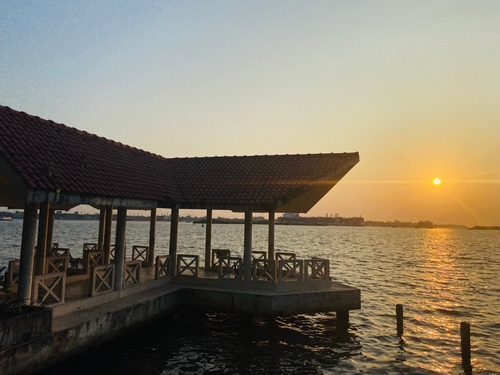
Kochi is India’s most trending international destination in 2026. This is not a marketing claim, it is the finding of travel search data across European...
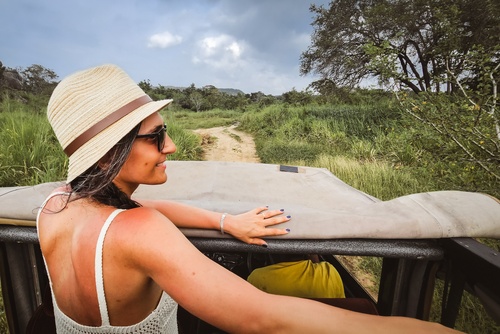
Thailand has been the default Asian destination for Western travellers for three decades. It is familiar, efficient, beautiful, and well-understood. The beaches are excellent. The...
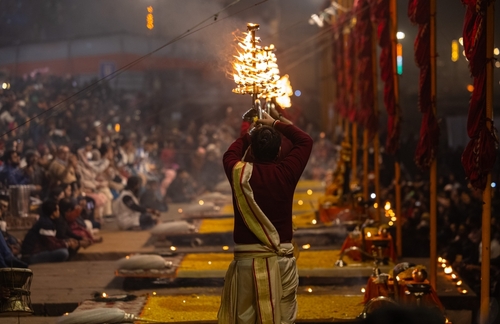
There is no city in the world like Varanasi. Not in Asia. Not anywhere. Varanasi is the oldest continuously inhabited city on earth, possibly 3,000...
You are one step closer to having the best journey of your lifetime! Talk to us, write to us all that you have envisioned for your India trip, and one of our travel experts will connect with you on priority. To help you explicitly we have WhatsApp and Email addresses!


