


Experiential Travel in India: Beyond Sightseeing for International Tourists (2026)
India’s most extraordinary travel experiences are not in its monuments. They are in a weaver’s workshop in Varanasi where a Banarasi silk sari takes three...


 18884507235


Bhutan does not want to be everywhere. It has never wanted to be everywhere.
While every other country in Asia has spent decades building airports, lowering visa barriers, and competing for the largest possible share of the global tourism market, Bhutan has done something entirely different. It has controlled its own narrative. It has deliberately limited its visitors. It has chosen depth over volume, quality over quantity, and the long-term health of its culture and environment over the short-term revenue of mass tourism.
The result is the most extraordinary destination in Asia, and one of the most extraordinary on earth.
Bhutan is a Himalayan Buddhist kingdom of 800,000 people, sandwiched between India and China, that has never been colonised, never been conquered, and never lost the thread of its own cultural identity to outside influence. Its monasteries are living institutions, not museum pieces. Its forests cover 71% of its land area, protected by a constitutional requirement that forest cover never fall below 60%. Its development policy is guided not by GDP but by Gross National Happiness; a measurement framework that takes spiritual wellbeing, cultural preservation, and environmental health as seriously as economic output.
For the international traveller, Bhutan offers something that no other destination in the region can provide: the experience of entering a country that has remained, against every pressure of modernity, genuinely itself.
Most travel destinations offer variety. Bhutan offers coherence.
Every element of the country, its architecture, its dress code, its food, its festivals, its approach to tourism, is part of a single, consistent cultural vision that has been maintained across centuries and codified into law. Buildings across Bhutan must conform to traditional architectural standards. Government employees wear the national dress, the gho for men, the kira for women, to work every day. The sale of tobacco is banned. Plastic bags are prohibited. And the number of international tourists permitted to visit each year is controlled through a pricing mechanism that ensures Bhutan remains accessible only to those willing to pay for the privilege of visiting it responsibly.
This is not a restriction for its own sake. It is the most sophisticated approach to tourism management in the world, and it produces an experience of extraordinary quality for the travellers who make it through.
The Sustainable Development Fee (SDF) is the mechanism through which Bhutan manages its tourism. Understanding it before you plan is essential.
As of 2026, international tourists pay a Sustainable Development Fee of $100 USD per person per night. This fee is paid directly to the Bhutanese government and funds free healthcare, free education, and environmental conservation programmes across the country.
The SDF is separate from your accommodation, meals, transport, and guide costs, which are arranged through a licensed Bhutanese tour operator and vary depending on your choice of hotels and itinerary. Together, the SDF plus tour costs make Bhutan one of the more expensive destinations in Asia. However, it is important to understand what you are paying for.
The SDF is not a luxury surcharge. It is a direct contribution to a country that has chosen to fund its social welfare through tourism revenue rather than through the environmental and cultural degradation that uncontrolled tourism produces everywhere else. Every dollar of the SDF goes directly into Bhutanese public services.
Regional exceptions: Citizens of India, Bangladesh, and the Maldives pay a reduced SDF of ₹1,200 per night rather than the full $100 USD rate. All other nationalities pay the full rate.
Important: All international tourists must book through a licensed Bhutanese tour operator. Independent travel without a licensed operator is not permitted. This requirement is not a bureaucratic inconvenience, it is the mechanism through which Bhutan ensures every visitor has a guide who can provide context, manage logistics, and ensure that tourism benefits local communities directly.
Paro International Airport is Bhutan’s only international airport and one of the most dramatic arrivals in aviation. The approach to Paro requires pilots to navigate a series of steep mountain valleys, banking sharply between peaks, with the runway appearing with almost no warning below. Only eight pilots in the world are certified to land at Paro. The approach is extraordinary, and entirely safe.
Druk Air and Bhutan Airlines are the two carriers operating international flights to Paro. Direct connections are available from Delhi, Mumbai, Kolkata, Bagdogra, Bangkok, Singapore, Kathmandu, and Dhaka. For travellers from the US, UK, Europe, and Australia, the most practical routing is via Delhi or Bangkok, with a connecting flight to Paro.
Flight time from Delhi to Paro is approximately 2 hours. The mountain views on a clear morning, the Himalayas visible from the window in their full extent, make the flight one of the finest in Asia even before you land.
Bhutan shares a land border with India at Phuentsholing in the south, a border crossing accessible by road from West Bengal. This option works well for travellers combining Bhutan with a Darjeeling or Sikkim itinerary, or for those who want the gradual approach of driving up from the Indian plains into the Bhutanese highlands.
The drive from Phuentsholing to Thimphu takes approximately 4-5 hours through increasingly dramatic mountain scenery. It requires prior visa arrangement, the Bhutanese entry permit must be organised before crossing.
Bhutan does not issue tourist visas through embassies. The entry permit is arranged entirely through your licensed Bhutanese tour operator, who applies on your behalf after receiving your booking confirmation and payment.
The process is straightforward:
Your operator submits your passport details and itinerary to the Tourism Council of Bhutan. The permit is issued electronically and sent to your operator. You collect your physical permit stamp at Paro Airport or the Phuentsholing land border upon arrival.
There are no Bhutanese embassies issuing tourist visas. If you see an agent offering a Bhutanese visa independently of a tour operator booking, it is not legitimate.
Citizens of India, Bangladesh, and the Maldives do not require a visa but do need a valid passport or voter ID card to enter.
Bhutan has four distinct seasons, each with its own character and its own reasons to visit.
Spring (March–May) is the most popular season for international tourists, and with good reason. The rhododendrons bloom across the hillsides in March and April, turning the forests pink, red, and white in a display of colour that peaks in mid-April. The weather is clear and pleasant, with daytime temperatures in the valleys between 15–25°C. The Paro Tsechu, Bhutan’s most famous festival, held annually in spring, falls in March or April depending on the lunar calendar. Witnessing the unfurling of the Thongdrel (a giant sacred silk appliqué) at dawn on the final day of the festival is one of the most extraordinary experiences available to a visitor in Bhutan.
Autumn (September–November) is the second peak season and arguably the finest for photography and trekking. The post-monsoon skies are crystal clear, the mountains are visible with exceptional definition, and the landscape is at its most lush after the summer rains. The Thimphu Tsechu and Wangdue Phodrang Tsechu both fall in autumn. Trekking conditions are at their best, the trails are clear, the views are unobstructed, and the air is cold and sharp at altitude.
Winter (December–February) is the quietest season and the most underrated. Crowds are minimal. Rates at some properties drop. The high mountain passes are occasionally snowbound, but the main valley destinations, Thimphu, Paro, Punakha, are entirely accessible. Punakha in winter is particularly beautiful, the jacaranda trees lining the river road bloom in February, and the Punakha Dzong against a winter sky is a sight of extraordinary elegance.
Monsoon (June–August) brings heavy rainfall, particularly in the south. Trekking becomes difficult on many routes. However, the landscape is intensely green, the rivers are full, and the waterfalls that appear on every hillside after rain give the valleys a drama they do not have in the dry season. Visitor numbers are lowest in the monsoon, and the SDF remains the same, making it the best value season for travellers whose priority is cultural immersion rather than trekking.
Bhutan’s accommodation landscape has developed significantly over the past decade, and the luxury end of the market is now genuinely world-class.
Amankora – the Aman group’s Bhutan property, operates five lodges across the country’s main valleys: Paro, Thimphu, Punakha, Gangtey, and Bumthang. Each lodge is a cluster of traditional-style dzong architecture, its interiors warm and spare, its service exceptional. The Amankora journey, moving between lodges as you travel east through the valleys, is the finest way to experience Bhutan at the luxury level, and it produces a sense of the country’s geographical and cultural variety that a single-base stay cannot replicate.
Six Senses Bhutan operates a similar multi-lodge format, five lodges across Paro, Thimphu, Punakha, Gangtey, and Bumthang, with a strong wellness focus built around Bhutanese healing traditions, forest bathing, and altitude acclimatisation programmes. The Six Senses Punakha, in particular, set on a river peninsula with the Punakha Dzong visible from the lodge deck, has one of the finest settings of any hotel in the Himalayas.
Zhiwa Ling Heritage in Paro is the finest independently owned luxury property in Bhutan; a purpose-built hotel in traditional Bhutanese architecture whose interiors are decorated with original paintings by Bhutanese artists, whose restaurant serves some of the finest traditional Bhutanese cuisine in the country, and whose rooftop view of the Paro Valley is available to guests at any hour of the day or night.
For travellers who want an authentic experience at a more accessible price point, boutique guesthouses and farm stays in the Paro and Punakha valleys offer a genuinely Bhutanese experience; home-cooked meals, family hospitality, and a connection to daily Bhutanese life that luxury lodges cannot provide.
The Paro Taktsang; the Tiger’s Nest, is Bhutan’s most iconic image and one of the most extraordinary buildings in the world. A cluster of monastery buildings clings to a sheer cliff face 900 metres above the Paro Valley floor, accessible by a 2–3 hour hike through pine forest that delivers you, gradually and dramatically, to a bridge over a waterfall and then to the monastery gates themselves.
The monastery was built in 1692 around a cave where Guru Rinpoche, Padmasambhava, the Indian master who brought Buddhism to Bhutan in the 8th century, is said to have meditated for three months, flying to the site on the back of a tigress. It is an active place of worship. Monks live and practice here. The interiors, accessible to respectful visitors, contain chapels of extraordinary sanctity and artwork of considerable antiquity.
The hike is the best part. The forest smells of pine and cedar. Prayer flags line the trail. The monastery appears and disappears around corners as you climb. And at the viewpoint, a rest stop midway up where the entire Taktsang complex is visible across a gorge, you understand why people who have visited every country in the world still name this among the finest things they have seen.
The Punakha Dzong, the administrative and religious centre of the Punakha Valley, built in 1637 at the confluence of the Pho Chu (male river) and Mo Chu (female river), is the most beautiful dzong in Bhutan. Its white and ochre walls rise from the river confluence with a precision and a grandeur that the setting amplifies: the rivers on three sides, the mountains behind, and in February the jacaranda trees lining the approach road in full purple bloom.
The dzong serves as the winter residence of Je Khenpo, the Chief Abbot of Bhutan, and as the venue for the Punakha Tsechu festival. It is also where Bhutan’s royal weddings have taken place; the current King, Jigme Khesar Namgyel Wangchuck, married his queen here in 2011. Visiting the dzong’s interior, its courtyards, its assembly halls, its remarkable collection of religious art, requires entering barefoot and in respectful dress, and rewards the effort with one of the finest architectural interiors in the Himalayas.
The Gangtey Valley, also known as Phobjikha, is a glacial valley at 2,900 metres in central Bhutan that serves as the winter home of the black-necked crane, a bird sacred in Bhutanese Buddhist tradition. The cranes arrive from Tibet each October or November and depart in February or March, and the valley during their presence, the wide, flat wetland floor, the cranes moving slowly through the morning mist, the sound of their calls carrying across the silence, is one of Bhutan’s most meditative landscapes.
The Black-Necked Crane Festival, held at the Gangtey Monastery in November, celebrates the cranes’ arrival with traditional dances, music, and local cultural performances. It is one of Bhutan’s most intimate festivals, smaller than the major tsechus, attended primarily by local communities and a small number of international visitors and the combination of the festival and the landscape makes a visit to Gangtey in November one of the finest experiences Bhutan offers.
The Dochula Pass, a mountain pass at 3,116 metres on the road between Thimphu and Punakha, is where Bhutan reveals its Himalayan scale most dramatically. On a clear day from the pass, 108 chortens (memorial stupas) built by the Queen Mother stand in a line against a panorama of Himalayan peaks that extends from east to west across the entire northern horizon. The peaks are among the highest in Bhutan, Gangkhar Puensum at 7,570 metres, the highest unclimbed mountain in the world, is visible on the clearest days.
Stop here on every journey between Thimphu and Punakha. The view changes with the weather and the light. No two visits to Dochula are the same.
Thimphu is the only capital city in the world with no traffic lights, traffic is managed at the main intersection by a white-gloved policeman in a traditional uniform, directing vehicles with elaborate hand signals in a practice that the city has maintained as a point of identity even as the junction has become busy enough to warrant signals.
This small detail says everything about Thimphu. It is a city that takes its own culture seriously enough to maintain its traditions even when efficiency might suggest otherwise.
The Tashichho Dzong, the seat of the Bhutanese government and the summer residence of the Je Khenpo, dominates the northern end of the city in gleaming white and gold. The National Memorial Chorten, built in 1974 in memory of Bhutan’s third king and used by Thimphu’s residents for their daily circumambulation, is where you see Bhutan’s living Buddhist tradition most clearly: the elderly residents making their rounds at dawn, their prayer wheels spinning, their lips moving in quiet mantras, entirely indifferent to the capital city moving around them.
The Folk Heritage Museum and the Textile Museum together provide the finest introduction to Bhutanese material culture available in the country, the weaving traditions, the architectural history, the agricultural practices, and the daily life of a kingdom that has changed less in the past century than almost anywhere else on earth.
Bumthang, a cluster of four valleys in central Bhutan at 2,600 metres, is the oldest inhabited region of the country and the spiritual heartland of Bhutanese Buddhism. Its monasteries include Jambay Lhakhang (built in the 7th century by the Tibetan King Songtsen Gampo) and Kurjey Lhakhang (built around the body print of Guru Rinpoche in a cave, one of the most sacred sites in Bhutan).
Bumthang is also where Bhutan’s finest buckwheat noodles are made, where the country’s only brewery produces Red Panda beer and Bhutan Malt whisky, and where the apple orchards that line the valley roads produce the fruit that goes into Bhutan’s excellent apple arak. It is a valley of extraordinary beauty and extraordinary cultural density, the place that most travellers who visit Bhutan once want most to return to.
Minimum – 5 days: Paro (Tiger’s Nest), Thimphu, Punakha. The essential Bhutan circuit. Covers the country’s finest dzong, its most sacred monastery, and its capital. Works for travellers adding Bhutan as a short extension to an India trip.
Recommended – 8 days: Paro, Thimphu, Punakha, Gangtey. Adds the black-necked crane valley and allows an unhurried pace throughout. This is the itinerary that produces the fullest sense of what Bhutan is.
Ideal – 12 days: Paro, Thimphu, Punakha, Gangtey, Bumthang. The complete Bhutan journey, east to the spiritual heartland and back. Requires the Amankora or Six Senses multi-lodge format to do comfortably.
Sample 8-Day Itinerary:
Bhutan works exceptionally well as an extension of an India trip, and the combination of the two produces a journey of extraordinary contrast and depth.
India and Bhutan 14-day circuit: 10 days in Rajasthan or Kerala, followed by 4-5 days in Bhutan via a connecting flight through Delhi or Kolkata. The contrast between India’s scale, density, and historical complexity and Bhutan’s quiet, coherent, unhurried character gives both halves of the trip a clarity they might not have in isolation.
The subcontinent circuit: India, Bhutan, and Nepal across 21 days, the complete Himalayan Buddhist world combined with the full spectrum of India’s cultural and geographical diversity. This is GeTS Holidays’ most requested multi-country itinerary for international travellers who want the full South Asian experience in a single journey.
Currency: The Bhutanese Ngultrum (BTN) is pegged to the Indian Rupee at a 1:1 ratio. Indian Rupees are accepted everywhere in Bhutan. US dollars and major international currencies can be exchanged at Paro Airport and banks in Thimphu and Paro. ATMs are available in Thimphu and Paro. Carry adequate cash before venturing into smaller towns and valleys.
Altitude: Thimphu sits at 2,334 metres. Paro at 2,200 metres. Gangtey at 2,900 metres. Bumthang at 2,600 metres. None of these altitudes are high enough to cause serious altitude sickness in healthy individuals, though mild symptoms, headache, fatigue, disturbed sleep, are possible on arrival. Rest on your first day. Drink plenty of water. Avoid alcohol for the first 24 hours.
Dress code: Dress modestly at all dzongs and monasteries, knees and shoulders covered. Men must wear a kabney (traditional scarf) inside dzongs, these are provided at the entrance. Remove footwear before entering all religious buildings.
Photography: Photography is generally permitted in dzong courtyards and exteriors. Photography inside dzong interiors and sacred monastery chambers is often restricted, follow your guide’s instructions and signage. Never photograph religious objects or ceremonies without explicit permission.
Food: Bhutanese cuisine is built on rice (red rice in particular, a nutty, slightly chewy variety unique to Bhutan), buckwheat, and chillies. Ema datshi, chillies cooked with local cheese, is the national dish, eaten at almost every meal, and is significantly hotter than most international visitors expect. Tell your guide your spice tolerance before your first meal. Most hotels catering to international tourists moderate the heat on request.
Health: No vaccinations are specifically required for Bhutan, though the standard travel health preparations, Hepatitis A and B, Typhoid, Tetanus, are recommended. Drink bottled water only. Medical facilities in Thimphu are reasonable. Outside the capital they are limited, travel insurance with medical evacuation coverage is strongly recommended.
Can I visit Bhutan independently without a tour operator?
No. All international tourists (except citizens of India, Bangladesh, and the Maldives) must book through a licensed Bhutanese tour operator. Your operator arranges your entry permit, your guide, your accommodation, and your transport. Independent travel is not permitted under Bhutanese tourism regulations.
Is the Sustainable Development Fee worth paying?
Yes, both as a travel experience and as a contribution to a country whose approach to sustainable development is genuinely extraordinary. The fee funds free healthcare and education for all Bhutanese citizens. No other country in the world funds its social welfare system through tourism revenue in quite this way.
How fit do I need to be to visit Bhutan?
The Tiger’s Nest hike is the most physically demanding standard activity, a 4-6 hour return hike on steep terrain. Reasonably fit travellers with no serious joint or cardiac conditions complete it comfortably. Horses are available for part of the ascent for those who need them. The rest of Bhutan’s standard tourist circuit is manageable without significant physical fitness.
What is the best festival to plan a trip around?
The Paro Tsechu in spring is the most famous and most visually spectacular. The Punakha Drubchen and Tsechu in February or March are less crowded and equally extraordinary. The Black-Necked Crane Festival in Gangtey in November is the most intimate. All three are worth planning around, the specific choice depends on your travel dates.
Can I combine Bhutan with Nepal?
Yes. Several airlines connect Paro to Kathmandu directly, making a Bhutan-Nepal combination itinerary extremely practical. The two countries together, both Himalayan Buddhist kingdoms, each entirely distinct in character, form one of the finest short multi-country journeys in Asia.
How far in advance should I book a Bhutan trip?
For festival season travel (Paro Tsechu in spring, major festivals in autumn), book 4-6 months in advance. For non-festival travel, 6-8 weeks is generally sufficient for most itineraries. The Amankora and Six Senses lodges book out significantly further in advance, 6-12 months for peak season.
Bhutan requires a licensed local operator, and the quality of that operator determines the quality of everything that follows. At GeTS Holidays, we have been building Bhutan itineraries for international travellers across every season and every budget level within the luxury market. Whether you want five days at the Tiger’s Nest or twelve days through every valley in the kingdom, we build the journey around what you are actually looking for. Begin at [www.getsholidays.com].
Last updated July 2026. The Sustainable Development Fee and entry requirements for Bhutan are subject to change. Always confirm current regulations with your operator before booking.
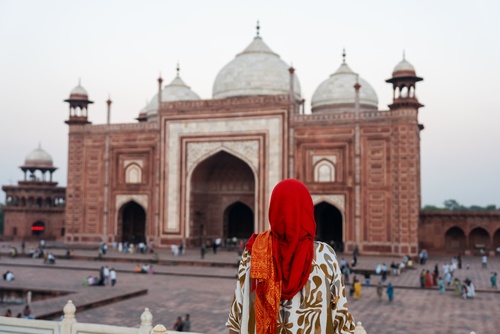
India’s most extraordinary travel experiences are not in its monuments. They are in a weaver’s workshop in Varanasi where a Banarasi silk sari takes three...
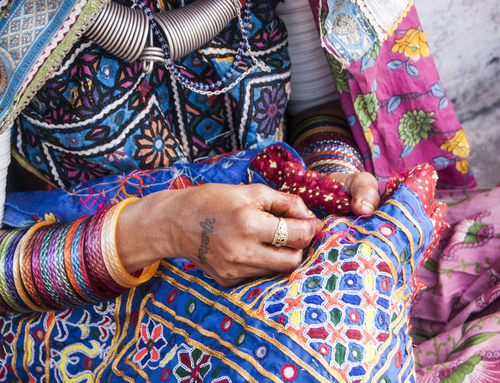
India has more distinct textile and craft traditions than any other country on earth. This is not an approximation. The combination of 28 states, dozens...
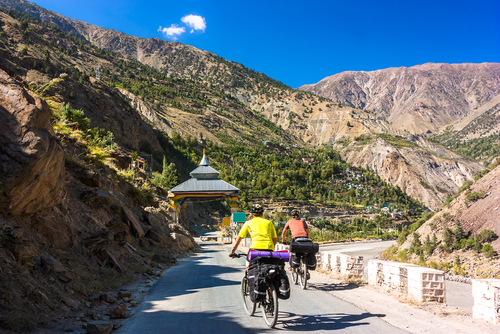
India bookings among adventure travellers surged 214% in the past year. Cycling is at the heart of that surge. International cyclists are discovering that India...
You are one step closer to having the best journey of your lifetime! Talk to us, write to us all that you have envisioned for your India trip, and one of our travel experts will connect with you on priority. To help you explicitly we have WhatsApp and Email addresses!


