


Experiential Travel in India: Beyond Sightseeing for International Tourists (2026)
India’s most extraordinary travel experiences are not in its monuments. They are in a weaver’s workshop in Varanasi where a Banarasi silk sari takes three...


 18884507235

Every seasoned traveler knows the feeling. You have done the research, read the guides, seen the photographs. You know that the Golden Triangle connects Delhi, Agra, and Jaipur. You know that Kerala’s backwaters involve houseboats and coconut palms. You know that Rajasthan means forts and desert and palace hotels.
And then you arrive. And India, being India, immediately begins showing you things that none of that research prepared you for.
This is the essential nature of travel here. The famous circuits are famous for excellent reasons, they contain some of the most extraordinary experiences available anywhere on earth. But they also contain layers that most visitors never reach, histories that the standard itinerary never surfaces, and details so specific and so remarkable that knowing them in advance transforms what you are looking at from a beautiful object into a living story.
This guide is for the traveler who wants the story.
The Golden Triangle is India’s most travelled tourist circuit, a roughly equilateral triangle connecting the capital Delhi, the Mughal city of Agra and its Taj Mahal, and the Pink City of Jaipur in Rajasthan. Most first-time visitors to India cover it in 6 to 9 days, moving between the three cities by road or train, ticking off the Taj Mahal, the Red Fort, Amber Fort, and the City Palace before flying out feeling that they have seen India.
They have seen the surface of something extraordinary. Here is what lies beneath it.
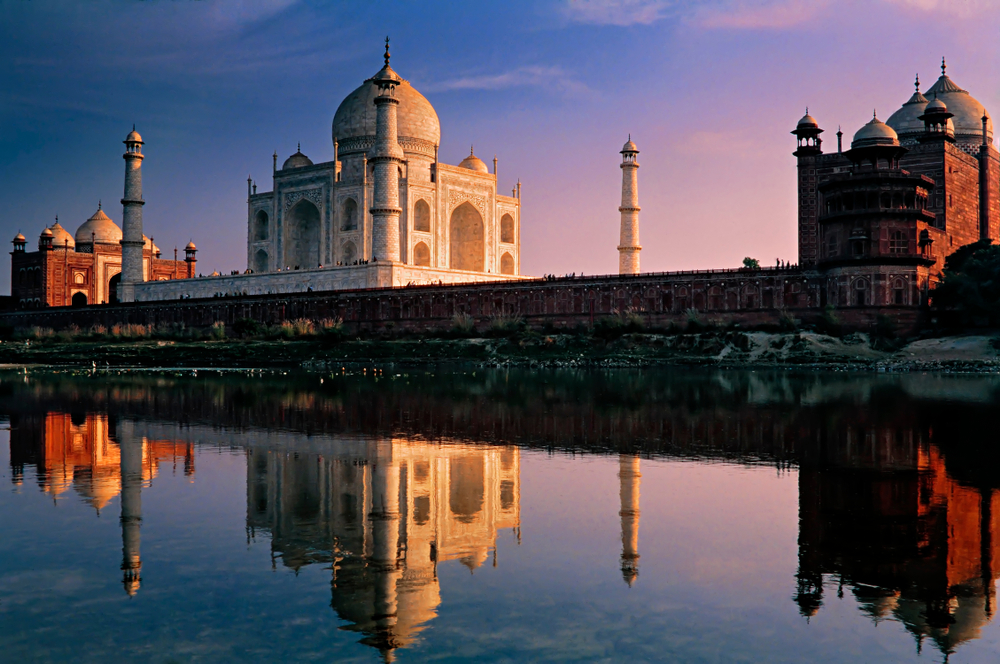
The Taj Mahal changes color four times a day and most visitors only see one of them.
At dawn, before the crowds arrive, it is pale pink, almost rose-gold, as the first light catches the marble at a low angle and the white becomes something warmer and more vulnerable. By mid-morning it is brilliant white, almost too bright to look at directly. In the late afternoon it turns a deep amber. And on full moon nights, when the site is open for special ticketed visits, it is silver-grey and entirely otherworldly, the inlay work catches the moonlight in ways that daylight never produces.
The vast majority of visitors arrive between 9am and 2pm and see the white version. This is the least interesting version. A sunrise visit, arriving at the eastern gate before 6am, transforms the experience entirely.
The Taj Mahal was designed to be approached from the river, not from the main gate.
Shah Jahan intended the primary approach to his wife’s mausoleum to be by boat along the Yamuna River, arriving at the water gate on the northern face. The elaborate main gate complex that tourists now use was secondary, a land approach for those who could not come by river. Today the river behind the Taj is accessible by local boat, and the view of the monument from the water , the perspective Shah Jahan actually designed to be seen from first, is one of the finest and least photographed views of the building in existence. Almost no tourist takes this boat ride. Almost everyone considers it the highlight of Agra.
Delhi contains not one but three complete medieval cities, two of which most tourists never visit.
The Delhi that tourists see, Connaught Place, the Red Fort, Qutb Minar, India Gate, is largely the British colonial city and the Mughal capital Shahjahanabad. But Delhi has been the capital of multiple empires across a thousand years, and it contains the physical remains of at least seven distinct cities built on top of one another.
Mehrauli, the area around the Qutb Minar complex, is the oldest of these, containing not just the famous minaret but a sprawling archaeological landscape of tombs, mosques, step-wells, and fortifications spread across an area that most visitors walk past without realising what they are looking at. The Balban’s Tomb in Mehrauli is the first building in India to use the true arch, a structural innovation that changed Indian architecture permanently, and it sits in a quiet park that receives a fraction of the visitors that the Qutb Minar does.
Tughlaqabad, a 14th-century fortified city built by Ghiyas ud Din Tughlaq in just four years, is the largest medieval fort complex in Delhi, bigger than the Red Fort, more dramatically situated, and almost entirely empty of tourists. Its walls run for 6.5 kilometres, its battlements look out over a vast reservoir that is now mostly dry, and within its walls are palaces, mosques, granaries, and a citadel that in its time housed a city of tens of thousands. Today it receives perhaps a hundred visitors on a busy day.
Lodi Garden, 90 acres of manicured parkland in the heart of south Delhi containing the 15th-century tombs of the Sayyid and Lodi dynasty rulers, is one of the finest urban historical spaces in Asia. The tombs are extraordinary: octagonal, domed, surrounded by formal gardens, their stonework still sharp after 600 years. It is also where Delhi comes to walk its dogs and do yoga in the early morning, which gives it a particular quality of the living and the historical coexisting without self-consciousness that is entirely Indian and entirely impossible to manufacture.
Jaipur’s Pink City is not actually pink, and the colour has a specific political story.
The buildings of Jaipur’s old city are painted in a terracotta-pink that everyone calls “pink” but which is closer to salmon or dusty rose in reality. They were painted this colour in 1876 on the orders of Maharaja Ram Singh II, specifically to welcome the Prince of Wales, the future King Edward VII, on his visit to the city. Pink, in Rajput tradition, is the colour of hospitality and welcome. The entire old city was repainted in a single coordinated effort before the royal visit, and the colour has been maintained by municipal law ever since. Every building in the old city is legally required to be painted the same shade.
The specific paint colour is controlled by the Jaipur Municipal Corporation. There is an official Jaipur pink. It has a code.
Fatehpur Sikri, 40 kilometres from Agra, is one of the most perfectly preserved Mughal cities in existence, and it was abandoned after 14 years.
Akbar built Fatehpur Sikri between 1571 and 1585 as his new capital, relocating the entire Mughal court from Agra in a project of extraordinary ambition and scale. The city he built, its palace complexes, its mosque, its administrative buildings, its residential quarters, represents the fullest surviving expression of Akbar’s syncretic vision: a capital that blended Hindu, Jain, and Islamic architectural traditions into something entirely new.
He abandoned it in 1585, possibly because of water supply problems, possibly because the northwestern military campaigns required his presence elsewhere. The city has been empty of its original population ever since. What remains is one of the most complete and most haunting ghost cities in the world, the palace of an emperor who built it magnificently and left it entirely, preserved by its abandonment rather than despite it.
It is included in most Golden Triangle itineraries as a half-day addition. It deserves a full day and an overnight in the small town nearby, to see it at dawn when the tour buses have not yet arrived and the red sandstone catches the early light and the only sound is birdsong in the empty courtyards.
Rajasthan is India’s most visually dramatic state; forts, palaces, desert, camels, colourful bazaars, and heritage hotels. Most visitors cover Jaipur, Udaipur, Jodhpur, and Jaisalmer in a 10 to 14-day circuit, staying in heritage hotels and watching the sun set over dunes or lake palaces.
It is magnificent. It is also the outermost layer of a state whose depth most itineraries never reach.
Rajasthan’s step-wells are among the most extraordinary architectural achievements in the ancient world,and most tourists walk straight past them.
Baolis; step-wells, were the solution that Rajasthan’s medieval builders developed to the problem of water in a desert environment. They are not simply wells with steps. They are architectural masterpieces of extraordinary complexity: multi-storey subterranean structures descending as far as 30 metres below ground level, their walls covered in carved sculpture, their geometry precise, their engineering sophisticated enough to maintain a constant water temperature year-round regardless of the surface heat.
Chand Baori in the village of Abhaneri, 95 kilometres from Jaipur, is the finest surviving example in Rajasthan and one of the most extraordinary structures in India. It has 3,500 steps arranged in a perfect inverted pyramid, descending 13 storeys to the water below. The geometry is so precise that no step is a duplicate of another, and the visual effect, looking down from the top into the receding triangles of stone, is one of the most vertiginous and beautiful architectural experiences in the country. It was built in the 9th century CE and has barely been touched since.
It appears in almost no standard Rajasthan itinerary. It is 95 kilometres from Jaipur and two kilometres off the main road to Agra.
The blue colour of Jodhpur’s houses is not decorative, it is functional, and its origin is more complex than most tour guides suggest.
The common explanation given to tourists is that the blue houses of Jodhpur’s old city are the homes of Brahmins, who traditionally painted their houses this colour to distinguish them from other castes. This is partly true but incomplete. The indigo-blue colour, a specific shade of copper sulphate blue mixed with traditional limewash, also acts as a natural insecticide, repelling termites and other insects that would otherwise damage the mud-brick walls. It also reflects heat, keeping interiors cooler in summer. The blue city is simultaneously a caste marker, a pest control system, and a passive cooling technology, a confluence of function and tradition that is entirely characteristic of how Rajasthan’s architectural innovations developed.
Bundi, two hours from Jaipur, contains a palace whose interior walls are covered in the finest surviving Rajput frescoes in existence, and it receives a fraction of one percent of the visitors that Jaipur does.
The palace of Bundi, the Garh Palace, rising in tiers from a hilltop above the town, has a series of interior rooms whose walls and ceilings are covered in frescoes of extraordinary quality: hunting scenes, processions, devotional images, portraits of the royal family and their court, painted in colours that have survived 400 years with remarkable freshness. Art historians consider the Bundi school of miniature painting one of the finest in the Rajput tradition, and the palace frescoes are its greatest surviving expression.
The town below the palace, Bundi, is a warren of blue-painted lanes, step-wells, temples, and small bazaars that look almost exactly as they did a century ago. There are no touts. There are almost no other tourists. The family that owns the palace lives in part of it and will sometimes show visitors rooms that are not on the standard tour.
The Shekhawati region of northern Rajasthan is the world’s largest open-air art gallery, and almost no international tourist has heard of it.
In the 18th and 19th centuries, the merchant families of the Shekhawati region, the Marwaris, who went on to become some of India’s most powerful business dynasties, competed with extraordinary ferocity to commission the most elaborately decorated havelis in their home towns. The result is a cluster of small towns, Mandawa, Nawalgarh, Fatehpur, Jhunjhunu, Bissau, whose streets are lined with mansions whose every surface, inside and out, is covered in painted frescoes.
The subjects are extraordinary in their variety: Hindu mythology alongside scenes of the merchants’ trading activities, portraits of the British Queen alongside images of the first aeroplanes and motor cars the artists had ever seen, Ganesh alongside steam trains, Radha-Krishna alongside telephone exchanges. The artists, trained in the Rajput miniature tradition, encountered modernity through their patrons’ descriptions and rendered it in a style that makes these frescoes unlike anything else in the world, ancient techniques applied to entirely new subjects with complete unselfconsciousness.
The entire region is accessible as a 2-day loop from Jaipur. It appears in almost no standard Rajasthan itinerary.
Kerala’s backwaters, the network of lakes, rivers, and canals that run parallel to the Arabian Sea coast for 900 kilometres, are one of India’s most iconic travel experiences. The houseboat. The coconut palms. The toddy shops on the water. The egrets pick their way along the banks at dusk.
Most visitors spend one night on a houseboat between Alleppey and Kumarakom and consider the backwaters experienced.
Here is what one night on a standard houseboat circuit does not show you.
Kerala’s houseboats are a 20th-century reinvention of a much older tradition, and the original vessels are more interesting than the tourist version.
The kettuvallam, the traditional rice barge of the backwaters, was the primary cargo vessel of Kerala’s inland waterway network for centuries, carrying rice, spices, and goods between the coastal towns and the interior. They were made entirely without nails, the planks of jackwood stitched together with coconut fibre rope and sealed with a mixture of cashew nut oil and resin, a boat-building technique unique to Kerala that produced vessels of extraordinary flexibility and durability.
The conversion of these cargo barges into tourist houseboats began in the 1990s and grew rapidly. Today there are over 1,500 registered houseboats on the backwaters. The original kettuvallam design has been largely standardised into a tourist product, and the craftsmanship of the conversion varies enormously. The finest houseboats, the ones that retain genuine traditional construction and carry skilled crews who know the waterways intimately, are a small minority and require specific research to find.
The backwaters’ ecosystem is under serious environmental pressure, and the most beautiful sections are not on the standard houseboat route.
The most visited section of the backwaters, the Alleppey to Kumarakom stretch on Vembanad Lake, is the most accessible and the most crowded. On peak season days, dozens of houseboats navigate the same channels, their engines creating wake that erodes the banks and disturbs the ecosystem. The water in the most trafficked channels is significantly less clean than it was a decade ago.
The least visited and most biodiverse sections of the backwater system are in the far south, the Ashtamudi Lake near Kollam, and the narrow, shaded canals of the Kuttanad region south of Alleppey, where the waterways are too narrow for the large houseboats and are navigated instead by small country boats. These sections, where the canal banks are just arms’ length away, where kingfishers sit on the roots of overhanging trees at eye level, where the villages along the banks have not been altered by tourism, are what the backwaters were before the houseboats arrived and what they still are in places that the standard circuit never reaches.
Kerala has a spice trade history that is older than the Roman Empire, and you can still smell it in the right places.
Kerala’s Malabar Coast was the source of the black pepper, cardamom, cinnamon, and ginger that drove the ancient spice trade, the trade that brought Phoenician, Arab, Chinese, and eventually Portuguese, Dutch, and British ships to this coastline over a period of 3,000 years. The Roman Empire imported so much black pepper from Kerala that the trade was a significant drain on Roman gold reserves. Alaric the Visigoth, when he sacked Rome in 410 CE, demanded 3,000 pounds of pepper as part of his ransom.
The spice gardens that supplied this trade are still operating in the hills above the backwaters, in Thekkady, Munnar, and the Cardamom Hills of the Western Ghats. Walking through a working spice plantation, where the pepper vines climb the trees, the cardamom grows in the shade below, and the smell of cinnamon bark drying in the sun is something that stays with you for days is one of the most sensory and historically resonant experiences in Kerala. It is included in almost no standard backwaters itinerary.
The Chinese fishing nets of Fort Kochi are neither Chinese nor particularly old, but their story is more interesting than the myth.
The enormous cantilevered fishing nets that line the waterfront at Fort Kochi, one of Kerala’s most photographed images, are commonly described as having been introduced by Chinese traders during the reign of Kublai Khan in the 13th or 14th century. The historical evidence for this is thin. What is more reliably documented is that they arrived during the Portuguese colonial period in the 16th century, possibly via Chinese traders who were active in the Portuguese trading network.
What is genuinely interesting about them is that they are still in daily use, not as tourist attractions, though they have become that too, but as functional fishing equipment operated by fishing families who have worked these nets for generations. The fish caught in them each morning are sold on the spot to the seafood restaurants along the waterfront, who cook them to order the same afternoon. The farm-to-table supply chain is approximately 50 metres long and has been functioning since the 16th century.
The Buddhist pilgrimage circuit of northern India, connecting the sites of the Buddha’s birth (Lumbini, just across the Nepal border), enlightenment (Bodh Gaya), first teaching (Sarnath), and death (Kushinagar), is one of the most significant pilgrimage routes in the world, drawing Buddhist visitors from Sri Lanka, Myanmar, Thailand, Japan, Korea, China, and the West annually.
Most visitors follow the standard circuit between these four principal sites and consider the Buddhist India experience complete.
Sarnath contains the Lion Capital of Ashoka, the object that became independent India’s national emblem, and most visitors walk past it without knowing what they are looking at.
In the Sarnath Museum, in a room near the entrance, stands a polished sandstone column capital of four lions standing back to back, their mouths open in a collective roar. It was carved in the 3rd century BCE on the orders of Emperor Ashoka, placed on top of a 15-metre polished sandstone pillar at the site where the Buddha gave his first teaching, and rediscovered by British archaeologists in 1905.
The four lions of this capital, adapted, with the wheel (dharmachakra) below them, became the official emblem of independent India in 1950. The 24-spoked dharmachakra from this same capital appears in the centre of the Indian national flag. Every Indian passport, every government document, every official communication of the Indian state carries an adaptation of a 2,300-year-old Buddhist sculpture found in a field in Uttar Pradesh.
The original stands in a provincial museum that charges ₹25 entry and receives a few hundred visitors on a busy day.
The Mahabodhi Temple at Bodh Gaya was almost entirely rebuilt in the 19th century, and the story of its restoration is as extraordinary as the temple itself.
The Mahabodhi Temple as it currently stands, the tall, tapering shikhara tower visible from across the town, is largely a 19th-century reconstruction. The original temple, built in the 3rd century BCE and expanded over subsequent centuries, had fallen into disrepair and been buried under accumulated rubble by the time a Burmese royal mission arrived to restore it in the 1880s. The restoration, carried out by a British engineer named J.D. Beglar under the direction of Alexander Cunningham of the Archaeological Survey of India, was controversial at the time and remains so among some scholars, the reconstruction was partly speculative, based on available evidence and partly on aesthetic judgment about what the original might have looked like.
What this means is that the most sacred site in Buddhism, the place where the Buddha attained enlightenment, visited by millions of pilgrims annually, is substantially a Victorian-era reconstruction. This does not diminish its power or its sanctity. It adds a layer to the story that most visitors who stand before it are entirely unaware of.
Varanasi’s ghats were almost entirely rebuilt in the 18th century, the ancient city looks ancient but is largely 300 years old.
The stepped ghats that line the Ganga at Varanasi, 88 of them, running for 7 kilometres along the western bank, are one of the most visually iconic landscapes in India and are widely understood to be among the oldest human constructions in the subcontinent.
Most of them are not. The current ghats were largely built or rebuilt by the Maratha rulers and their allied nobility in the 18th century, when Varanasi experienced a period of significant patronage and architectural investment. The ghats that visitors see today, the steps, the temples, the burning platforms, are primarily 18th-century construction built on top of much older ground.
This is not a deception. The ghats have been continuously present in some form for far longer than their current construction. But the specific physical landscape that produces the visual experience of Varanasi, the one that makes it look like it has looked for a thousand years, is primarily three centuries old. Knowing this does not make it less beautiful. It makes the 18th-century Maratha builders, whose names most visitors have never heard, due the credit that the Mughals and the ancient Hindus have always received.
Ladakh is India’s high-altitude cold desert, monasteries, Pangong Lake, Nubra Valley, the world’s highest motorable roads. Most visitors arrive by flight from Delhi, spend 7 to 10 days covering the main circuit, and depart from Leh.
Ladakh was an independent kingdom for over a thousand years, and its royal family still lives in Leh.
The Kingdom of Ladakh, the Namgyal dynasty, ruled the region from the 10th century until Indian Independence in 1947, when it acceded to India. The royal family continues to reside in the Leh Palace, the 17th-century nine-storey palace that dominates the Leh skyline, and members of the family are actively involved in the cultural and social life of the region. The current head of the royal family, Gyalpo Jigme Wangchuk Namgyal, is a direct descendant of the dynasty that ruled Ladakh for a thousand years.
The palace itself is partially open to visitors and managed by the Archaeological Survey of India. The royal family’s private quarters are in the upper sections. On festival days, particularly Losar, the Ladakhi new year, the family participates publicly in celebrations that have marked the beginning of the year in this kingdom for centuries.
The monasteries of Ladakh contain some of the finest Tibetan Buddhist art outside Tibet, because much of it was brought here from Tibet.
Following the Chinese occupation of Tibet in 1950 and the subsequent Cultural Revolution of the 1960s and 70s, during which an estimated 6,000 Tibetan monasteries were destroyed and enormous quantities of religious art were lost, Ladakh’s monasteries became, inadvertently, repositories of Tibetan Buddhist cultural heritage that no longer exists in its place of origin.
Monks and lamas fleeing Tibet brought manuscripts, thangka paintings, ritual objects, and iconographic knowledge with them across the Himalayan passes. Some of this material found its way into Ladakhi monasteries, supplementing collections that already contained extraordinary historical objects. The library at Hemis Monastery contains manuscripts of significant antiquity. The murals at Alchi, painted by artists from Kashmir in the 11th century using an iconographic tradition that has since been lost, are studied by scholars who travel specifically to see them from institutions across the world.
What this means is that a visitor to Ladakh’s monasteries today may be looking at Tibetan Buddhist art that no longer exists in Tibet, preserved here, at the edge of the Himalayas, by the accident of geography and the determination of the people who carried it across the mountains.
Tamil Nadu’s great temple cities, Madurai, Thanjavur, Mahabalipuram, Rameswaram, form one of the richest concentrations of Dravidian temple architecture in the world. Most visitors cover them in a week-long south India circuit, moving between the gopuram towers and the Chola bronzes and the living rituals of temples that have been operating for over a thousand years.
The Brihadeeswara Temple’s shadow falls entirely within its own base at all times of day, and no one has produced a fully satisfying modern engineering explanation for how this was achieved.
The central vimana tower of the Brihadeeswara Temple in Thanjavur rises 66 metres from the ground. It was built in 1010 CE. At any time of day, regardless of the sun’s position, the tower’s shadow falls within the boundary of its own base rather than extending outward onto the surrounding courtyard.
This is the result of extraordinary geometric precision in the design of the tower’s taper, the angle at which the sides slope inward as they rise was calculated with such accuracy that the shadow self-contains at all sun angles achievable at Thanjavur’s latitude. The Chola architects who designed it in the early 11th century did this without modern mathematics, without computer modelling, and without the ability to test the design at full scale before committing 130,000 tonnes of granite to the project.
The Chola bronze castings of Tamil Nadu are considered the finest hollow metal castings produced anywhere in the ancient world.
The Nataraja, the dancing Shiva within a ring of fire, is Tamil Nadu’s most internationally recognised artistic export, found in museums from the Metropolitan in New York to the British Museum in London to the Musée Guimet in Paris. What most viewers of these bronzes in international museums do not know is that the technique used to cast them, the lost-wax (cire perdue) process as developed by the Chola craftsmen of the 9th to 13th centuries, achieved a quality of detail, a thinness of metal wall, and a subtlety of surface modelling that has never been surpassed in the subsequent history of bronze casting.
The finest Chola bronzes in existence are not in international museums. They are in the Government Museum in Chennai, the Thanjavur Art Gallery, and still in active worship in Tamil Nadu’s living temples, taken out in procession on festival days, garlanded with jasmine, and carried through temple streets by priests whose professional lineage extends directly back to the craftsmen who first cast them.
Every one of India’s famous travel circuits has this quality: the surface is extraordinary, and beneath the surface is another layer, and beneath that layer is another, and the depth does not exhaust itself no matter how long you look.
The Golden Triangle is not just three cities with famous monuments. It is the archaeology of seven successive imperial capitals, the ghost of a Mughal emperor’s grief, and the persistence of medieval urban life in lanes that the tourist buses never reach.
The Kerala backwaters are not just a houseboat and a sunset. They are the living remnants of an ancient maritime trading network, a fragile ecosystem under quiet pressure, and a spice history that shaped the entire course of European exploration.
The Buddhist circuit is not just pilgrimage geography. It is the story of how a prince’s insight under a tree became the second-largest religion in the world, and how the physical evidence of that story, scattered across the plains of north India in museums and ruins and living temples, has been assembled, lost, rediscovered, and preserved across 2,500 years.
This is what India does. It makes every layer of attention rewarding. It punishes superficiality not with emptiness but with the nagging sense that you have missed something, which you have, which everyone does, which is precisely why the people who come here most often are the people who have already been.
Understanding what lies beneath the surface of India’s famous circuits is one thing. Having the time, access, and local knowledge to reach it is another.
The step-wells of Shekhawati, the river approach to the Taj Mahal, the pre-dawn light at Fatehpur Sikri, the narrow canals of southern Kerala that the large houseboats cannot enter, the Chola bronzes still in active temple worship, these are not experiences that standard itineraries include, because standard itineraries are not designed to go this deep.
At GeTS Holidays, the itineraries we build for our guests are specifically designed around this principle: that the most extraordinary experiences in India are not always the most famous ones, and that the famous ones contain depths that most visitors never reach. Whether you are covering the Golden Triangle for the first time or returning to India for the fifth, we build the journey around what you have not yet seen, and what, once seen, you will not forget.
The conversation about your India begins at [www.getsholidays.com].
This guide was produced by the editorial team at GeTS Holidays; luxury inbound travel specialists for India, Bhutan, Nepal, and Sri Lanka. Last updated July 2026.
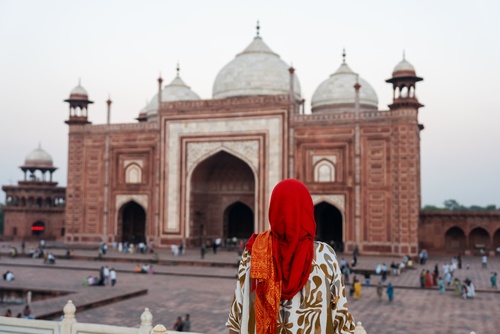
India’s most extraordinary travel experiences are not in its monuments. They are in a weaver’s workshop in Varanasi where a Banarasi silk sari takes three...

India has more distinct textile and craft traditions than any other country on earth. This is not an approximation. The combination of 28 states, dozens...
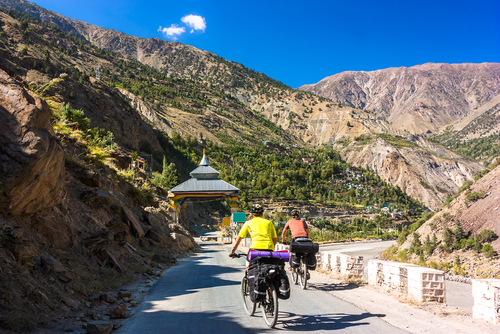
India bookings among adventure travellers surged 214% in the past year. Cycling is at the heart of that surge. International cyclists are discovering that India...
You are one step closer to having the best journey of your lifetime! Talk to us, write to us all that you have envisioned for your India trip, and one of our travel experts will connect with you on priority. To help you explicitly we have WhatsApp and Email addresses!


