


Experiential Travel in India: Beyond Sightseeing for International Tourists (2026)
India’s most extraordinary travel experiences are not in its monuments. They are in a weaver’s workshop in Varanasi where a Banarasi silk sari takes three...


 18884507235

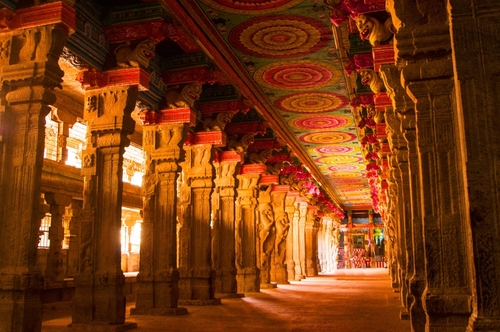
India has 42 UNESCO World Heritage Sites. Most international tourists visit the same five.
The Taj Mahal is extraordinary. The Red Fort is magnificent. Amber Fort deserves every visitor it receives. But India’s monument landscape extends far beyond these familiar names, into step wells of geometric perfection, rock carvings older than most civilisations, and temple complexes so technically audacious that modern engineers still cannot explain how they were built.
These are the monuments that reward the curious traveller. They are less visited, less photographed, and in many cases more extraordinary than the sites that appear on every India itinerary.
Here are 10 unique monuments in India that every international traveller should know about.
India’s famous monuments are famous for good reasons. However, the country’s historical depth means that extraordinary sites exist well outside the tourist circuit.
Many of these monuments receive fewer than 500 visitors on a busy day. Some have no entry queue. Several have no souvenir stalls at all. Visiting them feels like genuine discovery, the experience of standing inside something extraordinary without another tourist in sight.
Additionally, these sites tell stories that the famous monuments do not. They reveal different dynasties, different architectural traditions, and different aspects of Indian civilization that the Mughal-focused tourist trail consistently overlooks.
Why it is unique: Chand Baori is the deepest and most geometrically extraordinary step well in the world.
Built in the 9th century CE, it descends 13 storeys, approximately 30 metres, into the earth. It contains 3,500 steps arranged in a mathematically precise inverted pyramid. No two steps are identical. The geometry is so exact that the visual effect from the top, the steps receding into perfect symmetry below, produces a sensation of vertigo unlike anything in conventional architecture.
What most visitors do not know: The step well was built to maintain a constant water temperature year-round regardless of surface heat. It is simultaneously a feat of engineering, a feat of geometry, and a feat of thermal management, achieved in the 9th century without modern mathematics or modelling tools.
How to get there: Chand Baori is 95 kilometres from Jaipur. It is a 2-hour drive on the main Jaipur-Agra highway. Most tourists drive straight past it on their way between the two cities.
Best time to visit: Early morning. The light falls into the well from the east and illuminates the steps dramatically before 9am.
Why it is unique: Rani Ki Vav is the finest stepwell in India and one of the most intricately carved structures in Asia.
Built in the 11th century CE by Queen Udayamati as a memorial to her husband, King Bhimdev I, it descends seven storeys into the earth. Its walls contain over 500 principal sculptures and more than 1,000 minor ones, Vishnu in his ten avatars, apsaras in 16 distinct poses, celestial beings of extraordinary delicacy carved into sandstone with a precision that centuries of burial underground have preserved perfectly.
Rani Ki Vav was buried under silt for 700 years following a flood. The Archaeological Survey of India excavated it in the 1980s. The sculptures emerged in near-perfect condition, protected by the very disaster that had hidden them.
UNESCO status: World Heritage Site since 2014. Despite this, it receives a fraction of the visitors that comparable UNESCO sites attract.
How to get there: Patan is 125 kilometres north of Ahmedabad. The drive takes approximately 2.5 hours.
Practical tip: Combine with a visit to Modhera Sun Temple, 30 kilometres from Patan, for a full day of extraordinary Gujarat heritage.
Why it is unique: Lepakshi contains the largest monolithic Nandi bull in India, and a hanging pillar that defies explanation.
The Veerabhadra Temple at Lepakshi was built in the 16th century by the Vijayanagara Empire. Its interiors contain some of the finest surviving Vijayanagara murals in existence, ceiling paintings of extraordinary quality covering over 4,500 square feet.
However, Lepakshi’s most famous feature is its hanging pillar. Of the temple’s 70 pillars, one does not touch the ground. It hangs fractionally above the floor, a gap clearly visible when a thin sheet of paper is slid beneath it. Structural engineers have examined it repeatedly. No satisfactory modern explanation exists for how the pillar maintains its position or why the 16th-century builders constructed it this way.
The Nandi: The monolithic Nandi bull at Lepakshi is 4.5 metres high and 8.2 metres long, the largest in India. It sits on the approach road to the temple, carved from a single granite boulder, its expression of calm dignity entirely characteristic of Vijayanagara sculptural tradition at its finest.
How to get there: Lepakshi is 120 kilometres north of Bengaluru. The drive takes approximately 2.5 hours on NH44.
Why it is unique: The Vittala Temple contains pillars that produce musical notes when struck.
Hampi, the ruined capital of the Vijayanagara Empire, is a UNESCO World Heritage Site. However, even within Hampi, the Vittala Temple Complex is consistently underappreciated.
The temple’s musical pillars, 56 of them surrounding the main shrine, each produce a distinct musical note when tapped. They were carved from a single granite block in the 15th century by craftsmen who understood the acoustic properties of stone well enough to engineer specific pitches into specific pillar dimensions.
The Stone Chariot in the Vittala Temple courtyard is equally extraordinary. A granite chariot of perfect proportions, its stone wheels originally rotatable, it is one of the most photographed structures in Karnataka and one of the finest examples of Vijayanagara decorative architecture.
How to get there: Hampi is accessible by overnight train from Bengaluru (Hospete Junction, 13 kilometres from Hampi). Alternatively, fly to Hubli and drive 2 hours.
Practical tip: Hire a local guide specifically for the Vittala Complex. The musical pillar demonstration and the temple’s iconographic programme require explanation to be fully appreciated.
Why it is unique: Bhimbetka contains the oldest surviving human artwork in India, painted up to 30,000 years ago.
The Bhimbetka rock shelters are a UNESCO World Heritage Site in the Vindhya Hills of Madhya Pradesh. Over 700 rock shelters contain paintings created by hunter-gatherers between 10,000 and 30,000 years ago. The subjects include animals, hunting scenes, dancing figures, and ritual ceremonies, a visual record of human life in the Indian subcontinent before any known civilization existed here.
The colours, red and white ochre, derived from minerals, have survived millennia of exposure. The images are immediately legible. A bison running across a rock face. A group of dancers with their arms raised. A hunting party with bows. The continuity between these images and the human impulse to record experience feels overwhelming when you stand in front of them.
What makes this extraordinary: Some of the rock shelters show multiple layers of painting, different periods of human occupation painted over one another across thousands of years. A single rock face may contain images from 10 different historical periods.
How to get there: Bhimbetka is 45 kilometres southeast of Bhopal. The drive takes approximately 1 hour.
Best time to visit: October to March. The site is in a forested area and pleasant in cooler months.
Why it is unique: Gol Gumbaz has the second largest dome in the world, and a whispering gallery of extraordinary acoustic power.
Built between 1626 and 1656 as the mausoleum of Mohammed Adil Shah of the Adil Shahi dynasty, the Gol Gumbaz is a structure of staggering scale. Its central dome spans 44 metres in diameter, the second largest pre-modern dome in the world after the Pantheon in Rome. The entire structure rises 51 metres from the ground.
The Whispering Gallery encircles the interior of the dome at height. A whisper spoken at any point in the gallery travels around the entire circumference and is clearly audible on the opposite side, 37 metres away. Furthermore, every sound inside the dome echoes seven times. The acoustic properties were engineered deliberately by the Adil Shahi architects and remain fully functional nearly 400 years later.
What most visitors do not know: Gol Gumbaz is larger than the Taj Mahal’s central dome and was built at roughly the same time. It receives approximately 1% of the Taj Mahal’s annual visitors.
How to get there: Bijapur (Vijayapura) is accessible by overnight train from Bengaluru (approximately 10 hours) or by a 5-hour drive from Hyderabad.
Why it is unique: Nalanda was the world’s first residential university, operating for 700 years before its destruction in 1193 CE.
At its peak, Nalanda University enrolled over 10,000 students from across Asia, from China, Korea, Japan, Tibet, Mongolia, Turkey, and Southeast Asia. It had a nine-storey library containing millions of manuscripts. It offered courses in theology, philosophy, mathematics, astronomy, medicine, and linguistics. Scholars of the calibre of Xuanzang, the 7th-century Chinese pilgrim whose journey inspired the novel Journey to the West, studied here.
The Ghurid army destroyed Nalanda in 1193 CE. The library burned for three months. What remains, the excavated ruins of monasteries, lecture halls, and temples spread across 14 hectares, is one of the most significant archaeological sites in Asia and one of the least visited by international tourists.
The museum: The Nalanda Archaeological Museum contains sculptures, coins, and artefacts of considerable quality recovered from the excavations. It provides essential context for understanding the scale of what existed here.
How to get there: Nalanda is 95 kilometres from Patna and 12 kilometres from Rajgir. The drive from Patna takes approximately 2 hours.
Practical tip: Combine with Rajgir, an ancient city of deep Buddhist and Jain significance, for a full Bihar heritage day.
Why it is unique: Unakoti contains one of the largest collections of rock-cut sculptures in India, and almost no international tourist has seen them.
The name Unakoti means “one less than a crore”, one less than ten million. According to local legend, Shiva was travelling with ten million gods and goddesses to Kashi. He instructed them all to wake before dawn. When dawn came, only Shiva was awake. He cursed the sleeping deities and turned them to stone, producing the extraordinary assembly of rock-cut figures that covers the hillside today.
The sculptures date from the 7th to 9th centuries CE. The largest, a colossal head of Shiva carved directly into the rock face, rising 30 feet from the ground, is one of the most powerful pieces of rock-cut art in India. Surrounding it are carvings of Ganesh, Nandi, Durga, and dozens of other deities in a hillside setting of dense forest and cascading waterfalls.
Why so few visitors: Tripura requires advance planning and is less well connected than mainstream India tourist destinations. However, direct flights from Kolkata to Agartala (the state capital) make access significantly easier than it was a decade ago.
How to get there: Unakoti is 178 kilometres north of Agartala. The drive takes approximately 4 hours on hilly roads.
Why it is unique: Mattancherry Palace contains the finest surviving examples of Kerala mural painting, in a building most visitors walk straight past on their way to the Jewish Synagogue next door.
Built by the Portuguese in 1555 and later renovated by the Dutch in 1663, the Mattancherry Palace was presented to the Raja of Cochin as a diplomatic gift. Its interiors are covered in murals depicting scenes from the Ramayana, the Mahabharata, and the Puranas, painted in the Kerala style using natural pigments on wet plaster in a technique of extraordinary delicacy.
The bedchamber murals are particularly remarkable. They cover every surface, walls and ceiling, in narrative scenes of such detail and such quality that art historians regularly travel from across the world to study them.
What makes this extraordinary: The murals are among the finest examples of pre-colonial Indian painting in existence. They are in a building open to the public for a nominal entry fee in the middle of Fort Kochi’s most visited tourist area, and consistently overlooked.
How to get there: Mattancherry Palace is in Fort Kochi, accessible by ferry from Ernakulam (20 minutes) or by road from Kochi city centre.
Practical tip: Visit on a weekday morning. The palace is closed on Fridays and national holidays.
Why it is unique: Lonar is the only impact crater lake in basaltic rock in the world, and it contains temples built on its rim by communities who had no idea it was a meteor crater.
Approximately 50,000 years ago, a meteor struck the Deccan Plateau of Maharashtra and created a crater 1.8 kilometres in diameter and 150 metres deep. The crater filled with water over millennia to form Lonar Lake, a saline and alkaline lake of extraordinary chemical composition that supports unique microbial life found nowhere else on earth.
Around the crater’s rim, medieval Hindu and Buddhist temples were built by communities who considered the lake sacred without understanding its geological origin. The Kamalja Devi Temple and the Daitya Sudan Temple, both partially submerged at the lake’s edge, are the most significant.
The walk around the crater rim, 5 kilometres through forest, with the lake visible below and flamingos occasionally visible on the water, is one of the most unusual nature-heritage walks in India.
How to get there: Lonar is 490 kilometres from Mumbai and 150 kilometres from Aurangabad (which is also the base for Ajanta and Ellora). The drive from Aurangabad takes approximately 3 hours.
Practical tip: Stay overnight in Lonar or Aurangabad. Day trips from Aurangabad are possible but rushed.
Visiting these sites requires more planning than a standard India itinerary. Here is what to know:
Which of these monuments is easiest to add to a standard India itinerary?
Chand Baori is the simplest addition, it sits directly on the Jaipur-Agra highway and requires only a 30-minute detour. Mattancherry Palace in Kochi is equally accessible for travellers on a Kerala itinerary. Both require minimal additional planning.
Are these monuments safe to visit for international tourists?
Yes. All ten sites are established tourist destinations with government-managed entry. Standard India travel precautions apply; carry water, wear sun protection, and use a reputable local guide.
Which monument on this list is most underrated?
Gol Gumbaz in Bijapur is the most dramatically underrated. It is one of the largest pre-modern domed structures in the world, built at the same time as the Taj Mahal, and receives approximately 1% of its visitors. The whispering gallery alone justifies the journey.
Can I visit multiple monuments on this list in a single trip?
Yes, with planning. The Karnataka monuments, Vittala Temple at Hampi and Gol Gumbaz at Bijapur, can be combined in a 4-day circuit from Bengaluru. The Gujarat step wells, Rani Ki Vav and Modhera, combine easily in a day trip from Ahmedabad. Bihar’s Nalanda pairs naturally with Bodh Gaya and Varanasi.
Do I need a guide to visit these sites?
A guide is not legally required at most of these sites. However, it is strongly recommended at all of them. The context and stories that a knowledgeable local guide provides are what separates a forgettable visit from an unforgettable one.
Discovering India’s extraordinary lesser-known monuments requires local knowledge, the right itinerary, and a travel partner who knows where to look. At GeTS Holidays, we build luxury journeys across India that go well beyond the standard tourist circuit, combining the iconic with the undiscovered itineraries designed around what each traveller is genuinely curious about. Begin at [www.getsholidays.com].
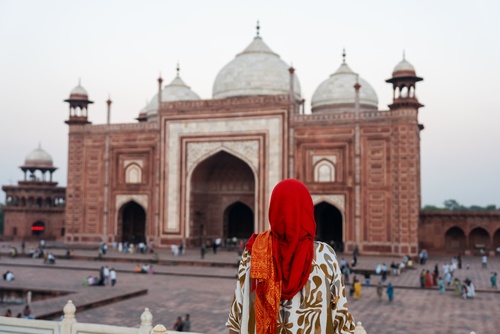
India’s most extraordinary travel experiences are not in its monuments. They are in a weaver’s workshop in Varanasi where a Banarasi silk sari takes three...

India has more distinct textile and craft traditions than any other country on earth. This is not an approximation. The combination of 28 states, dozens...
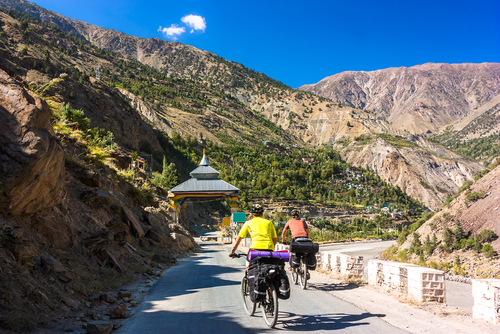
India bookings among adventure travellers surged 214% in the past year. Cycling is at the heart of that surge. International cyclists are discovering that India...
You are one step closer to having the best journey of your lifetime! Talk to us, write to us all that you have envisioned for your India trip, and one of our travel experts will connect with you on priority. To help you explicitly we have WhatsApp and Email addresses!


