


Experiential Travel in India: Beyond Sightseeing for International Tourists (2026)
India’s most extraordinary travel experiences are not in its monuments. They are in a weaver’s workshop in Varanasi where a Banarasi silk sari takes three...


 18884507235

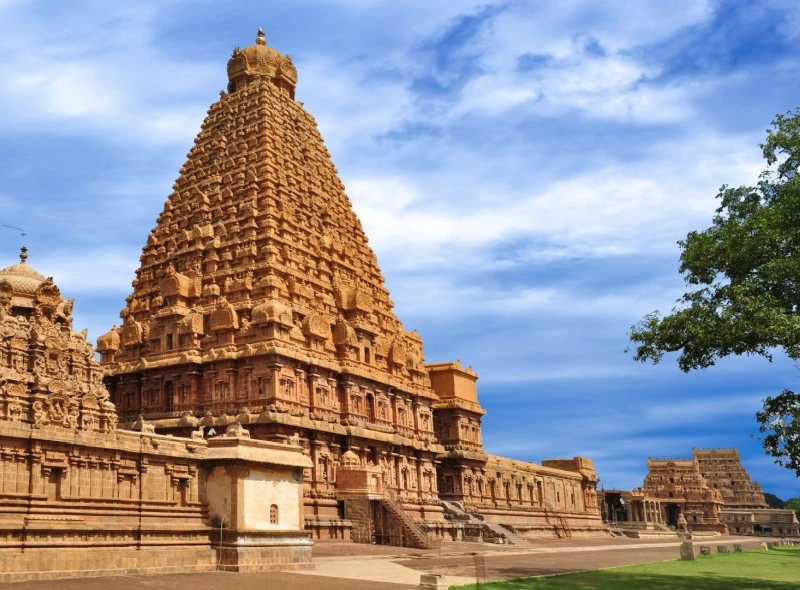
The Chola temples of Tamil Nadu are among the most extraordinary architectural achievements in Asia. Built between the 9th and 13th centuries during the powerful Chola period, these temples represent the pinnacle of South Indian temple architecture, monumental in scale, mathematically precise, spiritually charged, and politically symbolic.
For first-time travelers, these temples are not just religious sites. They are living museums of medieval engineering, sculpture, inscriptional history, and urban planning. The Chola dynasty temples were designed to communicate power, permanence, and divine legitimacy, and more than 1,000 years later, they still do.
To understand them fully, we must first understand the world that built them.
The Cholas were one of the longest-ruling and most expansive dynasties in Indian history. At their peak under Rajaraja Chola I and his son Rajendra Chola I, the empire extended across South India, Sri Lanka, and maritime Southeast Asia.
Temple-building during the Chola period was not merely devotional, it was imperial policy.
Temples served as:
The result was a sophisticated ecosystem of temples built by Cholas that combined architecture, governance, and spirituality.
Understanding Chola temple architecture enhances every visit. Key features include:
Unlike later South Indian temples where gateway towers dominate, early Chola period temples emphasize the towering pyramidal vimana above the sanctum. This vertical rise symbolizes Mount Meru, the cosmic axis.
Many temples were built entirely of granite, an engineering challenge considering quarries were often miles away.
Sanctum, mandapa (hall), and courtyard align perfectly along a sacred axis.
Outer walls feature deities, dancers, mythological scenes, and symbolic guardians — not decorative, but theological.
Walls document tax systems, military victories, donations, temple staff salaries, and even dance repertoires.
These elements define the great Chola temples and explain why they remain globally significant.
The UNESCO-recognized Great Living Chola Temples include:
They are called “living” because ritual worship continues uninterrupted for over a millennium, a rarity in world heritage sites.
(The Raja Raja Cholan Temple)
Completed in 1010 CE by Rajaraja Chola I, this temple represents the absolute zenith of Chola imperial ambition. Often referred to as the “Big Temple,” it is the most celebrated of all famous Chola temples and forms part of the UNESCO-listed Great Living Chola Temples.
Rajaraja Chola I ruled at a time when the Chola Empire had expanded dramatically through military campaigns and maritime trade. The construction of this temple was not merely devotional, it was a political proclamation carved in stone.
The temple inscriptions, running along the base walls, document:
No other medieval Indian temple provides such a detailed bureaucratic record. It functioned as both sacred space and state archive.
The temple redefined Chola temple architecture in scale and ambition.
Unlike later South Indian temples, the gateway towers are modest. The architectural focus is vertical, drawing the eye upward toward the sanctum tower, symbolizing Mount Meru.
The geometry is precise. Every proportion follows sacred mathematical ratios.
The courtyard’s vast openness enhances the monumentality of the structure. Unlike crowded temple towns, this layout allows uninterrupted views of the vimana from multiple angles.
Open daily. Ritual closures may occur briefly during poojas.
Built by Rajendra Chola I after his northern military expedition, this temple commemorates his symbolic victory over northern kingdoms.
Rajendra Chola I extended the empire beyond the Indian peninsula. After reaching the Ganges River, he ceremonially brought its water south and established a new capital, Gangaikonda Cholapuram.
The temple was designed to rival his father’s masterpiece at Thanjavur. It symbolized continuity of imperial legitimacy.
Although the surrounding capital city eventually declined, the temple remains.
At first glance, it resembles Brihadeeswarar Temple, but closer inspection reveals refinement.
The structure reflects aesthetic evolution, less rigid, more graceful.
This temple demonstrates the maturity of Chola dynasty temples, where monumentality merges with artistic finesse.
Unlike Thanjavur, this site is quieter and more atmospheric. The rural surroundings enhance its grandeur.
Visitors should take time to:
Constructed in the 12th century by Rajaraja Chola II, this temple represents the artistic high point of the later Chola period.
By the 12th century, the empire was still powerful but beginning to face challenges. Temple construction shifted focus from scale to artistic sophistication.
This temple was named after Airavata, the white elephant of Indra, who is believed to have worshipped Shiva here.
This temple is often described as a stone sculpture rather than a building.
The detailing is microscopic in places, requiring close observation.
Unlike Brihadeeswarar’s vertical dominance, this temple emphasizes horizontal storytelling through sculpture.
It is one of the most-artistically refined and important temples of the Chola period.
Ideal for slow exploration.
Built by Kulothunga Chola III, this temple represents the late phase of Chola temple architecture.
By this period, the Chola Empire was facing emerging regional powers. Yet temple construction continued as a reaffirmation of religious authority and cultural identity.
The name “Kampaheswarar” refers to Shiva as the one who removes trembling (fear).
This temple reflects vertical elegance rather than sheer scale.
Compared to earlier temples built by Cholas, this one feels lighter and more ornamental.
Less crowded, making it ideal for travelers seeking depth without heavy tourism.
Notice:
One of the earliest surviving structural temples of the mature Chola era, this temple is often overlooked by casual visitors, but for anyone wanting to understand how Chola period temples evolved, it is essential.
Built during the reign of Aditya Chola I (late 9th–early 10th century CE), the temple represents the formative phase of Chola temple-building, when the dynasty was consolidating power after the Pallavas.
Unlike later imperial monuments, this temple reflects a transitional moment in South Indian architecture, where Pallava structural experimentation began maturing into distinctly Chola solidity.
One of its most fascinating features is the solar alignment phenomenon. During specific days in the Tamil month of Chithirai (April), sunlight falls directly on the presiding deity in the sanctum, demonstrating advanced astronomical knowledge.
Compared to Brihadeeswarar Temple’s scale, Nageswaran is intimate, but that intimacy allows visitors to observe proportion and structural discipline closely.
Located in Kumbakonam, a town dense with historic temples, it offers:
Among the earliest granite temples attributed to the Cholas, this shrine offers insight into the dynasty’s architectural roots.
Dating to the early 10th century, this temple was built during a period of territorial consolidation. The Cholas were asserting independence from Pallava dominance and establishing their own architectural identity.
Unlike imperial capital temples, Koranganatha reflects regional craftsmanship under royal patronage.
The detailing here is remarkably expressive despite limited scale. Guardian figures and deity niches foreshadow the sculptural intensity seen later in Thanjavur.
Located in a rural setting, the temple offers:
Unlike the predominantly Shaivite focus of many temples built by Cholas, this Vaishnavite shrine reflects religious diversity within the empire.
Although the temple has earlier origins, it received Chola patronage and renovations during their rule. The Cholas supported both Shaivism and Vaishnavism, demonstrating political inclusivity.
Its location near the Kerala border influenced its design evolution.
This temple illustrates regional adaptation within Chola temples in India, showing flexibility rather than rigid stylistic enforcement.
An early granite temple complex built by local chieftains under Chola sovereignty.
Dating to the 10th century, Moovar Koil reflects a decentralized phase of temple-building, where regional elites participated in architectural patronage under imperial influence.
The name “Moovar Koil” means “Temple of Three,” referring to the original three shrines, of which two survive.
Although partially ruined, the surviving shrines display strong Pallava-to-Chola stylistic evolution.
Generally open during daylight hours (6:00 AM – 6:00 PM), as it is maintained as a protected monument.
One of the largest functioning temple complexes in the world, this temple-town grew significantly under Chola patronage.
Though expanded by later dynasties like the Pandyas and Vijayanagara rulers, Chola kings contributed major structural developments and land grants.
The temple became a fortified sacred city, illustrating how temples evolved into urban ecosystems.
This site demonstrates how Chola dynasty temples were not isolated monuments but civic centers.
Often considered a hidden gem among early Chola monuments.
Dating to the 10th century, this temple was built during a period when Chola sculptural traditions were crystallizing into a refined style.
Though smaller in scale, it demonstrates astonishing artistic sophistication.
The figures carved into the outer niches are among the finest surviving examples of early Chola stone artistry.
Tiruchirappalli International Airport
2–3 days minimum to cover major temples comfortably.
The great living Chola temples represent:
For first-time tourists, visiting these temples is not merely sightseeing, it is entering a civilization that mastered stone, geometry, devotion, and power.
The Chola temples remain one of the greatest architectural legacies in world history. From the monumental scale of the Raja Raja Cholan temple in Thanjavur to the intricate carvings of Darasuram, the famous temples of Chola dynasty reflect a golden age of South Indian civilization.
Exploring this carefully curated list of Chola temples offers far more than history, it offers insight into how art, empire, and spirituality fused to create some of the most extraordinary sacred spaces ever built.
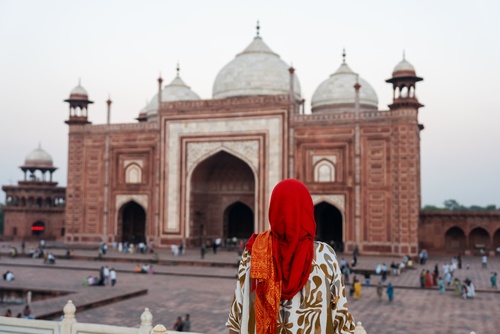
India’s most extraordinary travel experiences are not in its monuments. They are in a weaver’s workshop in Varanasi where a Banarasi silk sari takes three...

India has more distinct textile and craft traditions than any other country on earth. This is not an approximation. The combination of 28 states, dozens...
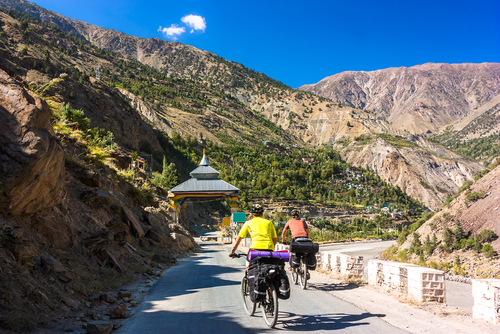
India bookings among adventure travellers surged 214% in the past year. Cycling is at the heart of that surge. International cyclists are discovering that India...
You are one step closer to having the best journey of your lifetime! Talk to us, write to us all that you have envisioned for your India trip, and one of our travel experts will connect with you on priority. To help you explicitly we have WhatsApp and Email addresses!


