August 31, 2026
There is a valley in the northwestern Himalayas that the Mughal Emperor Jahangir, dying in 1627 on the road back from Kashmir to Delhi, is said to have named with his last breath when asked what he wanted: “Kashmir, only Kashmir.”
Jahangir had spent his reign building gardens in the valley, Shalimar Bagh, Nishat Bagh, Chashme Shahi, formal Persian-style gardens terraced down hillsides above a lake so still and so large that the mountains on its far shore are reflected in it with photographic precision. He had built them because he considered Kashmir the most beautiful place on earth and wanted to impose a human order on its beauty that was worthy of the landscape itself.
Four centuries later, standing on the shikhara boat as it glides across Dal Lake in the early morning, the water still and grey-green, the Zabarwan Mountains reflected in it, the lotus beds rising around the boat, the wooden houseboats of the Mughal-era tradition moored along the banks, the response Jahangir was describing is immediately comprehensible.
This is Kashmir. And for international travellers who have hesitated to visit it, for reasons that are understandable but increasingly outdated, 2026 is the year to reconsider.
The Kashmir Question: Is It Safe to Visit in 2026?
This is the question every international traveller asks first, and it deserves a direct and honest answer.
Kashmir has had a complex and often troubled political history, particularly since the late 1980s. The situation has evolved significantly following the reorganisation of the region in 2019, and the ground reality for tourists, particularly in the Kashmir Valley and its principal destinations of Srinagar, Gulmarg, Pahalgam, and Sonamarg, has changed substantially.
The Kashmir Valley currently receives millions of domestic Indian tourists annually, numbers that have grown dramatically over the past four years, and the infrastructure for tourism has developed accordingly. International tourists visit in increasing numbers. The main tourist areas are heavily frequented, well-monitored, and have not experienced tourist-targeted incidents in several years.
The honest position for international travellers is this: Kashmir is not the conflict zone of the 1990s and early 2000s. The valley’s main tourist circuits are manageable and increasingly safe. Travel advisories from Western governments vary in their conservatism, some continue to advise caution, others have updated their guidance, and each traveller should consult the current advisory from their own country’s foreign ministry before booking.
What can be said with confidence is that the travellers who visit Kashmir in 2026, with a reputable operator, following current advice, and with appropriate travel insurance, are overwhelmingly having the experience that the valley’s extraordinary beauty promises. The question is not whether Kashmir is worth visiting. It demonstrably is. The question is whether the current moment is the right one for you specifically, and that is a judgment each traveller must make with current information.
The Kashmir Valley: What It Is
The Kashmir Valley is an oval basin approximately 135 kilometres long and 32 kilometres wide, sitting at an average elevation of 1,600 metres in the western Himalayas, surrounded on all sides by mountain ranges that close it off from the rest of the world, the Pir Panjal range to the south and the main Himalayan range to the north and east. The Jhelum River runs through its centre, fed by glacial streams from every direction.
The valley was formed by an ancient lake, geologists estimate it was filled with water until approximately 50,000 years ago, when the Jhelum broke through the surrounding mountains at Baramulla and drained it, leaving behind the extraordinarily fertile alluvial soil that makes Kashmir the garden it is. The saffron fields of Pampore. The apple and walnut orchards that cover the valley slopes. The lotus beds of Dal and Wular lakes. The chinars, the Oriental plane trees planted by the Mughals, which turn Kashmir into a landscape of extraordinary autumn colour between October and November.
The primary city is Srinagar, a city of 1.5 million people at 1,585 metres, built on both banks of the Jhelum, its old city a medieval landscape of wooden mosques and carved housefronts and narrow lanes that lead to the waterfront where the shikhara boats wait.
Srinagar: The City on the Lake
Dal Lake
Dal Lake is the defining experience of Srinagar, a 26-square-kilometre body of water that has shaped the city’s culture, economy, and identity for centuries. It is not a conventional lake. It is a living, inhabited ecosystem: a network of open water, lotus beds, floating vegetable gardens (the famous “floating gardens” or rad), and channels between islands on which an entire community , the Hanji water people, has lived, worked, and traded for generations without ever coming ashore.
The shikhara, the slender, canopied wooden boat that is Kashmir’s most recognisable image, is the vehicle through which most visitors first experience the lake, and the early morning shikhara ride, when the water is still and the mountains are reflected in it and the floating vegetable market is operating in the channels near the boulevard, the vendors paddling their laden boats between buyers in the half-light, is the finest introduction to Dal Lake and one of the finest water-based experiences in India.
Staying on a houseboat is the other essential Dal Lake experience. The houseboats of Srinagar, elaborately carved and furnished wooden vessels moored along the Boulevard and in the quieter reaches of the lake, were first built in the late 19th century as a workaround to a British colonial law prohibiting non-Kashmiris from owning land in the valley. The British who came to Kashmir for the summer built and lived on houseboats instead, and the tradition, with its carved cedar interiors, its formal dining rooms, its flower-filled sun decks, has been maintained and developed ever since.
The quality of houseboat accommodation varies enormously, from the genuinely luxurious, with private butlers and exceptional Kashmiri cuisine prepared on board, to the basic and poorly maintained. Research individual houseboats carefully before booking. The finest are genuinely extraordinary, waking to the sound of the lake, stepping onto a private deck as the morning mist lifts and the mountains appear, eating a breakfast of Kashmiri kahwa tea and fresh bread and honey from the family’s own bees, and the experience of sleeping on water in these surroundings is one of the most distinctive in India.
The Mughal Gardens
The three principal Mughal gardens of Srinagar, Shalimar Bagh, Nishat Bagh, and Chashme Shahi, were built in the early 17th century by successive Mughal emperors as expressions of their particular vision of paradise: a formal Persian charbagh design (four-quartered garden divided by water channels) adapted to the Himalayan setting, terraced down the hillside above the lake, with the mountains behind and the water below.
Shalimar Bagh – built by Emperor Jahangir for his wife Nur Jahan in 1619, is the largest and most elaborate. Four terraces descend to the lake, each with a different character: the outermost a public garden, the inner terraces progressively more private and more ornate. The central water channel runs through the entire garden, its fountains and cascades designed to be seen and heard simultaneously.
Nishat Bagh – the Garden of Bliss, built by Nur Jahan’s brother Asif Khan in 1633, has 12 terraces representing the 12 signs of the zodiac, descending from the Zabarwan Mountains to the lakeside with views across Dal Lake that the garden’s designers clearly intended to be part of the experience.
Chashme Shahi, the smallest of the three, built around a natural spring whose water is considered sacred, is the most intimate and least visited, and rewards the visitor who comes in the early morning before the tour buses arrive.
Visit all three. Visit them in the morning. Pack a picnic and spend an hour on the grass of each, looking out at the lake and the mountains, doing nothing in particular. This is what the gardens were built for.
The Old City
Srinagar’s old city, on the right bank of the Jhelum, accessible by the old wooden bridges that cross the river at several points, is a medieval landscape of remarkable preservation and remarkable vitality. The wooden mosques of Kashmir, built in a style found nowhere else in the world, their multi-tiered roofs covered in grass and wildflowers in the growing season, their interiors of carved walnut wood darkened by centuries of incense, are the most distinctive architectural element.
Shah-i-Hamdan Mosque, built in 1395 and rebuilt after successive fires, its current structure dating to 1732, is the finest example of the Kashmiri wooden mosque tradition, its paper maché interior of extraordinary delicacy. Jama Masjid, the principal mosque of the old city, built in 1394 by Sultan Sikandar, has 370 wooden pillars, each made from a single deodar cedar trunk, supporting a roof of considerable antiquity.
The craft bazaars of the old city, Nowhatta for copperware, Bohri Kadal for textiles, the lanes around the Jama Masjid for Kashmiri shawls and paper maché, are where Kashmir’s extraordinary craft traditions are most authentically encountered. Kashmir produces what are widely considered the finest handwoven shawls in the world, the pashmina shawls of the Changthangi goat’s undercoat, and the shahtoosh shawls that were once among the most precious textiles on earth. The craft of hand-embroidery, sozni work, the needle-drawn pattern on pashmina, is a tradition of extraordinary delicacy practised by families who have maintained the skill for generations.
Gulmarg: The Meadow of Flowers
55 kilometres west of Srinagar, at 2,650 metres, Gulmarg, the Meadow of Flowers, is one of the most beautiful high-altitude meadows in the Himalayas and one of the finest skiing destinations in Asia.
In summer (May to October), Gulmarg is a broad, gentle meadow ringed by fir forests and overlooked by the Apharwat Peak (4,390 metres), its slopes carpeted with wildflowers, blue poppies, primulas, gentians, and the wild roses that give the meadow its name, and its air carrying the particular freshness of Himalayan altitude. The Gulmarg Gondola, one of the highest cable car systems in the world, rising from 2,650 metres to 3,979 metres in two stages, provides access to the Apharwat ridge and views across the Kashmir Valley and, on clear days, the peaks of the Karakoram beyond the Pakistan border.
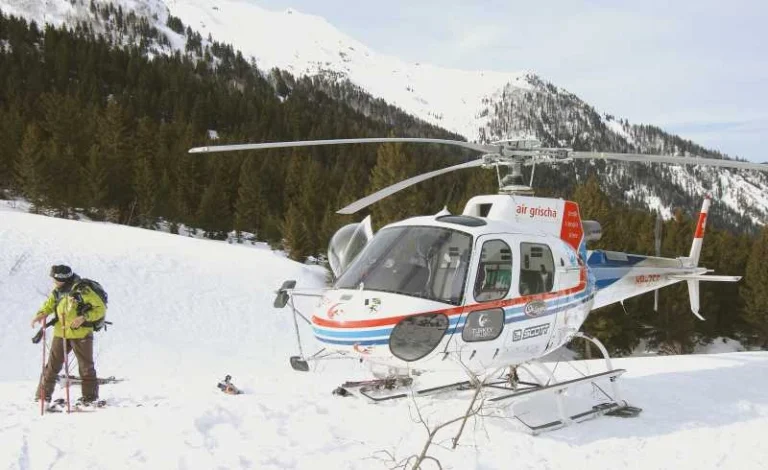
In winter (December to March), Gulmarg receives snowfall of extraordinary depth, four to six metres in a good year, and its slopes, served by the gondola, offer skiing and snowboarding on terrain that European and North American skiers accustomed to groomed piste find pleasantly surprising in its quality and quantity. Heli-skiing on the Apharwat backcountry has attracted a small but devoted international community of powder skiers who consider it among the finest untracked terrain in Asia.
The town of Gulmarg itself, a small collection of hotels, guesthouses, and the famous colonial-era Highlands Park Hotel, one of the oldest golf clubs in Asia whose 18-hole course at 2,650 metres claims the distinction of being the world’s highest, has been managed with a degree of tourist infrastructure that makes it significantly more accessible than Spiti or Ladakh while retaining the quality of the landscape.
Pahalgam: The Valley of Shepherds
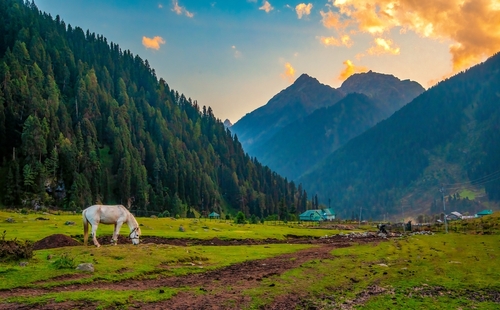
96 kilometres southeast of Srinagar, following the Lidder River into the mountains, Pahalgam sits at 2,130 metres in a valley of extraordinary pastoral beauty, wide meadows flanked by pine forests, the Lidder River running cold and clear through the centre, snow peaks visible above the treeline.
Pahalgam is the base for several of the most rewarding experiences in Kashmir:
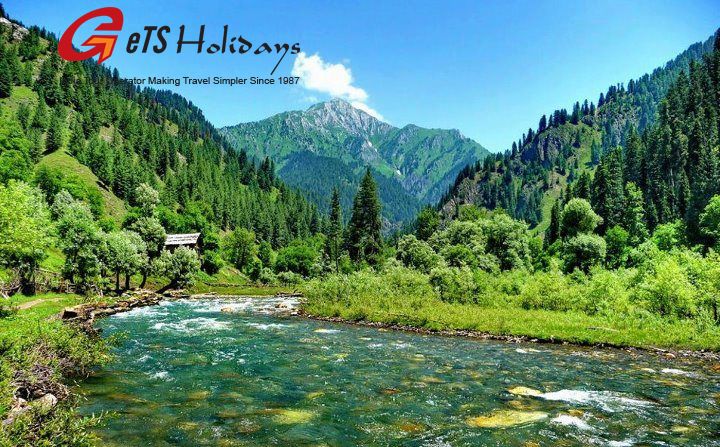
The Betaab Valley, named after a 1983 Bollywood film shot here, is a narrow, forested valley of considerable beauty accessible by road from Pahalgam, its meadows beside the river a favourite destination for domestic tourists and a genuinely lovely landscape for those who arrive early in the morning before the day-trippers.
Aru Valley, 12 kilometres from Pahalgam on a road that follows the Aru stream through increasingly remote and beautiful countryside, is the staging point for treks toward the Kolahoi Glacier and the high meadow of Tarsar Lake, one of the finest short treks in Kashmir for international visitors with moderate fitness and trekking experience.
The Amarnath Yatra base, Pahalgam is one of the two starting points for the annual pilgrimage to the Amarnath Cave, a high-altitude cave temple at 3,888 metres that houses a naturally forming ice stalagmite worshipped as a Shiva lingam and that draws hundreds of thousands of Hindu pilgrims each summer. The pilgrimage season (July–August) brings significant crowds to Pahalgam, avoid the town during this period if you are seeking quiet.
Sonamarg: The Meadow of Gold
87 kilometres northeast of Srinagar, at 2,740 metres, Sonamarg, the Meadow of Gold, named for the colour of its wildflowers in summer, is the last major settlement in the Kashmir Valley before the Zoji La Pass that marks the boundary between Kashmir and Ladakh.
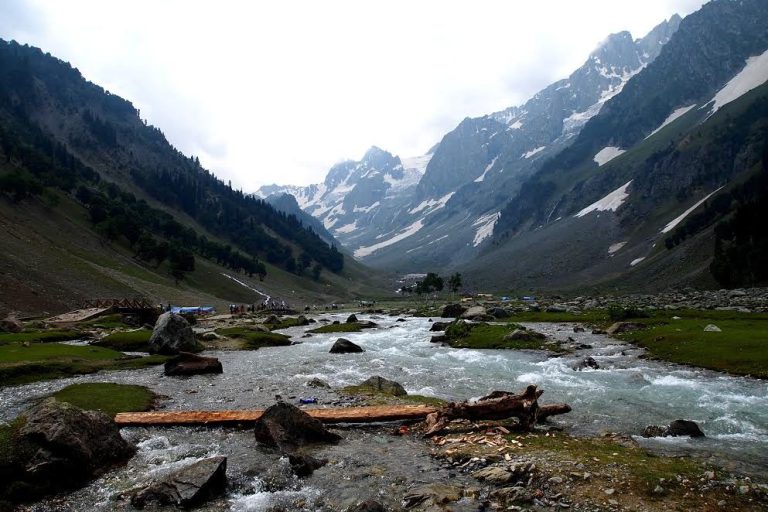
The landscape here is more dramatic than Gulmarg or Pahalgam, the valley narrows, the mountains close in, the Sindh River runs faster and colder, and the glaciers are visible from the road in a way that makes the proximity of the high Himalayas immediately apparent.
The Thajiwas Glacier, accessible by a 3-kilometre walk from the main meadow, is the primary tourist destination in Sonamarg, and the walk to its base, through a landscape of moraines and glacial streams and wildflower meadows, is one of the finest easy treks in Kashmir. The glacier itself, a tongue of blue ice descending from the peaks above, is best seen in the early morning before the cloud builds.
Sonamarg is also the gateway to the Vishansar and Krishansar lakes, twin high-altitude glacial lakes at 3,800 metres, connected by a high pass and surrounded by peaks of considerable scale, accessible on a 3-day trek from Sonamarg that is consistently cited by experienced Kashmir trekkers as the finest short high-altitude walk in the valley.
Kashmir’s Food and Craft: The Two Other Reasons to Come
The Food
Kashmiri cuisine is one of the most distinct and most extraordinary regional food traditions in India, built on a foundation of lamb, dry fruits, and spices that reflects the valley’s history as a crossroads of the Silk Road trading routes that passed through it from Central Asia.
Wazwan – the formal Kashmiri banquet, is the centrepiece. A traditional wazwan involves up to 36 courses, all prepared by hereditary wazas (cooks) using techniques passed through family lines for generations. The dishes are almost exclusively lamb: rogan josh (the slow-cooked red curry known internationally but tasting here, made with Kashmiri chillies and whole spices, like something entirely different from any restaurant version), yakhni (lamb in yogurt gravy perfumed with cardamom and fennel), gushtaba (large meatballs of hand-pounded lamb cooked in a white yogurt sauce), rista (smaller meatballs in a red gravy). The meal is served on a trami, a large copper plate shared between four people, and eaten with rice and Kashmiri bread.
Kahwa – Kashmiri green tea brewed with saffron, cardamom, cinnamon, and almonds in a samovar, is the valley’s defining drink and one of the finest things you will taste in India. Drink it at every opportunity. The best is made with saffron from Pampore, the world’s finest saffron, deep red and intensely fragrant, grown in a valley visible from the Srinagar-Jammu highway.
The Crafts
Kashmir’s craft traditions, pashmina weaving, sozni embroidery, walnut wood carving, paper maché, kani shawls woven on traditional looms with intricate patterns that take months to complete, are among the most refined in South Asia and among the most vulnerable, with many of the older craft traditions maintained by a dwindling number of master artisans.
A kani shawl, woven on a traditional loom using small wooden spools (kanis) rather than a modern jacquard, can take one weaver six months to complete for a simple design, and two or three weavers working simultaneously for a year or more for a complex one. The resulting textile, once complete, is simultaneously a garment and a work of art of extraordinary technical achievement. These are available in the old city bazaars and through specialist craft cooperatives, their authenticity verifiable by the slight irregularities that hand-weaving always produces, and by the price, which cannot be low if the shawl is genuine.
Practical Guide for Kashmir
Getting There
Srinagar International Airport receives direct flights from Delhi (1 hour 20 minutes), Mumbai, Bengaluru, and several other Indian cities. It is the most practical entry point for the Kashmir Valley. The airport is modern, well-organised, and handles international charter flights in addition to domestic services.
By road – the Jammu-Srinagar National Highway (NH44) connects Jammu (which has rail connections to Delhi) to Srinagar through the Banihal Tunnel, a 9-kilometre road tunnel through the Pir Panjal range that has reduced journey times significantly since its opening. The drive takes approximately 7–8 hours and passes through landscapes of considerable beauty, particularly the Banihal section and the approach to the valley through the Qazigund gateway.
Best Time to Visit
Spring (April–June), the valley is at its most dramatic in spring, when the almond and cherry orchards bloom in March and April, the tulip gardens of Indira Gandhi Memorial Tulip Garden (the largest tulip garden in Asia) are at their peak in late March and April, and the Mughal gardens are full of flowers. Temperatures are pleasant, 15–25°C in the day, cool at night.
Summer (July–August), the valley is green and lush, the Dal Lake houseboats are at their busiest, and the meadows of Gulmarg and Sonamarg are carpeted with wildflowers. Peak tourist season, book accommodation well in advance.
Autumn (September–November), arguably the finest season of all. The chinar trees, the great Oriental plane trees planted by the Mughals throughout the valley, turn from green to gold to deep amber to rust between October and November, transforming the valley into a landscape of extraordinary autumnal colour. The tourist numbers thin after September, the light is lower and warmer, and the atmosphere of the valley in October, the harvest season, the smell of woodsmoke from the evening fires, the mountains visible in the crystalline post-monsoon air, is unlike anything the summer season produces.
Winter (December–March), Srinagar and the valley proper remain accessible through winter, though cold, temperatures drop to –5°C or below in January and the lake occasionally freezes. Gulmarg in winter is the destination for skiers. The houseboat experience in winter, with kangri (traditional Kashmiri fire pots) keeping the rooms warm, is a specific and extraordinary experience that almost no international tourist has had.
How Long Do You Need?
Srinagar alone: 3–4 days, covering Dal Lake, the Mughal gardens, and the old city properly.
Srinagar with Gulmarg: 5–6 days.
Full Kashmir circuit: 8–10 days, covering Srinagar, Gulmarg, Pahalgam, and Sonamarg with the time to be unhurried in each.
Frequently Asked Questions
Do I need a special permit to visit Kashmir?
No. Indian citizens and foreign nationals with a valid Indian visa can visit the Kashmir Valley, Srinagar, Gulmarg, Pahalgam, Sonamarg, without any special permit beyond the standard Indian tourist visa. Certain areas near the Line of Control require permits, your operator will advise on current requirements.
Is the houseboat experience worth it?
At the right houseboat and choosing the right one requires research, unambiguously yes. The experience of waking on Dal Lake, stepping onto your private deck as the morning mist lifts, and having Kashmir present itself slowly and gently across the water is one of the finest hotel experiences in India.
What is the best season for the chinar colour?
Mid-October to mid-November, depending on the year. The colour typically peaks in late October. It varies by a week or two each year depending on temperatures, a warmer autumn delays the colour, a cooler one advances it.
Can I combine Kashmir with Ladakh?
Yes, and it is one of the finest combinations in Indian Himalayan travel. The Srinagar–Leh highway (NH1) connects the two regions through the Zoji La Pass, open from May to November. The drive takes approximately 9 hours and passes through some of the most dramatic road scenery in Asia, from the green Kashmir Valley through the Sindh River gorge, over the Zoji La into the bare moonscape of Ladakh, and down the Indus Valley to Leh.
Kashmir requires specialist local knowledge, houseboat selection, current road conditions, the seasonal timing of specific experiences, and the logistical confidence that comes from having sent guests here repeatedly and knowing what works. At GeTS Holidays, we build Kashmir itineraries that go beyond the standard circuit, combining the valley’s finest houseboats, the most knowledgeable shikara guides, private wazwan dinners, and access to craft workshops that most visitors never find, into journeys that do full justice to what Jahangir was talking about. Begin at [www.getsholidays.com].
Last updated July 2026. Travel advisory status for Kashmir should be checked against your country’s current foreign ministry guidance before booking. Conditions on the ground evolve and current information is always preferable to historical accounts.