


11 Colourful Holi Foods of India You Must Try
While Holi Festival is all about colours, but like every other festival, the celebrations are incomplete without some scrumptious foods that will awaken your senses...


 18884507235

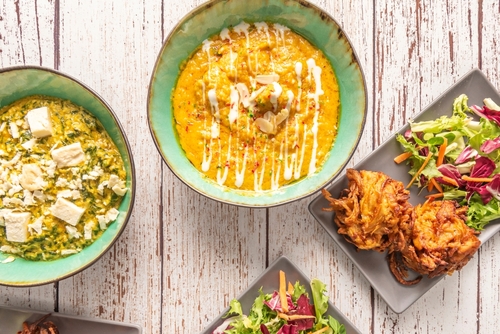
There is a conversation that happens regularly between first-time visitors to India and people who have been here many times. The first-time visitor says: “I know Indian food, I’ve been eating it for years.” The veteran India traveller smiles. Not condescendingly. With the particular warmth of someone who remembers having the same conversation with themselves, before they arrived, before they understood what Indian food actually is.
What the world calls Indian food, the butter chicken, the tikka masala, the garlic naan, is the product of a specific set of circumstances: the adaptation of Punjabi and Mughal cooking traditions to the tastes of British and American diners in restaurants that were, for decades, almost exclusively run by Bangladeshi and Punjabi immigrants. It is not bad food. Some of it is excellent food. But it represents perhaps five percent of what Indian cooking actually is and the other 95 percent, encountered in the places where it evolved, is one of the most extraordinary culinary discoveries available to an international traveller anywhere on earth.
India has 28 states and 8 union territories. Each of them has a distinct culinary tradition. Several of them have multiple distinct culinary traditions within their own borders, varying by community, by religion, by caste, by geography, by season, and by the particular history of the people who developed them. The total number of distinct regional cuisines within India’s borders is impossible to count accurately, but estimates range from 50 to several hundred, depending on how granularly you define the term.
This guide is a starting point. It covers the regional traditions that reward the food traveller most directly, the ones that are most distinct, most extraordinary, most impossible to encounter authentically outside the specific places where they evolved. Use it as a map. The territory it describes will exceed it.
Delhi is the finest food city in India for the sheer range of what is available, a megalopolis that has absorbed the culinary traditions of every region it has governed, every community that has settled in it, and every empire that has made it a capital.
Old Delhi is where the Mughal culinary tradition is most authentically maintained. The nihari of Karim’s, a slow-cooked overnight stew of beef or mutton, its gravy deepened by marrow bones and whole spices, served with a ladle of clarified butter and bread for dipping, has been produced by the same family in the same lane behind the Jama Masjid since 1913. It is the direct descendant of the dish that was prepared in the royal Mughal kitchens and served to the emperor’s court, now available for less than the cost of a coffee in most Western cities.
The Paranthe Wali Gali, the Lane of Stuffed Breads, has been frying parathas in clarified butter since the mid-19th century. The stuffings are more varied than most visitors expect: potato and chilli is the standard, but the best stalls do stuffings of paneer, rabri (sweetened condensed milk), dried fruits, and combinations that have no name in English. Eaten standing at a narrow counter with a side of pickles and yogurt, this is breakfast in Old Delhi as it has been for 150 years.
Chandni Chowk is the location of several of Delhi’s most historically significant food establishments, Ghantewala, the sweet shop that fed Delhi’s elite for over 200 years before finally closing in 2015, is gone, but Natraj Dahi Bhalle Wala, serving dahi bhalle (lentil dumplings in yogurt with tamarind chutney) from the same location since 1940, remains. Kuremal Mahavir Prasad Kulfi Wale, stuffed kulfi (dense frozen milk dessert) packed inside seasonal fruits, a technique that produces a dessert of extraordinary elegance from extremely simple ingredients, has been operating in Sitaram Bazaar since 1906.
The Dhaba Tradition: The roadside dhabas of Delhi’s periphery, the truck-stop restaurants along the national highways that feed the drivers who move India’s goods across its length and breadth, represent one of the most underrated food experiences in north India. Dal makhani (black lentils slow-cooked overnight in a wood-fire oven until they reach a richness that no restaurant version quite replicates), tandoori chicken cooked in a clay oven buried in the ground, makki ki roti (cornmeal flatbread) with sarson ka saag (mustard greens) in the winter months, this is the food that north India eats when it is feeding itself rather than performing for visitors.
Lucknow, the former capital of the Nawabs of Awadh, the most culturally refined court in 18th and 19th century India, has a culinary tradition that is widely considered the most sophisticated in north India. The Awadhi style of cooking, dum pukht, a technique of slow-cooking in sealed vessels over low heat, allowing the ingredients to cook in their own steam and the flavours to develop without the intrusion of outside air, produces dishes of extraordinary subtlety and depth.
Biryani in Lucknow, the Awadhi biryani, pakki (pre-cooked meat layered with partially cooked rice and then sealed and slow-cooked together) rather than the Hyderabadi kachchi (raw meat cooked with rice simultaneously), is lighter, more fragrant, and more delicately spiced than any version you have eaten outside the city. The rice grains are separate and perfumed with kewra water and saffron. The meat falls from the bone. It is eaten with a raita of extraordinary simplicity, yogurt, mint, a touch of cumin, that exists to clear the palate between mouthfuls rather than to compete with the main dish.
Galouti kebab, invented, according to tradition, for a Nawab who had lost his teeth and required a kebab that could be eaten without chewing, is made from lamb so finely minced and so carefully spiced, with over 100 spices in the traditional recipe, that it has the consistency of pâté and dissolves on the tongue rather than requiring mastication. Eaten on a warqi paratha, a layered bread so delicate it shatters at the touch, at Tunday Kababi in Lucknow, which has been making galouti kebabs since 1905, it is one of the finest things you will eat in India.
Sheermal, a saffron-enriched flatbread baked in a tandoor and glazed with milk, its surface slightly sweet, its interior soft and fragrant, is Lucknow’s most distinctive bread and the ideal accompaniment to the city’s richer meat preparations.
Varanasi’s food tradition is shaped by its identity as Hinduism’s holiest city. The city is largely vegetarian, the sale of meat and eggs is restricted in many areas near the temples, and its culinary identity is built around street food of extraordinary variety and quality.
Kachori sabzi, a deep-fried bread of considerable crispness, stuffed with a spiced lentil filling, served with a potato curry and a variety of chutneys, is the standard Varanasi breakfast, eaten at small stalls near the ghats from early morning. The best versions involve kachoris that shatter at the touch, spilling their filling into the curry below, and the combination is one of those dishes whose simplicity conceals a depth of flavour that has been refined over generations.
Malaiyo, a winter-only dessert available only in Varanasi, made by churning milk foam overnight in the cold air until it becomes a cloud of extraordinary lightness, then serving it with saffron and pistachios in the morning before it melts, is one of the most transient and most beloved of Varanasi’s food traditions. It exists only between November and February. It cannot be stored. It must be eaten within minutes of being served. It tastes of nothing that exists anywhere else.
Banarasi paan, the betel leaf preparation of Varanasi, is a subject of considerable local pride and of considerable variety: sweet paan, meetha paan stuffed with gulkand (rose petal preserve) and coconut and fennel, is the visitor-friendly introduction. The more complex preparations, including the famous fire paan (briefly ignited before being placed in the mouth whole), are the subject of specific pilgrimage among paan enthusiasts across India.
Mumbai’s food culture is the most diverse in India, a city of migrants from every state and every community, each bringing their culinary tradition and adapting it to the specific ingredients, the specific pace, and the specific hunger of one of the world’s largest cities.
Street food is Mumbai’s greatest culinary achievement. Vada pav, a potato fritter in a bread roll, with three chutneys, the whole thing assembled and eaten in 30 seconds, is Mumbai’s defining street food, described by food historians as India’s first fast food, now available at stalls across the country but at its finest at the stalls near Dadar station where it has been sold since the 1960s. Pav bhaji, a thick vegetable curry eaten with soft, butter-fried bread rolls, is the street food of Marine Drive and Chowpatty Beach, eaten at sunset watching the Arabian Sea. Sev puri, bhel puri, ragda pattice, the chaat family of sweet, sour, spicy assembled snacks, are the afternoon food of Mumbai’s office workers and schoolchildren and retired couples in equal measure.
The Parsi cuisine of Mumbai, the culinary tradition of the Zoroastrian community that fled Persia in the 8th century and has maintained a distinct cultural identity in India ever since, is one of the most extraordinary and most threatened culinary traditions in the country. Dhansak, a combination of meat and lentils and pumpkin slow-cooked together in a gravy of Parsi spices, served with brown rice and a salad of raw onions, lime, and mint, is the community’s most famous dish, now available primarily at the remaining Parsi restaurants in Mumbai. Britannia & Co in the Ballard Estate has been serving Parsi food since 1923. The owner, now in his 90s, still attends lunch service. The berry pulao, basmati rice cooked with meat and flavoured with zereshk (Iranian barberries), is a dish that exists in its authentic form in Mumbai and in Iran and almost nowhere else.
Gujarat is India’s most rigorously vegetarian state, the Jain community and the dominant Vaishnava Hindu tradition have shaped a culinary culture that has developed, over centuries, the most sophisticated vegetarian cooking in India in response to the constraint of working without meat.
Thali, the Gujarati thali, served at lunch in the traditional way with unlimited refills of each dish, at restaurants across the state, is one of the finest eating experiences in India. The elements of a proper Gujarati thali: dal (lentil soup, slightly sweet in the Gujarati tradition), kadhi (yogurt curry, tangy and thin), three or four vegetable preparations (at least one leafy green, at least one root vegetable, at least one seasonal speciality), rice, three types of bread (puri, thepla, and a third that varies by season and region), pickles, papad, and a sweet, typically shrikhand (strained yogurt with saffron and cardamom) or basundi (condensed milk with nuts). Unlimited. Refilled by staff who move around the dining room with pots and will not accept “no” easily.
Dhokla, a steamed cake of fermented chickpea batter, soft and slightly sour, served with a tempering of mustard seeds and curry leaves and green chillies, is Gujarat’s most internationally recognised food and one of the finest examples of fermentation-based cooking in India. Eaten fresh, still warm from the steamer, in the morning at a Gujarati breakfast stall, it is completely different from the cold, packaged version available in Indian grocery stores outside India.
Goa’s culinary tradition is the result of four and a half centuries of Portuguese colonial presence overlaid on a pre-existing Konkani Hindu and later Muslim tradition, and the result is unlike anything else in India, a cuisine that has absorbed European technique and ingredients while remaining fundamentally its own.
Fish curry rice, Goa’s most basic and most beloved daily meal, eaten for lunch by most Goans most days, involves a thin, coconut milk-based curry with green chillies and kokum (a souring agent), fresh fish (typically kingfish or pomfret), and rice. It sounds simple. It is simple. It is also deeply, specifically delicious in a way that every iteration of “fish curry” outside Goa fails to replicate, because the kokum cannot be substituted, the coconut milk must be fresh, and the fish must have been in the sea within 24 hours.
Vindaloo, the dish that most international travellers think they know, bears almost no relationship to the Goan original. The restaurant version is a generic curry of considerable heat. The Goan original, pork marinated in vinegar (vinha) and garlic (alhos) in the Portuguese tradition, cooked with Kashmiri chillies and a specific spice blend that includes cumin, cinnamon, cloves, and cardamom, is a dish of balanced complexity whose heat is present but not dominant, and whose vinegar-forward flavour is entirely specific to the tradition that produced it.
Bebinca, the layered coconut cake that is Goa’s most distinctive dessert, made from alternating layers of coconut milk, egg yolks, flour, and sugar, each layer individually cooked before the next is added, the whole process taking several hours for a full cake of 16 layers, is one of those desserts that is entirely impossible to rush and entirely worth the time it requires.
Tamil Nadu’s culinary tradition is one of the oldest, most sophisticated, and most internationally misunderstood in India. The world knows south Indian food primarily through the dosa-idli-sambar trinity, and these are genuine masterpieces of fermented grain cooking, but Tamil Nadu’s full culinary range extends far beyond them.
Chettinad cuisine, the cooking of the Nattukotai Chettiar community of the Chettinad region in central Tamil Nadu, is the most complex and the most globally distinctive regional cuisine in south India, built on a spice palette that includes ingredients found nowhere else in Indian cooking: kalpasi (stone flower, a lichen), marathi mokku (dried flower pods of the Indian persimmon), star anise, and dried red chillies of extraordinary variety. Chettinad chicken, slow-cooked in a gravy of ground fresh coconut, fennel, kalpasi, and Chettinad chillies, is one of the finest chicken preparations in India.
Idli, the steamed rice cake, made from a batter of fermented rice and lentils, that is the foundation of south Indian breakfast, sounds too simple to be interesting. It is one of the most technically demanding preparations in Indian cooking. The fermentation must proceed for the right number of hours at the right temperature. The batter must have the right consistency. The idlis must be steamed in the right moulds for exactly the right time. The result, when all of this is right, as it is at the best idli restaurants in Chennai and Madurai, is a breakfast of extraordinary lightness and depth, eaten with sambar (a tamarind-based lentil soup of considerable complexity) and two chutneys (coconut and tomato), and requiring nothing else.
The Onam Sadya, the elaborate feast of 26 or more dishes served on a banana leaf for the Kerala harvest festival of Onam, is one of the most extraordinary eating experiences in south India, though it belongs technically to Kerala rather than Tamil Nadu. If your visit coincides with Onam (August–September), eat a sadya at a traditional household or a restaurant that takes it seriously. The sequence of the dishes, the specific placement of each on the banana leaf, and the instruction to eat with the right hand in a particular order are not arbitrary traditions, they are a structure developed over centuries to present the flavours in their most complementary progression.
Kerala’s culinary tradition is built on a coastline of extraordinary fish and seafood resources, a hinterland of spice gardens and coconut groves, and a multiplicity of communities, Hindu, Muslim, Christian, Jewish, each of which has developed distinct culinary traditions that coexist in the same geography without resembling one another.
Karimeen pollichathu, pearl spot fish marinated in a paste of red chillies, ginger, garlic, and coconut, wrapped in a banana leaf, and grilled over charcoal until the leaf chars and the fish steams inside it, is Kerala’s most distinctive seafood preparation and one of the finest fish dishes in India. It is available only in Kerala, only with the pearl spot fish that is specific to the backwater ecosystem, and it tastes more strongly of place than almost any other dish in the country.
Appam with stew, a lace-edged rice pancake with a soft, slightly spongy centre, eaten with a thin coconut milk stew of chicken or vegetables flavoured with whole spices, is the standard Kerala breakfast at its finest: the appam slightly sour from fermentation, the stew rich and gentle, the combination entirely satisfying in a way that requires no further elaboration.
Malabar cuisine, the food of Kerala’s northern coast, shaped by centuries of Arab trading contact, uses a distinct spice palette and produces dishes like Malabar biryani (rice cooked with meat in the dum style, fragrant with star anise and fennel), fish curry with raw mango, and the extraordinary Malabar parotta (a layered flatbread made by stretching and folding dough until it produces dozens of crisp, oily layers) that have no equivalent in the rest of Kerala’s cooking.
Kolkata’s claim to be the street food capital of India is contested by Mumbai and Delhi, but its claim is the most historically substantial. The city’s street food culture developed over two centuries of colonial-era urban density, producing a repertoire of snacks and quick meals that is more varied, more technically sophisticated, and more deeply embedded in daily life than any other city’s.
Phuchka, Kolkata’s version of the pani puri that appears across India under different names, is universally considered by its devotees to be the finest version: the shells crisper, the filling more complex (a mixture of mashed potato, chickpeas, tamarind, and green chillies), the water more tart (made with raw mango and black salt rather than the tamarind-only version of other cities). The argument about which city makes the best pani puri / phuchka / golgappa is one of India’s most reliably passionate culinary debates.
Kathi roll, a paratha wrapped around a filling of egg and chicken or mutton tikka, with raw onions and green chutney, was invented in Kolkata in the 1930s, at Nizam’s Restaurant near New Market, as a portable meal for office workers who could not stop to sit down for lunch. It is now one of the most widely replicated street foods in India, but the original, from Nizam’s, remains the definitive version.
Mishti, Bengali sweets, are a world unto themselves: rasgulla (soft cheese balls in light sugar syrup, invented or at least perfected in Kolkata in the 19th century), sandesh (fresh cheese sweetened and flavoured with cardamom or saffron or seasonal fruit, shaped into beautiful moulds), mishti doi (yogurt set in earthenware pots with date palm jaggery, the slight minerality of the jaggery giving it a complexity that refined sugar cannot produce), chomchom (a denser, oval sweet covered in grated coconut or dried milk solids). Bengali sweets are eaten not as a conclusion to a meal but throughout the day, at the sweet shop in the morning, with tea in the afternoon, after dinner as a matter of course.
The single most important principle for food travel in India, the one that produces the finest eating consistently across every region, is deceptively simple: eat where the locals eat.
The restaurant that is full of Indian diners at lunchtime, with no English menu and a queue of local office workers at the counter, is almost always producing better and safer food than the tourist-facing restaurant with photographs on the menu and a tout outside inviting you to enter. High turnover means fresh ingredients and freshly cooked food. Local patronage means the food has been refined by the demands of customers who grew up eating it.
The street food stall that has been in the same location for decades, where the vendor knows every regular customer by name and has been perfecting the same dish for 30 or 40 years, is producing a level of craft and consistency that no restaurant kitchen can replicate. The best street food in India is not a lower tier of eating. It is the highest expression of a culinary tradition whose development happened on the street rather than in professional kitchens.
Water: Drink bottled or filtered water only, everywhere in India, throughout your trip. This is the single rule that eliminates the majority of stomach problems.
Heat: Indian food is genuinely spicy in most regional traditions, and the heat level in authentic preparations is often significantly higher than in international Indian restaurants. Tell your host or server your tolerance level and they will almost always accommodate it, but be honest. Asking for “mild” and then suffering through “medium” because you did not want to seem unadventurous serves no one.
Vegetarianism: India is the easiest country on earth to be vegetarian. In several states, Gujarat, Rajasthan’s more conservative areas, Tamil Nadu’s Brahmin communities, the finest and most interesting food is vegetarian. Never assume that vegetarian means less flavourful or less complex in India. The opposite is frequently true.
Allergies: Communicate food allergies clearly and specifically. Nut allergies in particular require careful communication; nuts are used extensively in Mughal-derived north Indian cooking, often as thickeners in gravies rather than as visible ingredients.
The Thali: At any traditional thali restaurant, north or south, vegetarian or non-vegetarian, order the thali. It is the most complete way to understand a regional cuisine in a single meal, presenting multiple preparations at once in the proportions and combinations that the tradition considers correct.
India’s food is inseparable from the places that produced it, the specific ingredients, the specific communities, the specific histories that make Lucknowi kebabs taste like Lucknow and Goan fish curry taste like Goa. At GeTS Holidays, we build food-led itineraries that take international travellers beyond the restaurants and into the kitchens, the markets, the family dining rooms, and the street food lanes where India’s culinary traditions are most authentically alive. The conversation starts at [www.getsholidays.com].
Last updated July 2026.
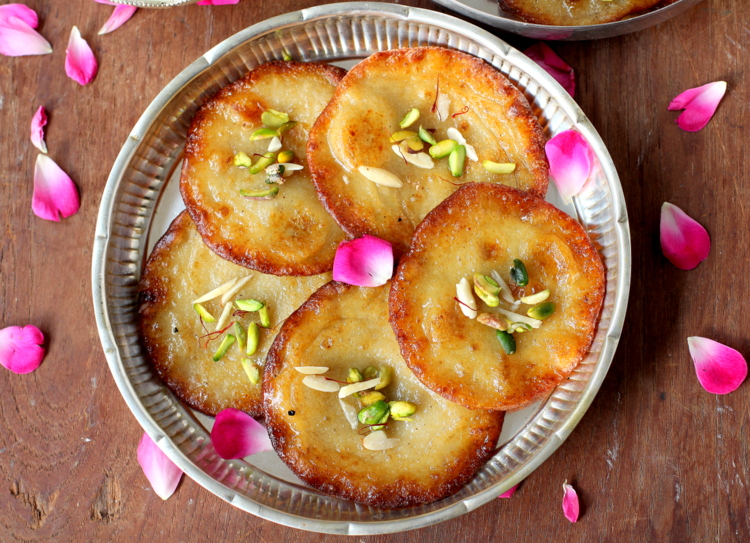
While Holi Festival is all about colours, but like every other festival, the celebrations are incomplete without some scrumptious foods that will awaken your senses...
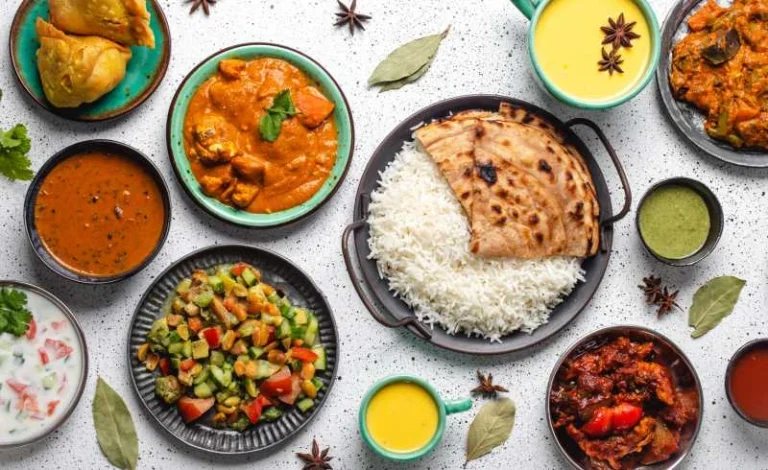
India is often described by the phrase “Unity in Diversity,” a fitting reflection of the country’s vast cultural, religious, and traditional differences. With a population...
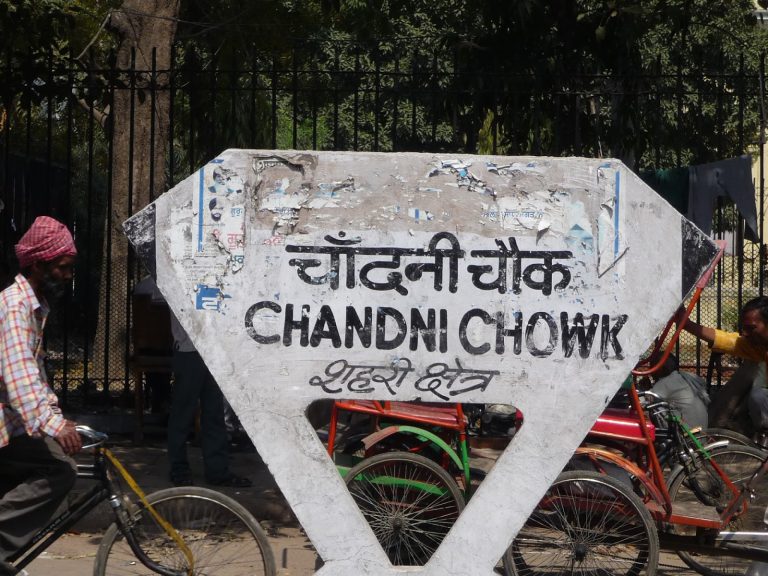
Delhi is almost synonymous with Chandni Chowk Market and some might say that not every visit qualifies as a memorable experience worth sharing. However, Chandni...
You are one step closer to having the best journey of your lifetime! Talk to us, write to us all that you have envisioned for your India trip, and one of our travel experts will connect with you on priority. To help you explicitly we have WhatsApp and Email addresses!


