

-
 18884507235
- Enquire now
18884507235

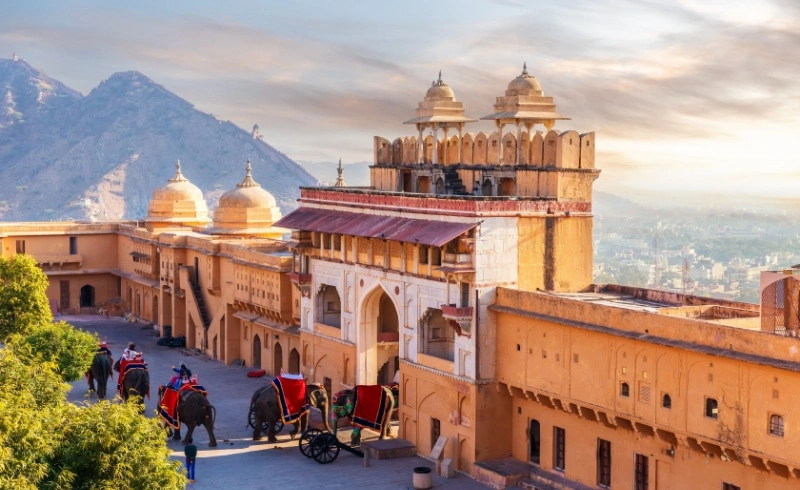
India’s architectural heritage is inseparable from its royal past. Long before modern nationhood, the subcontinent was divided into powerful kingdoms, princely states, and empires, each leaving behind monumental residences that symbolised authority, wealth, and artistic excellence. Today, these palaces of India stand as enduring reminders of a time when kings, queens, and dynasties shaped history through diplomacy, warfare, culture, and patronage of the arts.
Unlike European castles built primarily for defence, an Indian royal palace often combined fortification with refined aesthetics, intricate courtyards, mirror halls, painted chambers, and expansive gardens. From desert citadels and hilltop fortresses to lakeside residences and coastal palaces, the diversity of styles across regions makes India home to some of the most beautiful palaces in the world.
Whether you are seeking the largest palace in India, exploring the oldest palaces in India, or simply admiring a beautiful palace steeped in history, this curated list of the 25 best palaces in India offers a comprehensive journey through royal grandeur in 2026.
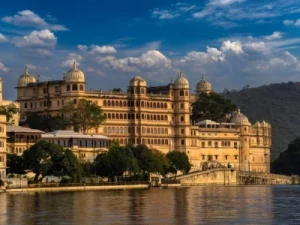
The City Palace of Udaipur stands as the political and cultural heart of the former Mewar kingdom. Construction began in 1559 CE under Maharana Udai Singh II, the founder of Udaipur, after the fall of Chittorgarh to Mughal forces. Over the next four centuries, successive Maharanas expanded the complex, making it a living chronicle of Rajput resilience. Unlike many kingdoms that surrendered to the Mughals, Mewar fiercely guarded its sovereignty, and the palace reflects that independent spirit.
Perched atop a ridge overlooking Lake Pichola, the palace is an architectural fusion of Rajput military design and Mughal ornamental elegance. Built primarily with granite and marble, the complex comprises:
The architecture was strategically designed to offer defensive advantages while maintaining royal grandeur.
Several sections of the palace now house museums displaying royal costumes, weaponry, miniature paintings, and personal artefacts of the Mewar rulers. Parts of the palace are still occupied by the royal family, reinforcing its status as a functioning Indian royal palace.
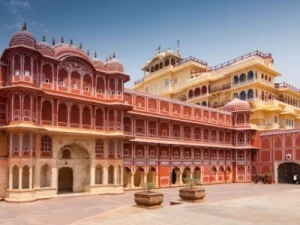
City Palace Jaipur was established in the early 18th century by Maharaja Sawai Jai Singh II, the founder of Jaipur. Built at the heart of India’s first planned city, the palace served as the seat of the Kachwaha Rajput rulers and remains partially occupied by the royal family today. It played a central role in governance, diplomacy, and ceremonial life during the princely era.
The palace complex is a harmonious blend of Rajput, Mughal, and European architectural styles. Key features include:
The palace layout reflects both royal authority and Jaipur’s urban planning brilliance.
City Palace stands as a living royal institution, preserving traditions while adapting to modern cultural tourism. Its museums house royal costumes, manuscripts, weaponry, and art, offering a comprehensive understanding of Jaipur’s royal legacy.
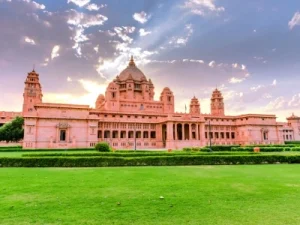
Commissioned by Maharaja Umaid Singh in 1928, Umaid Bhawan Palace was built during a prolonged drought to provide employment to local artisans. It stands as one of the newest royal palaces in India and is often cited among the largest palaces in the world.
Constructed using golden Chittar sandstone, the palace reflects a blend of Art Deco and Indo-classical styles. Its massive scale includes:
The palace is divided into three functional zones: a museum, a luxury hotel, and a private royal residence.
Umaid Bhawan Palace is one of the most successful examples of adaptive heritage reuse. As a luxury hotel, it has hosted global dignitaries, celebrities, and state guests, reinforcing India’s palace-to-hospitality legacy.
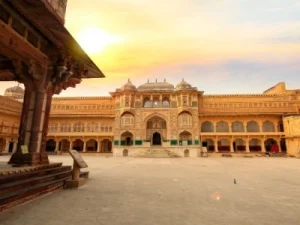
Amber Palace served as the capital of the Kachwaha Rajputs before Jaipur was founded. Built in 1592 by Raja Man Singh I, it reflects the strategic importance of hill forts during medieval India. The palace witnessed key political alliances between Rajputs and Mughals.
The palace is a masterclass in Rajput–Mughal architecture, combining rugged exteriors with lavish interiors. Key highlights include:
The palace’s elevation provided both security and commanding views of the surrounding landscape.
Amber Palace is one of the most visited famous palaces in India, offering sound-and-light shows and guided heritage walks.
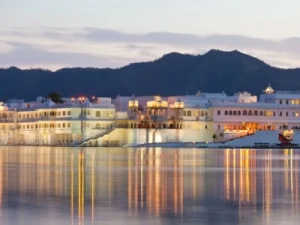
Built in 1746 by Maharana Jagat Singh II, the Lake Palace (Jag Niwas) was designed as a royal summer retreat. Positioned in the middle of Lake Pichola, it offered isolation and comfort during intense summers, away from political disturbances.
Constructed entirely of white marble, the palace appears to float on water. Its design includes:
The palace is frequently ranked among the most beautiful palaces in India and globally.
In the 20th century, the palace was converted into a luxury heritage hotel, setting a benchmark for palace hospitality in India. It remains one of the most photographed Indian palaces.
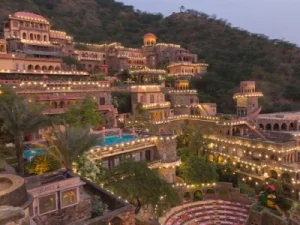
Neemrana Palace dates back to the 15th century and was built by Raja Prithvi Singh Yadav, a descendant of Prithviraj Chauhan. Strategically positioned on the Delhi–Jaipur route, the palace served as an important defensive and administrative stronghold for centuries. After falling into decline post-independence, Neemrana Palace gained renewed significance when it became one of India’s earliest and most successful heritage restoration projects, setting a benchmark for adaptive reuse of royal properties.
Spread across 14 terraced levels, Neemrana Palace is a striking example of Rajput hill-fort architecture blended with Indo-Islamic elements. Built into the Aravalli hillside, the palace features:
The vertical layout offers panoramic views of the surrounding plains, making it one of the most visually dramatic palaces in India.
Neemrana Palace represents a modern revival of India’s royal heritage, where history meets contemporary luxury. It has played a key role in popularising heritage tourism in India and is frequently used for:
Its transformation from a ruined fort to a thriving royal residence reflects India’s evolving approach to preserving its palace legacy.
Advance reservations are recommended, especially during peak tourist seasons.
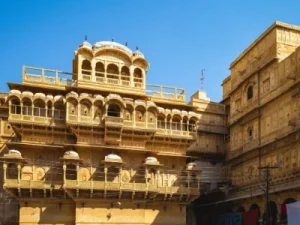
Often referred to as the “Golden Fort”, Jaisalmer Fort was built in 1156 CE by Rawal Jaisal. Unlike most forts, it remains one of the few living forts in the world, with residents still inhabiting its precincts. Within its walls lie several palatial residences once occupied by Rajput rulers.
Constructed from yellow sandstone, the fort and palace structures glow golden under sunlight. Architectural highlights include:
The palace buildings demonstrate desert-adapted architecture, optimised for ventilation and insulation.
The fort-palace complex played a critical role in controlling ancient Silk Route trade. Its palaces offer insight into how royal life coexisted with merchant communities in medieval Rajasthan.
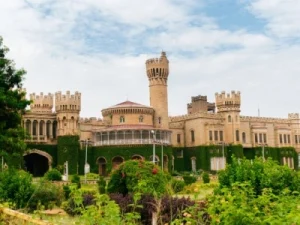
Built in 1878, Bangalore Palace was inspired by England’s Windsor Castle and served as the residence of the Wodeyar family outside Mysore. It reflects the growing influence of European aesthetics among Indian royalty during the colonial era.
The palace showcases Tudor Revival architecture, featuring:
Surrounding the palace are expansive gardens that once hosted royal events and durbars.
Bangalore Palace bridges colonial and royal histories, making it a key landmark in understanding Bengaluru’s transformation from a cantonment town to a modern metropolis.
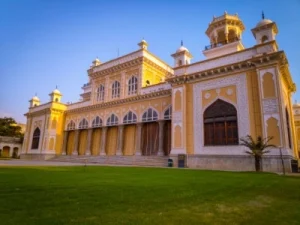
Chowmahalla Palace was the official seat of the Asaf Jahi dynasty and hosted coronation ceremonies of the Nizams. Construction began in the late 18th century, and the palace served as the administrative and ceremonial centre of Hyderabad.
The palace complex is inspired by Persian and Mughal styles and consists of four palaces around a grand courtyard. Key features include:
The palace architecture reflects the grandeur and ceremonial discipline of Deccan royalty.
Recognised by UNESCO for heritage conservation, Chowmahalla Palace offers rare insight into the governance and lifestyle of one of India’s most influential princely states.
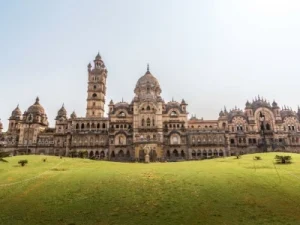
Laxmi Vilas Palace was built in 1890 by Maharaja Sayajirao Gaekwad III, one of India’s most progressive rulers. It served as the royal residence of the Gaekwads, whose patronage extended to education, art, and public welfare.
Four times the size of Buckingham Palace, Laxmi Vilas Palace is often cited among the largest palaces in India. Its Indo-Saracenic architecture features:
The palace grounds also include a private golf course designed for royalty.
The palace museum houses royal paintings, sculptures, weapons, and artefacts, offering insight into Gujarat’s royal heritage.
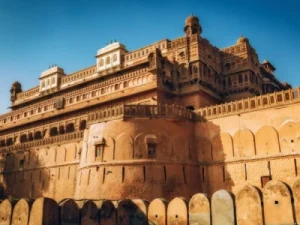
Junagarh Fort was constructed in 1594 AD by Raja Rai Singh, one of Emperor Akbar’s most trusted generals. Unlike most Rajasthani forts, Junagarh was built on the plains rather than atop a hill, symbolizing the confidence and strategic foresight of the Bikaner rulers. Remarkably, the fort was never captured in battle, preserving its original grandeur over centuries.
The palace complex showcases a refined blend of Rajput, Mughal, and Gujarati architectural styles. Built primarily with red sandstone, the interiors contrast with lavish marble work, gold leaf ornamentation, mirror inlays, and fresco-painted ceilings. Key highlights include:
Junagarh reflects the evolution of royal life from military dominance to ceremonial splendor. Today, it houses a museum displaying royal costumes, weaponry, manuscripts, and palanquins, making it one of the most informative royal palace complexes in India.
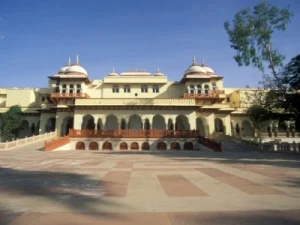
Originally built in 1835 as a royal garden retreat, Rambagh Palace later became the main residence of the Maharaja of Jaipur. It played a central role during the late princely era and witnessed Jaipur’s transition into modern India.
Rambagh Palace is a striking example of Indo-Saracenic architecture, seamlessly blending Mughal domes, Rajput chhatris, and colonial symmetry. The interiors feature:
Today, Rambagh Palace is globally recognized as one of the most luxurious heritage palaces in India, operated as a palace hotel. It represents how Indian royal palaces have been preserved through adaptive reuse while retaining their historical identity.
Man Singh Palace was built in the 15th century by Raja Man Singh Tomar and forms the heart of the mighty Gwalior Fort. The palace later served as a Mughal residence and, during British rule, as a prison, adding multiple historical layers to its legacy.
The palace exterior is instantly recognizable by its turquoise-blue tiles and yellow duck motifs, a rare decorative feature in Indian palace architecture. Inside, the palace includes royal halls, underground chambers, and intricately carved stone balconies.
The palace stands as a symbol of early Rajput cultural expression and courtly life. Gwalior Fort, within which it sits, is often cited while discussing which is the largest fort in India, making Man Singh Palace a key historical anchor.
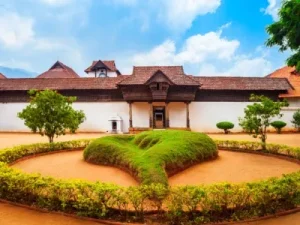
Once the capital of the Travancore kingdom, Padmanabhapuram Palace predates the modern boundaries of Kerala and Tamil Nadu. Despite its location in Tamil Nadu, it remains under the administration of the Kerala government due to its royal lineage.
Padmanabhapuram Palace is the largest wooden palace in India, built entirely in traditional Kerala Nālukettu architectural style. Features include:
The palace is a living example of sustainable royal architecture and South India’s craftsmanship. It preserves the cultural ethos of the Travancore rulers and stands apart from the marble-heavy palaces of North India.
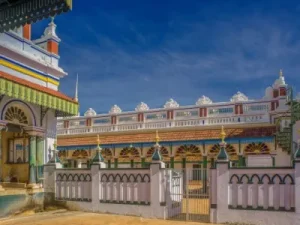
Constructed between the late 19th and early 20th centuries, the Chettinad palaces were built by the affluent Chettiar trading community, whose wealth came from international trade across Southeast Asia and Europe.
These palaces are architectural showcases of global influence, incorporating:
Each palace is designed around open courtyards with symmetrical layouts and grand ceremonial halls.
Chettinad palaces redefine the idea of an Indian palace, shifting the narrative from royal lineage to mercantile prosperity. They are also deeply connected to Chettinad cuisine, art, and social traditions.
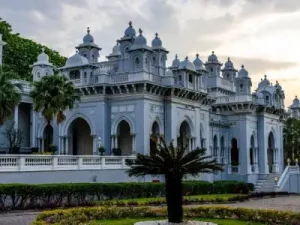
Built in 1894 by Nawab Sir Viqar-ul-Umra, Falaknuma Palace served as the royal residence of the Nizams of Hyderabad, one of the wealthiest dynasties in Indian history.The palace played host to global dignitaries, including King George V.
Falaknuma Palace blends Italian and Tudor architectural styles and is laid out in the shape of a scorpion. Architectural highlights include:
Falaknuma symbolizes Hyderabad’s cosmopolitan royal past and is widely regarded as one of the most beautiful palaces in the world, showcasing Indo-European elegance.
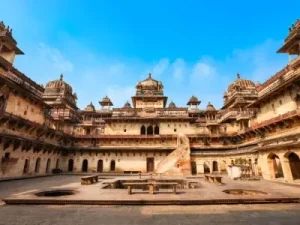
Jahangir Mahal was constructed in the early 17th century by Raja Bir Singh Deo of Orchha to commemorate the visit of Mughal Emperor Jahangir. Although Jahangir reportedly stayed only one night, the palace stands as a symbol of political alliance between the Bundela Rajputs and the Mughal empire. Orchha itself was an important cultural center during medieval Central India.
The palace is a three-storeyed structure built in sandstone, blending Rajput and Mughal architectural styles. Distinct features include:
The symmetry and elevation give the palace a fortress-like presence while retaining royal elegance.
Jahangir Mahal reflects a period when regional kingdoms balanced autonomy with imperial diplomacy. It is one of the finest surviving examples of Bundela architecture and contributes significantly to Orchha’s recognition as a heritage town.
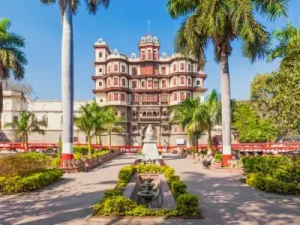
Rajwada Palace was built over 200 years ago by Malhar Rao Holkar, founder of the Holkar dynasty. It served as the administrative and ceremonial seat of the Maratha rulers of Indore and witnessed key political developments during Maratha and British periods.
The palace uniquely combines Maratha, Mughal, and French architectural influences. Notable elements include:
Repeated restorations after fires and invasions have added layered architectural character.
Rajwada Palace is deeply intertwined with Indore’s civic identity. It anchors the city’s old quarters and remains a symbol of Maratha governance in Central India.
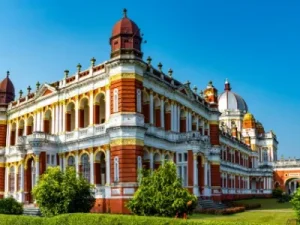
Cooch Behar Palace was built in 1887 by Maharaja Nripendra Narayan of the Koch dynasty, which ruled the princely state of Cooch Behar for centuries. The palace emerged during a period when Indian royalty was increasingly influenced by British governance and education, yet still retained sovereign authority. The Koch rulers maintained strategic alliances with the British while preserving their regional autonomy, making the palace a symbol of political transition in late-colonial India.
Inspired by Buckingham Palace in London, Cooch Behar Palace is a rare example of European Renaissance architecture in India, distinctly different from Indo-Saracenic or Rajput styles. Architectural highlights include:
Set within landscaped gardens, the palace’s proportions and design reflect the global outlook of Indian royalty in the 19th century.
Today, the palace functions as a museum under the Archaeological Survey of India, showcasing royal artefacts, furniture, portraits, and manuscripts of the Koch dynasty. It plays a crucial role in representing eastern India’s princely heritage, which is often overshadowed by Rajasthan and Deccan narratives. The palace also highlights the era when Indian royal families engaged actively with Western education, law, and administration.
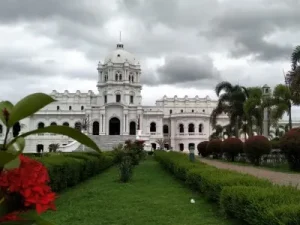
Ujjayanta Palace was built in 1901 by Maharaja Radha Kishore Manikya of the Tripura royal family. It served as the royal residence until Tripura merged with India and later became the state legislative assembly.
Designed by British architect Sir Alexander Martin, the palace is a blend of Neoclassical and Indo-Saracenic styles. Architectural highlights include:
Its bright white façade makes it one of the most visually striking palaces in Northeast India.
Now housing the Tripura State Museum, Ujjayanta Palace plays a vital role in preserving the cultural, tribal, and royal history of the region, expanding the geographical scope of Indian palace heritage.
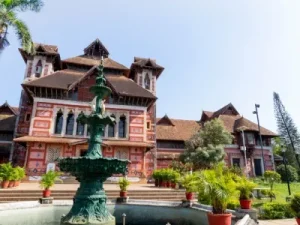
Kanakakkunnu Palace was built in the late 19th century by the rulers of Travancore as a venue for royal banquets and state ceremonies. Unlike private residences, it functioned primarily as a ceremonial palace.
Constructed in traditional Kerala architectural style, the palace features:
The structure blends seamlessly with its surrounding gardens and landscape.
Today, Kanakakkunnu Palace is a prominent cultural venue hosting exhibitions, music concerts, and state events. It represents Kerala’s understated royal aesthetic, contrasting sharply with the opulence of North Indian palaces.
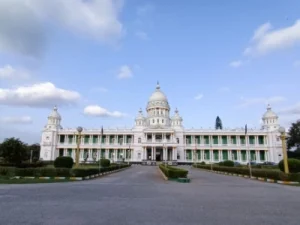
Lalitha Mahal Palace was commissioned in 1921 by Maharaja Krishnaraja Wodeyar IV, one of the most enlightened rulers of the Mysore kingdom. Built to host royal guests and dignitaries, the palace reflects the Wodeyars’ cosmopolitan outlook during the late princely era. It stands as the second-largest palace in Mysuru, after the main Mysore Palace, and played a significant role in royal hospitality and state ceremonies.
Designed in European Renaissance style, Lalitha Mahal Palace is visually striking for its pure white façade and symmetrical proportions. Key architectural features include:
The palace sits atop a gentle hill, offering panoramic views of the Mysuru landscape, reinforcing its grandeur and visual prominence.
Today, Lalitha Mahal Palace functions as a heritage hotel, managed by the Karnataka State Tourism Development Corporation. It represents the evolution of Indian palaces from private royal spaces to public heritage assets. The palace also highlights how South Indian royalty embraced European aesthetics while retaining regal dignity.
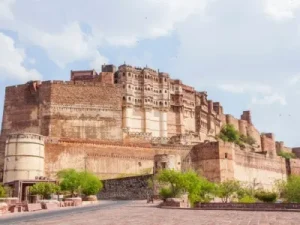
Mehrangarh Palace forms the royal residential core within the mighty Mehrangarh Fort, founded in 1459 by Rao Jodha, the founder of Jodhpur. Over generations, Rathore rulers expanded the palace complex, transforming it into a symbol of Marwar’s military strength and royal authority. The palace witnessed pivotal moments of Rajput resistance, Mughal alliances, and internal succession struggles, making it one of the most historically layered royal residences in India.
Dramatically perched atop a 400-foot-high cliff, the palace combines formidable defense with opulent design. Architectural highlights include:
The palace architecture balances desert-adapted practicality with ceremonial grandeur.
Mehrangarh Palace houses one of India’s finest fort museums, displaying palanquins, arms, textiles, and miniature paintings. It remains a cultural epicenter of Jodhpur and a global ambassador of Rajput heritage through exhibitions, music festivals, and heritage conservation initiatives.
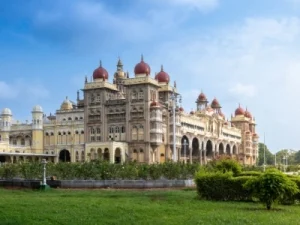
Mysore Palace, also known as Amba Vilas Palace, served as the official residence of the Wodeyar dynasty, which ruled Mysore for over 600 years. The current structure was completed in 1912, replacing earlier wooden palaces destroyed by fire. It symbolises the prosperity and cultural patronage of southern Indian royalty.
Designed by British architect Henry Irwin, the palace is a grand example of Indo-Saracenic architecture, blending Hindu, Mughal, Rajput, and Gothic styles. Highlights include:
The palace is often ranked among the most beautiful palaces in the world.
Mysore Palace is central to the Dussehra festival, when it becomes the focal point of elaborate processions and ceremonies. During special illuminations, nearly 100,000 lights outline the palace, creating an unforgettable visual spectacle.
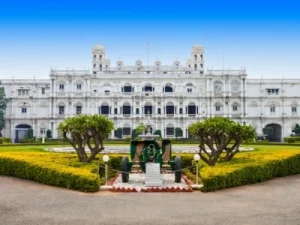
Jai Vilas Palace was constructed in 1874 by Maharaja Jayajirao Scindia, one of the most influential rulers of the Scindia dynasty. Built to welcome King Edward VII during his visit to India, the palace symbolised the Scindias’ immense wealth, political power, and close association with the British Crown. It served as the primary royal residence of the Gwalior state and stood at the centre of administration, diplomacy, and ceremonial life.
Jai Vilas Palace is a striking blend of European Neo-Classical and Baroque architecture, making it architecturally distinct from traditional Indian palaces. Designed by Sir Michael Filose, its most notable features include:
The palace famously tested its ceilings by hanging elephants before installing the chandeliers, underscoring its engineering ambition.
Today, a large portion of Jai Vilas Palace functions as the Scindia Museum, showcasing royal artefacts such as silver train sets, Belgian glassware, weaponry, manuscripts, and furniture. The palace offers one of the most immersive insights into the lifestyle of India’s princely elite during the colonial era, making it one of the most educational palace museums in India.
The palaces of India are far more than architectural marvels, they are living chronicles of power, artistry, diplomacy, and cultural evolution. From the fortified heights of Rajasthan and the ceremonial courts of Jaipur to the political strongholds of the Marathas and the refined elegance of eastern Indian royalty, each palace reveals a distinct chapter of India’s royal past.
Together, these 25 palaces showcase why India remains unmatched in its diversity of royal architecture, encompassing the largest palaces in the world, some of the oldest surviving palace complexes, and many of the most beautiful palaces globally. Whether preserved as museums, adapted into luxury heritage stays, or still serving as royal residences, these palaces continue to define India’s historical identity in 2026 and beyond.
Exploring these palaces is not merely about witnessing grandeur, it is about understanding how India’s kings, queens, warriors, and visionaries shaped a civilisation whose legacy continues to inspire the world.
You are one step closer to having the best journey of your lifetime! Talk to us, write to us all that you have envisioned for your India trip, and one of our travel experts will connect with you on priority. To help you explicitly we have WhatsApp and Email addresses!


